
How to Choose a VIN Marking Machine
Introduction
Selecting a VIN marking machine is a critical decision for automotive manufacturers. The Vehicle Identification Number (VIN) is a permanent, legal identifier that must remain legible throughout the vehicle's life. Unlike general-purpose marking, VIN marking on body-in-white (BIW) involves high-strength steels, robotic integration, and strict traceability requirements. This guide explains the technical and operational factors to evaluate when choosing a VIN marking machine, helping engineers and production managers make an informed decision.
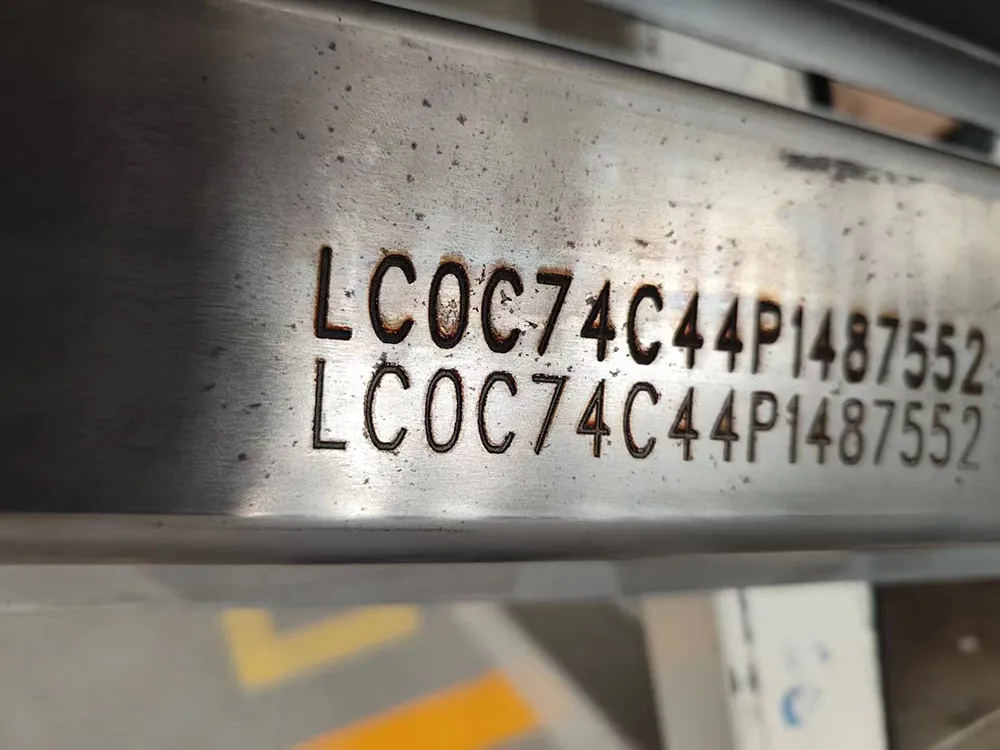
Product Overview: What a VIN Marking Machine Does
A VIN marking machine is designed to permanently mark the vehicle identification number onto the vehicle body or chassis. In modern automotive assembly lines, this process must be fast, reliable, and capable of marking on advanced high-strength steels (AHSS) and hot-formed steels. The machine typically integrates with robots or manipulators and may include vision guidance and quality verification systems. The goal is to produce a deep, clear mark that withstands painting, rubbing, and environmental exposure while supporting full traceability.
Working Principle of Deep Laser VIN Marking
Deep laser marking uses a high-power laser to ablate material, creating a permanent recessed mark. The depth of the mark is a key indicator of durability. For VIN applications on high-strength steel, a marking depth of at least 0.2 mm is often specified to ensure the number remains readable after painting and over the vehicle's lifetime. The process is controlled by software that directs the laser beam according to the VIN data, and it can be integrated with automated material handling for continuous production.
Key Factors to Consider When Choosing a VIN Marking Machine
1. Marking Depth and Material Compatibility
The machine must be capable of marking on the materials used in your production. High-strength steels with yield strength exceeding 700 MPa and hot-formed steels up to 1500 MPa require sufficient laser power and optimized marking parameters. Verify that the machine can achieve the required depth (e.g., ≥0.2 mm on BIW) without compromising material integrity.
2. Integration with Production Line
Consider how the marking machine will integrate with existing robots, conveyors, or manipulators. Look for standardized mounting interfaces and communication protocols that simplify installation. The ability to operate in a robotic cell or with assisted manipulators ensures flexibility for different line layouts.
3. Positioning and Vision Guidance
Accurate positioning is essential for marking the VIN in the correct location every time. Optional 3D vision guidance systems can locate the marking area precisely, reducing errors and improving cycle times. This is particularly valuable for variants with different body styles or when the marking position is not fixed.
4. Traceability and Quality Verification
To ensure 100% traceability, the machine should support online inspection of marking quality. Optional 3D laser scanning measurement and OCR recognition systems can verify depth, character legibility, and correctness in real time. This data can be logged for quality records and regulatory compliance.
5. Marking Quality After Painting
The VIN must remain legible after the painting process. A special marking process can ensure that the number is easily rubbed (拓印) and clearly visible. Evaluate the machine's ability to produce a mark that resists paint filling and maintains contrast.
6. Power and Environmental Requirements
Check the power supply and environmental specifications. Typical industrial VIN marking machines operate on AC220V ±10%, 50Hz ±2%, with power consumption under 1000W. They should function reliably in operating temperatures of 0~40°C and humidity up to 90% RH (non-condensing). Ensure your facility meets these conditions or plan for appropriate controls.
7. Service and Support
Consider the supplier's after-sales support, including installation, commissioning, training, and maintenance. A fast response service and remote diagnosis capability can minimize downtime. A 12-month warranty on the complete machine is a common baseline; confirm the terms and availability of spare parts.
Applications of VIN Marking Machines
VIN marking machines are used in automotive manufacturing, particularly in body-in-white assembly, where the VIN is stamped or laser-marked onto the vehicle body. They are also applied in powertrain manufacturing for marking engine and transmission components, and in new energy vehicle production for battery pack and chassis marking. Other applications include automotive components, engineering machinery, and rail transit, where permanent identification is required.
Benefits of a Well-Chosen VIN Marking Machine
Improved traceability: Online verification ensures each VIN is correctly marked and recorded.
Process consistency: Automated marking reduces variability compared to manual methods.
Production integration: Seamless connection with robots and conveyors supports high-volume manufacturing.
Quality assurance: Deep, permanent marks that withstand painting and environmental exposure.
Regulatory compliance: Meets legal requirements for vehicle identification.
Why Choose KINMARK for VIN Marking Solutions
KINMARK has been developing marking and traceability systems since 1996, with a focus on automotive intelligent automation. Our deep laser marking machines are designed for high-strength steel VIN marking, with features such as easy rubbing after painting, flexible integration interfaces, and optional vision guidance and traceability systems. We serve major automotive manufacturers and suppliers, providing reliable equipment and responsive support. Our team offers installation, commissioning, and training to ensure smooth production start-up.
Frequently Asked Questions
What is the typical marking depth required for VIN on high-strength steel?
For body-in-white applications, a marking depth of at least 0.2 mm is commonly specified to ensure durability and legibility after painting. The exact requirement may vary by manufacturer and material.
Can a VIN marking machine be integrated with existing robots?
Yes. Many VIN marking machines, including KINMARK's deep laser marking systems, are designed with mounting interfaces for quick integration with industrial robots or assisted manipulators.
How can I ensure the VIN remains readable after painting?
A special marking process can create a mark that is easily rubbed and clear after painting. Additionally, online verification systems such as 3D scanning and OCR can confirm quality before the body moves to the paint shop.
What power supply is required for a deep laser VIN marking machine?
Typical specifications include AC220V ±10%, 50Hz ±2%, with power consumption under 1000W. Always confirm the exact requirements with the supplier.
Does the machine come with a warranty?
KINMARK offers a 12-month warranty on the complete machine, along with professional technical support and long-term maintenance service.
Conclusion
Choosing a VIN marking machine requires careful evaluation of marking depth, material compatibility, integration capabilities, traceability features, and after-sales support. By considering these factors, automotive manufacturers can select a system that ensures permanent, legible VIN marks and supports efficient, compliant production. KINMARK's deep laser marking machines are engineered to meet these demands, providing a reliable solution for automotive VIN marking on high-strength steels.
If you're interested in any of the equipment mentioned in this article, feel free to contact our sales engineers for detailed product information and customized technical solutions.