
How to Achieve Consistent Refrigerant Filling in Vehicle Production
Introduction
Consistent refrigerant filling machines and coolant filling systems are a critical requirement in vehicle production. Whether the medium is refrigerant, coolant, or antifreeze, the fill volume and liquid level must be accurate and repeatable on every unit that moves down the assembly line. Inconsistent filling leads to rework, warranty claims, and compromised thermal management performance. This article explains the process factors that influence filling consistency and describes how a vacuum-assisted filling machine with integrated leak testing and PLC control addresses these factors in automotive production environments.
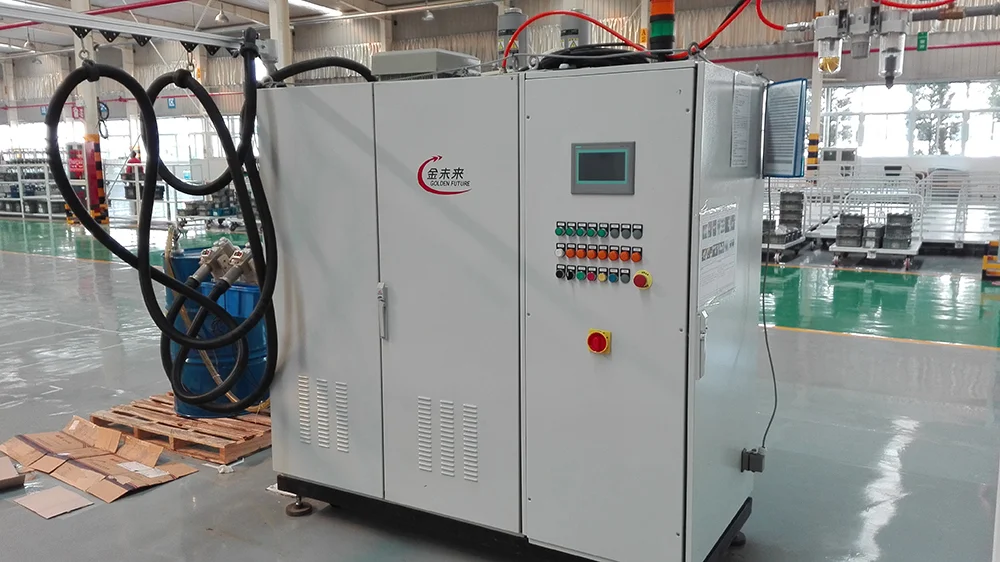
Understanding Refrigerant and Coolant Filling in Vehicle Assembly
In vehicle production, filling systems deliver fluids such as refrigerant, coolant, and antifreeze into sealed circuits. The filling operation must satisfy two conditions: the correct volume must enter the system, and the liquid level must remain stable after the filling nozzle is removed. Air pockets, residual vacuum, temperature variation, and pressure fluctuations can all cause the delivered volume to differ from the target. A filling process that only measures volume at the nozzle, without controlling the state of the circuit, cannot guarantee a stable liquid level.
Product Overview
The Antifreeze Vacuum Filling Machine is an automated system designed for precise coolant and antifreeze filling with a stable liquid level. It uses a PLC-controlled process to automate the complete filling cycle, including vacuum evacuation, leak testing, pressure filling, and back suction. The machine is suitable for automated coolant and antifreeze filling applications on automotive production and assembly lines.
Working Principle
The filling cycle follows a defined sequence. First, the system performs vacuum evacuation to remove air from the circuit. Next, it conducts leak testing under vacuum and pressure conditions. After confirming system tightness, a secondary vacuum is created before the coolant is introduced under controlled pressure. Once the filling pressure reaches equilibrium, the system automatically vents to atmospheric pressure and performs back suction to remove excess coolant. This back suction step helps achieve the specified liquid level and prevents the coolant level from dropping after filling.
By integrating vacuum evacuation, leak testing, pressure filling, and back suction into one automated cycle, the machine reduces the variables that cause inconsistent fill results.
Key Features
PLC-controlled automation of the complete filling process
Vacuum evacuation before filling
Leak testing under vacuum and pressure conditions
Secondary vacuum before coolant introduction
Pressure filling with automatic venting to atmospheric pressure
Back suction to achieve the specified liquid level and prevent level drop
Filling volume range: 1–400 L
Filling pressure range: 1–4 bar
Maximum filling speed: 60 L/min
Filling precision: ±0.5%
Liquid level accuracy: ±2 mm
Measurement display range: 0.0–999.9 L
Vacuum pump capacity: 40–65 m³/h
Negative pressure leak rate: ≤0.5 mbar / 60 s
Positive pressure leakage:
< 1.4 g/year
Power supply: AC 380 V ±10%, 50 Hz ±2%
Equipment dimensions: 1800 × 1000 × 800 mm (customizable)
How the Filling Process Supports Consistency
Consistency in refrigerant and coolant filling depends on controlling the circuit condition before and after the fill. The machine addresses this through several process steps.
Vacuum Evacuation
Air and moisture in the circuit can compress or vaporize, causing the delivered volume to vary. Vacuum evacuation removes these gases before filling begins.
Leak Testing
Leak testing under vacuum and pressure conditions verifies that the circuit is sealed. A leaking circuit cannot hold a stable liquid level, so this step identifies non-conforming units before filling.
Secondary Vacuum and Pressure Filling
Creating a secondary vacuum before introducing coolant under controlled pressure helps the fluid enter the circuit without trapped air. Filling pressure is regulated within the 1–4 bar range.
Back Suction and Level Stabilization
After filling pressure reaches equilibrium, the system vents to atmospheric pressure and performs back suction to remove excess coolant. This step achieves the specified liquid level and prevents the level from dropping after filling.
Applications
The Antifreeze Vacuum Filling Machine is used for automated coolant and antifreeze filling on automotive production and assembly lines. Typical applications include filling cooling circuits and thermal management systems where a precise and stable liquid level is required. The machine can be integrated into vehicle assembly processes that demand repeatable filling results.
Benefits
Improved filling consistency through automated vacuum, leak test, fill, and back suction steps
Stable liquid level after filling, reducing the need for level correction
Integrated leak testing to identify non-sealed circuits before filling
PLC control for repeatable process execution
Compatibility with automated production and assembly lines
Filling precision of ±0.5% and liquid level accuracy of ±2 mm
Why Choose KINMARK
KINMARK (Jinan Zhongzheng Jinma Technology Co., Ltd.) has been engaged in automotive intelligent automation equipment since 1996. The company develops and manufactures marking and traceability systems, servo press systems, fluid filling systems, and robot automation systems. Its fluid filling systems are used in automotive manufacturing, automotive components, new energy vehicles, powertrain manufacturing, and intelligent factory automation. KINMARK has established long-term cooperation with domestic and international automotive manufacturers and also provides automation solutions to industrial enterprises in related sectors.
For filling applications, KINMARK provides installation and commissioning, operator training, a 12-month warranty on the complete machine, and after-sales support including remote diagnosis and technical assistance.
Frequently Asked Questions
What causes inconsistent refrigerant or coolant filling in vehicle production?
Air and moisture trapped in the circuit, leaks, pressure fluctuations, and the absence of a level stabilization step can all cause the delivered volume or liquid level to vary. Vacuum evacuation, leak testing, and back suction help control these factors.
How does the Antifreeze Vacuum Filling Machine achieve a stable liquid level?
After pressure filling reaches equilibrium, the system automatically vents to atmospheric pressure and performs back suction to remove excess coolant. This helps achieve the specified liquid level and prevents the level from dropping after filling.
What is the filling precision and liquid level accuracy of this machine?
The filling precision is ±0.5%, and the liquid level accuracy is ±2 mm. The filling volume range is 1–400 L, and the maximum filling speed is 60 L/min.
Can this filling machine be integrated into an automated assembly line?
Yes. The machine uses a PLC-controlled system to automate the complete coolant filling process and is suitable for automated coolant and antifreeze filling applications on automotive production and assembly lines.
Conclusion
Achieving consistent refrigerant and coolant filling in vehicle production requires control over the circuit condition before, during, and after the fill. The Antifreeze Vacuum Filling Machine integrates vacuum evacuation, leak testing, pressure filling, and back suction into a single PLC-controlled cycle. This approach supports stable liquid levels and repeatable filling results for automotive production and assembly line applications.
If you're interested in any of the equipment mentioned in this article, feel free to contact our sales engineers for detailed product information and customized technical solutions.