
What Affects Laser Marking Depth
Introduction
Laser marking depth is a critical quality characteristic in automotive manufacturing, particularly for Vehicle Identification Number (VIN) marking on body-in-white and structural components. Unlike surface marking, which only alters appearance, deep laser marking removes or displaces material to create a permanent, legible mark that survives painting, stamping, and years of service exposure. For engineers and production managers, understanding what affects laser marking depth is essential when specifying equipment, qualifying processes, and maintaining traceability compliance.
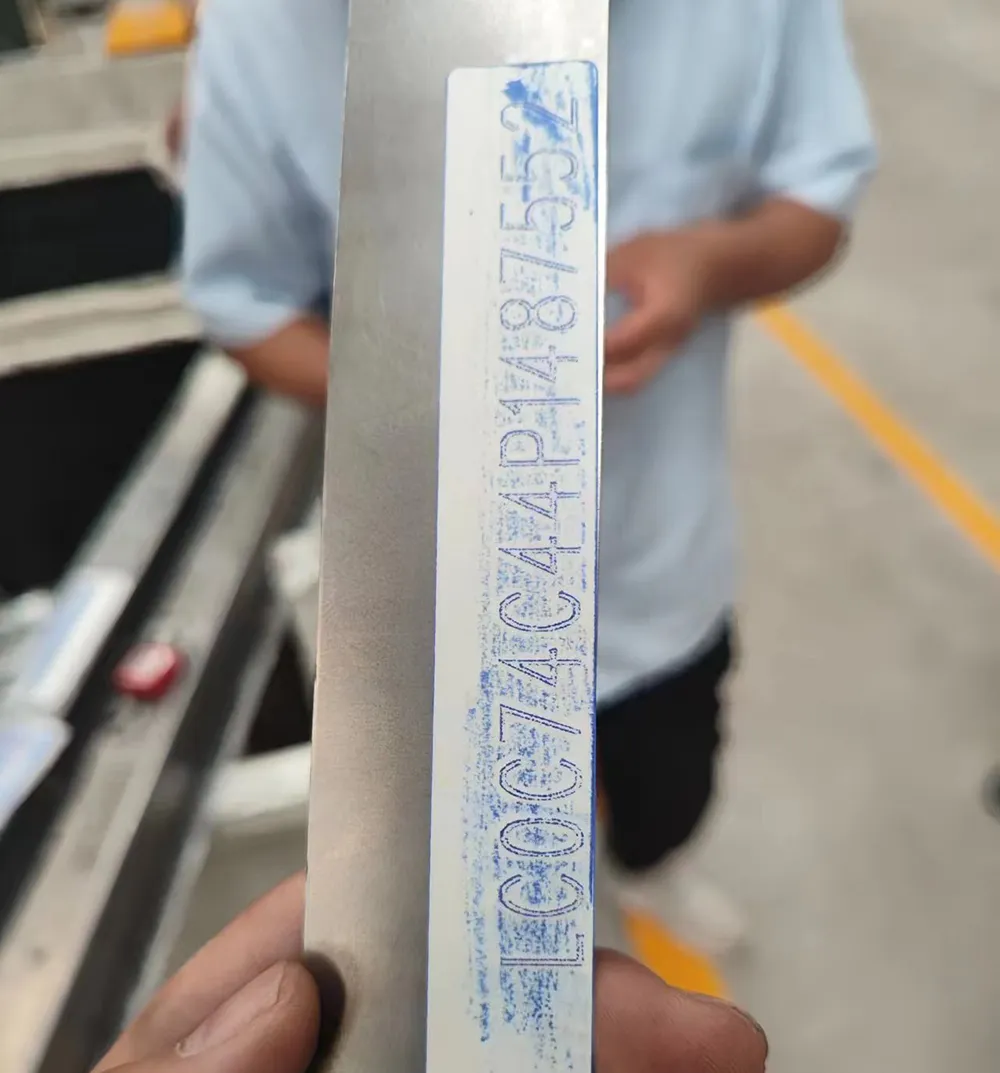
This guide examines the primary factors that influence laser marking depth, based on the technical characteristics of deep laser marking systems used in automotive mass production. It covers material properties, laser parameters, process integration, and quality verification methods, providing a practical reference for manufacturing engineers evaluating deep marking solutions.
Product Overview
A deep laser marking machine is designed to produce permanent markings below the surface of high-strength materials. In automotive applications, the most demanding use case is VIN marking on body-in-white, where the marking must remain readable after the paint shop and throughout the vehicle lifetime.
KINMARK deep laser marking systems are engineered for this application. The system enables permanent VIN deep marking on high-strength steel plates with yield strength exceeding 700 MPa and hot-formed steel plates with strength up to 1500 MPa. The marking depth on body-in-white can reach more than 0.2 mm, which is sufficient to survive the painting process and provide a durable identification mark.
The machine is designed for integration into automated production lines, with mounting interfaces that allow connection to industrial robots or assisted manipulators. Optional 3D vision guidance and 3D laser scanning measurement systems support precise positioning and online quality inspection.
Working Principle
Deep laser marking works by directing a focused laser beam onto the material surface. The absorbed energy rapidly heats the localized area, causing melting and vaporization of the material. As the beam moves along the programmed path, a groove or depression is formed, creating the marked character or symbol.
The depth of the mark depends on the balance between the energy delivered to the material and the material's resistance to melting and vaporization. In deep marking applications, the laser power, focus position, marking speed, and number of passes are coordinated to achieve the required depth without introducing micro-cracks or excessive heat-affected zones.
For VIN marking on high-strength steel, the process must be robust enough to produce a consistent depth across the marking area. The system's marking area of 112 mm × 112 mm and laser power of 200 W are specified to support this requirement. The exact parameter set is developed and validated for each material and marking geometry.
Key Factors That Affect Laser Marking Depth
1. Laser Power and Energy Density
Laser power determines the amount of energy available per unit time. Higher power generally enables deeper marking, but only when the beam is properly focused and the interaction time is controlled. Energy density, which combines power, spot size, and interaction time, is the more direct driver of depth. A 200 W laser, as used in KINMARK deep marking systems, provides sufficient energy for VIN deep marking on high-strength steel when paired with appropriate process parameters.
2. Material Properties
Material composition, hardness, and strength significantly influence marking depth. High-strength steels and hot-formed steels require more energy to achieve the same depth compared to mild steel. The system is designed to mark materials with yield strength above 700 MPa and hot-formed steel up to 1500 MPa, demonstrating that the process is matched to the material's resistance to melting. Surface conditions, such as scale, coatings, or oil films, can also affect energy absorption and should be considered during process qualification.
3. Marking Speed and Interaction Time
Marking speed determines how long the laser beam interacts with a given point on the material. Slower speeds increase interaction time and can produce deeper marks, but may also increase heat input and cycle time. In production environments, speed is balanced against depth requirements and takt time. The optimal speed is established during process development for each application.
4. Focus Position and Spot Size
The focus position relative to the material surface affects the power density. A tightly focused beam concentrates energy into a smaller area, increasing depth capability but reducing the width of the mark. Conversely, a defocused beam spreads energy over a larger area, producing a shallower but wider mark. For deep VIN marking, the focus is typically set to achieve the required depth while maintaining character legibility.
5. Number of Passes and Marking Strategy
Multiple passes can increase depth incrementally. However, repeated passes may introduce excessive heat and alter the material microstructure. The marking strategy, including pass count, overlap, and path planning, is developed to achieve the target depth efficiently. The system's control software and mechanical design support repeatable multi-pass marking when required.
6. Positioning Accuracy and Vision Guidance
Accurate positioning ensures that the laser beam strikes the intended location with the correct focus. In automated lines, part-to-part variation can affect depth consistency. An optional 3D vision guidance system enables precise positioning and accurate marking, helping to maintain consistent depth across production. This is particularly important for body-in-white where the marking location may vary slightly due to fixture tolerances.
7. Quality Verification and Traceability
Depth cannot be assumed; it must be verified. Optional 3D laser scanning measurement and OCR recognition systems provide online inspection of marking quality and ensure 100% traceability. These systems measure the actual depth and character legibility, allowing real-time process control and rejection of non-conforming parts. Without verification, variations in material or process conditions could go undetected.
Applications
Deep laser marking is primarily used in automotive manufacturing for VIN marking on body-in-white and structural components. The ability to mark high-strength steel and hot-formed steel makes it suitable for modern vehicle architectures that use advanced high-strength materials for crash safety and weight reduction.
Beyond VIN marking, deep laser marking can be applied to other permanent identification needs in powertrain manufacturing, automotive components, and new energy vehicles. The system's integration interfaces support automated production lines, including robot-mounted and manipulator-assisted configurations.
Benefits
Permanent traceability: Deep marks survive painting and remain readable for vehicle lifetime.
Material versatility: Capable of marking high-strength steel and hot-formed steel.
Process integration: Designed for quick integration with robots and manipulators.
Quality assurance: Optional vision and scanning systems enable online inspection and 100% traceability.
Consistent results: Special marking process ensures clear rubbing results after painting.
Why Choose KINMARK
KINMARK has been involved in automotive marking and traceability since 1997, with a history of supplying printing and marking equipment to major automotive manufacturers. The company's deep laser marking system is the result of ongoing development in marking technology, including the introduction of VIN laser deep marking systems in 2023.
KINMARK provides installation, commissioning, and operator training, along with a 12-month warranty and fast response service. The company's focus on automotive intelligent automation equipment means the deep laser marking machine is designed with production integration in mind, including mounting interfaces for robots and optional vision and scanning systems for quality control. Learn more about KINMARK and its automotive automation expertise.
Frequently Asked Questions
What is the typical marking depth for VIN deep marking?
The marking depth on body-in-white can reach more than 0.2 mm. This depth is sufficient to ensure the VIN remains legible after the painting process and throughout the vehicle's service life.
Can deep laser marking be used on high-strength steel?
Yes. The system is designed to mark high-strength steel plates with yield strength exceeding 700 MPa and hot-formed steel plates with strength up to 1500 MPa.
How is marking quality verified?
Optional 3D laser scanning measurement and OCR recognition systems provide online inspection of marking quality. These systems verify depth and character legibility, ensuring 100% traceability.
What are the power requirements for a deep laser marking machine?
The system operates on AC220V ±10%, 50Hz ±2%, with power consumption less than 1000W. The laser power is 200W.
Can the marking system be integrated with robots?
Yes. The system is designed with various mounting interfaces for quick integration with industrial robots or assisted manipulators. An optional 3D vision guidance system supports precise positioning for automated marking.
Conclusion
Laser marking depth is influenced by a combination of laser parameters, material properties, process strategy, and positioning accuracy. For automotive VIN marking on high-strength steel, achieving a consistent depth of more than 0.2 mm requires a system that is engineered for the application and supported by proper process development and quality verification.
KINMARK deep laser marking machines are designed to meet these requirements, with features such as high-power laser capability, robot integration, optional vision guidance, and online traceability. By understanding the factors that affect marking depth, manufacturing engineers can specify and maintain a deep marking process that delivers permanent, traceable identification for vehicle production.
If you're interested in any of the equipment mentioned in this article, feel free to contact our sales engineers for detailed product information and customized technical solutions.