
How Does Laser VIN Marking Work
Introduction
A Vehicle Identification Number (VIN) is the primary identity record for a vehicle, and it must remain readable for the entire life of the vehicle. On modern body-in-white (BIW) lines, VIN marking is no longer a simple stamping operation. High-strength steel, hot-formed steel, multi-layer panel stacks, and high line speeds make it difficult to produce a permanent, legible mark that survives painting and years of service.
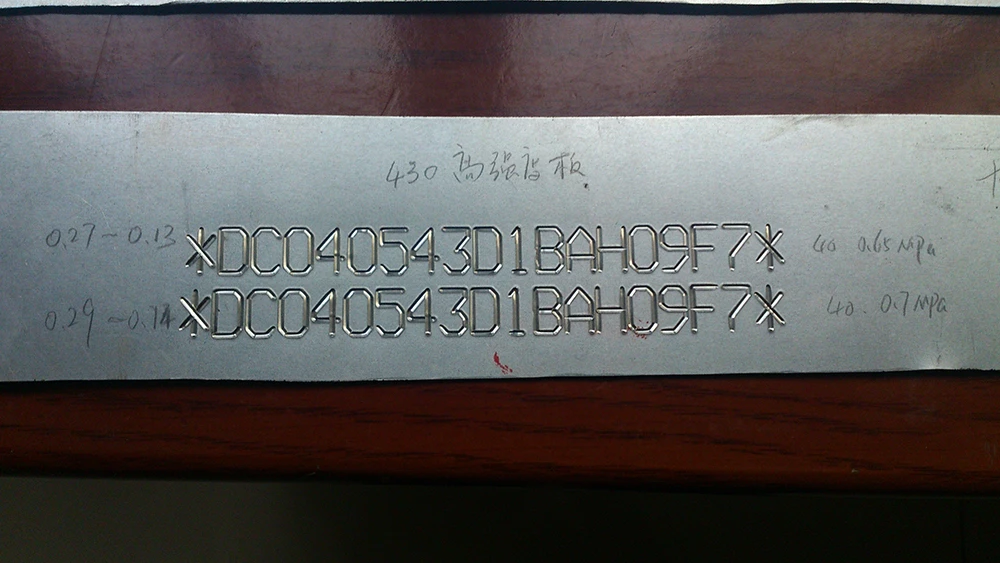
Laser VIN marking has become a practical answer to this problem. Instead of removing material with a mechanical stylus, a focused laser beam creates a controlled, deep mark directly in the metal surface. This article explains how laser VIN marking works, what happens inside the marking head, how the process is integrated into an automotive production line, and what factors engineers should consider when specifying a deep marking system.
What Is Laser VIN Marking
Laser VIN marking is a non-contact marking process in which a focused laser beam writes the 17-character VIN directly onto a metallic surface, typically the body-in-white or a structural component. The goal is a permanent, machine-readable and human-readable identification mark that supports vehicle traceability from assembly through registration, service, and end-of-life processing.
In automotive manufacturing, VIN marking must satisfy two requirements at the same time: sufficient depth for durability and sufficient contrast for reliable reading. A mark that is too shallow may become illegible after painting or corrosion. A mark that is too deep or poorly formed may damage the panel or create surface defects. Deep laser marking systems are designed to balance these requirements.
KINMARK deep laser marking machines are built for this application. They are designed to produce permanent VIN deep marking on high-strength steel plates and hot-formed steel plates, with a marking depth on body-in-white that can reach more than 0.2 mm.
How Does Laser VIN Marking Work
The working principle of laser VIN marking can be understood in three stages: beam generation, beam positioning, and material interaction.
Beam Generation
A laser source produces a high-energy beam. In KINMARK deep laser marking machines, the laser power is 200W. The beam is directed through an optical path and focused onto the workpiece surface. The power supply is AC220V ±10%, 50Hz ±2%, and the equipment power consumption is below 1000W.
Beam Positioning and Marking Area
The focused beam is moved across the surface according to the VIN character pattern. The marking area of the system is 112 mm × 112 mm, which defines the working field in which the VIN can be written. Within this field, the beam traces each character, producing a controlled pattern of material interaction rather than a single impact.
Material Interaction and Marking Depth
When the focused beam reaches the metal surface, the energy is absorbed and converted into heat. The material undergoes localized melting and vaporization, creating a recess in the surface. By controlling the beam path and energy delivery, the system produces a mark with a defined depth. KINMARK deep laser marking achieves a marking depth of ≥0.2 mm on body-in-white, and the process is designed to work on high-strength steel plates with yield strength exceeding 700 MPa as well as hot-formed steel plates with strength up to 1500 MPa.
Process note: Deep VIN marking is not only about depth. The shape of the mark, the surface condition of the panel, and the stability of the marking position all affect whether the VIN remains legible after painting. This is why positioning and verification systems are often combined with the marking head.
The Role of Marking Depth in VIN Durability
VIN durability is directly related to marking depth. After the body-in-white passes through the paint shop, the marked area is covered with primer, base coat, and clear coat. A shallow surface mark can become difficult to read or can be partially filled by paint. A deeper mark maintains a measurable recess that remains visible and readable after painting.
KINMARK deep laser marking is designed with a special marking process to ensure clear rubbing results after painting. This means the VIN can still be transferred or rubbed for verification purposes after the paint process, which is important for vehicle registration and inspection workflows.
At the same time, depth must be controlled. The system is engineered to mark high-strength and hot-formed steel without compromising the structural panel. The marking depth of ≥0.2 mm is specified for body-in-white, providing a permanent identification mark suitable for mass production.
Positioning and Vision Guidance
Accurate marking depends on accurate positioning. On a moving production line, the body-in-white may not arrive at exactly the same position every cycle. If the marking head is not aligned with the target area, the VIN may be placed incorrectly or the mark quality may vary.
KINMARK deep laser marking machines can be equipped with an optional 3D vision guidance system. This system enables precise positioning and accurate marking, helping to improve production efficiency on automated lines. The vision system locates the marking position before the laser process begins, so the marking head writes the VIN in the correct location relative to the actual panel position.
For automated production lines, this positioning capability is often the difference between a manual-assisted marking station and a fully integrated automated marking cell.
Traceability and Quality Verification
A VIN mark is only useful if it can be verified and traced. Modern automotive traceability systems require more than marking; they require confirmation that the mark was produced correctly and that the data is linked to the vehicle record.
KINMARK deep laser marking machines can be equipped with an optional 3D laser scanning measurement system and OCR recognition system. These options provide online inspection of marking quality and help ensure 100% traceability. The 3D scanning measurement checks the depth and geometry of the mark, while OCR recognition reads the characters to confirm that the correct VIN was marked.
This combination of marking and verification supports the broader traceability requirements of automotive manufacturing, where each vehicle must be identifiable throughout its production history.
Integration with Robots and Production Lines
Laser VIN marking systems are often integrated into automated production lines rather than operated as standalone stations. KINMARK deep laser marking machines are designed with various mounting interfaces, allowing the system to be quickly integrated with industrial robots or assisted manipulators for automated production lines.
This integration matters for several reasons:
Robot integration allows the marking head to be positioned relative to the body-in-white without manual handling.
Assisted manipulators can support the marking head in stations where a full robot cell is not required.
Standardized mounting interfaces reduce the engineering effort needed to add marking to an existing line.
Because the marking process is non-contact, there is no mechanical force applied to the panel during marking. This is an advantage when working with high-strength steel and hot-formed steel, where surface integrity is important.
Key Features of Deep Laser VIN Marking Systems
The following features are relevant when evaluating a deep laser marking system for VIN applications:
Deep VIN marking: Permanent VIN deep marking on high-strength steel plates with yield strength exceeding 700 MPa and hot-formed steel plates with strength up to 1500 MPa; marking depth on body-in-white can reach more than 0.2 mm.
Easy rubbing: A special marking process ensures clear rubbing results after painting.
Easy integration: Various mounting interfaces allow quick integration with industrial robots or assisted manipulators.
Vision guidance: Optional 3D vision guidance system for precise positioning and accurate marking.
Automatic traceability: Optional 3D laser scanning measurement and OCR recognition systems for online marking quality inspection and 100% traceability.
Technical Specifications
| Parameter | Value |
| Power Supply | AC220V ±10%, 50Hz ±2% |
| Power Consumption | <1000W |
| Laser Power | 200W |
| Marking Area | 112mm × 112mm |
| Marking Depth | ≥0.2mm |
| Operating Temperature | 0~40℃ |
| Operating Humidity | ≤90% RH (Non-condensing) |
Applications in Automotive Manufacturing
Laser VIN marking is used in automotive manufacturing where permanent vehicle identification is required. The most common application is VIN marking on the body-in-white during the assembly process, before the paint shop.
Because the system can mark high-strength steel and hot-formed steel, it is suitable for modern vehicle bodies that use these materials for structural reinforcement. The ability to mark with a depth of ≥0.2 mm supports durability through the painting process and beyond.
The system is also relevant to automotive component manufacturing and powertrain manufacturing, where permanent identification and traceability are required for parts and assemblies. In new energy vehicle production, traceability requirements are similarly important, and laser marking supports the identification needs of these production environments.
In intelligent factory automation, laser VIN marking can be integrated with robots, vision systems, and production data systems to create a connected marking and traceability process.
Benefits of Laser VIN Marking
Improved traceability: Permanent VIN marks support vehicle identification throughout production and service life.
Process consistency: Controlled laser marking produces repeatable mark depth and character quality.
Production integration: Mounting interfaces and optional vision guidance support integration with robots and automated lines.
Quality verification: Optional 3D scanning and OCR recognition provide online inspection of marking quality.
Non-contact process: No mechanical force is applied to the panel during marking.
Why Choose KINMARK for Deep Laser VIN Marking
KINMARK is a manufacturer of marking and traceability systems, servo press systems, fluid filling systems, and robot automation systems. The company has been involved in automotive intelligent automation equipment since its early work in marking systems, and its deep laser marking machines are designed for VIN marking on high-strength and hot-formed steel.
For engineers and production managers evaluating a deep laser VIN marking solution, the relevant considerations include marking depth capability, integration flexibility, positioning accuracy, and traceability options. KINMARK deep laser marking machines address these areas through a 200W laser source, a marking depth of ≥0.2 mm, a 112 mm × 112 mm marking area, robot and manipulator mounting interfaces, optional 3D vision guidance, and optional 3D laser scanning measurement with OCR recognition.
The complete machine is covered by a 12-month warranty, with professional technical support and long-term maintenance service. KINMARK also provides installation and commissioning, operator training, and fast response after-sales support with remote diagnosis and technical assistance. Learn more about KINMARK and its automotive automation experience.
Frequently Asked Questions
How deep is a laser VIN mark on body-in-white?
KINMARK deep laser marking machines produce a marking depth on body-in-white of ≥0.2 mm. This depth is specified to provide a permanent VIN mark that remains legible after the painting process.
Can laser VIN marking be used on high-strength steel?
Yes. The system is designed to perform VIN deep marking on high-strength steel plates with yield strength exceeding 700 MPa and hot-formed steel plates with strength up to 1500 MPa.
How is the VIN mark verified after marking?
KINMARK deep laser marking machines can be equipped with an optional 3D laser scanning measurement system and OCR recognition system. These options provide online inspection of marking quality and support 100% traceability.
Can the marking system be integrated with a robot?
Yes. The system is designed with various mounting interfaces and can be quickly integrated with industrial robots or assisted manipulators for automated production lines.
Does the VIN remain readable after painting?
The marking process is designed to ensure clear rubbing results after painting. Combined with a marking depth of ≥0.2 mm on body-in-white, this supports readability of the VIN after the paint shop.
Conclusion
Laser VIN marking works by focusing a laser beam onto the body-in-white or component surface and creating a controlled, deep mark that remains readable after painting. The process combines laser power, precise beam positioning, and controlled material interaction to produce a permanent VIN with a depth of ≥0.2 mm on body-in-white.
For automotive manufacturing, the value of laser VIN marking is not only in the mark itself. It is in the ability to integrate marking with robots, position the mark accurately with optional 3D vision guidance, and verify quality with optional 3D scanning and OCR recognition. Together, these capabilities support the traceability requirements of modern vehicle production.
As vehicle bodies increasingly use high-strength and hot-formed steel, deep laser marking provides a practical method for permanent VIN identification on materials that are difficult to mark with conventional methods. Understanding how the process works is the first step in specifying a marking system that meets the durability, integration, and traceability needs of a production line.
If you're interested in any of the equipment mentioned in this article, feel free to contact our sales engineers for detailed product information and customized technical solutions.