
The Role of a Pneumatic Plunger Pump in Refrigerant Filling
Introduction
Refrigerant filling is a controlled process step in automotive assembly, particularly for vehicles equipped with air conditioning systems. The refrigerant circuit must be charged to a defined quantity, and the charging process has to be repeatable from one vehicle to the next. In many production environments, the pump that moves the refrigerant is not a standard centrifugal or gear pump. A pneumatic plunger pump is often selected because it is driven by compressed air rather than by an electric motor, which allows it to operate in a different way from motor-driven alternatives.
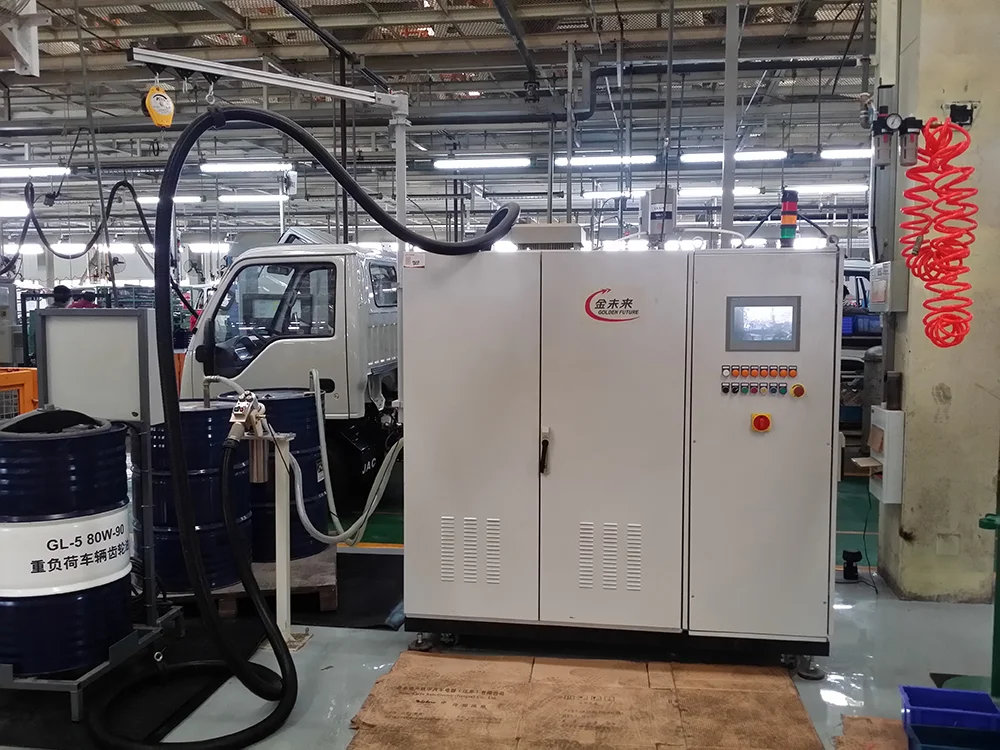
This article explains what a pneumatic plunger pump is, how it works in a refrigerant filling context, and why its characteristics matter for automotive refrigerant charging. It is written for automotive engineers, manufacturing engineers, production managers, and purchasing managers who need to understand the equipment before specifying or integrating it into a filling system. The discussion focuses on the pump's function and its relationship to the wider filling process, not on unverified performance figures.
Product Overview
A pneumatic plunger pump is a positive displacement pump in which a plunger moves inside a cylinder to draw in and discharge a fluid. The plunger is driven by compressed air, typically through a reciprocating air motor or a pneumatic drive section. Because the drive is pneumatic, the pump does not rely on an electric motor located at the pump itself. This is a relevant characteristic in refrigerant filling, where the medium and the surrounding environment may require equipment designed around compressed-air actuation.
In refrigerant filling, the pump's job is to move refrigerant from a supply source toward the point of delivery, whether that is a charging manifold, a buffer vessel, or a direct connection to the vehicle's refrigerant circuit. The pump contributes to the filling circuit but is only one element of it. Other elements typically include the refrigerant supply, filtration and moisture control, pressure regulation, metering or weighing devices, valves, and the control system that sequences the filling cycle. The pump should therefore be understood as part of an integrated fluid filling system rather than as a standalone solution.
Pneumatic plunger pumps are used in industrial fluid handling where a compressed-air drive is preferred. In refrigerant filling, the selection of the pump type depends on factors such as the refrigerant being handled, the required filling quantity, the filling pressure, and the way the pump is integrated into the filling station.
Working Principle
The working principle of a pneumatic plunger pump can be described in general terms. Compressed air is supplied to the pneumatic drive section. The air pressure acts on a piston or diaphragm within the drive, which is connected to the plunger. As the drive reciprocates, the plunger moves back and forth inside the pump cylinder.
On the suction stroke, the plunger moves in a direction that increases the cylinder volume. An inlet check valve opens, and fluid enters the cylinder. On the discharge stroke, the plunger moves in the opposite direction, reducing the cylinder volume. The inlet check valve closes, an outlet check valve opens, and fluid is pushed out of the cylinder into the discharge line. The check valves ensure that flow moves in one direction through the pump.
Because the pump is a positive displacement type, the volume of fluid displaced per stroke is determined by the plunger geometry and the stroke length. The flow rate depends on the stroke frequency, which in turn depends on the compressed-air supply and the pump's internal design. In a refrigerant filling system, the pump output is integrated with the filling control logic. The control system manages the filling sequence, including the start and stop of the pump, the target quantity, and the pressure conditions in the filling circuit.
In a complete automated filling cycle, the pump may operate alongside other process steps such as evacuation, leak testing, and pressure-controlled filling. For example, in an automated vacuum filling and leak testing process, the system can first perform vacuum evacuation, then carry out leak testing under vacuum and pressure conditions, and after confirming system tightness, create a secondary vacuum before the filling medium is introduced under controlled pressure. Once the filling pressure reaches equilibrium, the system can automatically vent to atmospheric pressure and perform back suction to remove excess medium. This describes a complete cycle that integrates evacuation, leak testing, pressure filling, and back suction. A pneumatic plunger pump can be part of the filling section of such a cycle, working together with the valves, sensors, and control system that govern the sequence.
Key Features of Pneumatic Plunger Pumps in Refrigerant Filling
The following characteristics are generally associated with pneumatic plunger pumps and are relevant when they are considered for refrigerant filling duties.
Pneumatic drive: The pump is driven by compressed air rather than an electric motor at the pump location. This can simplify installation in areas where an electric drive is not preferred.
Positive displacement operation: The plunger displaces a defined volume per stroke, which supports controlled delivery of the fluid.
Reciprocating action: The back-and-forth movement of the plunger draws fluid in and pushes it out through check valves, providing a pulsating but directed flow.
Integration with filling control: The pump can be started, stopped, and sequenced by the filling system's control logic, allowing it to work within an automated filling cycle.
Compatibility with filling circuits: The pump can be combined with filtration, pressure regulation, metering, and valve components to form a complete refrigerant filling circuit.
These features describe the pump's general behavior. The specific configuration of a refrigerant filling system depends on the refrigerant, the required filling quantity, and the design of the filling station.
Applications in Automotive Refrigerant Filling
Pneumatic plunger pumps are relevant to refrigerant filling in automotive manufacturing and assembly contexts. The following application areas are typical of the broader filling equipment used in these environments.
Automotive manufacturing: Refrigerant charging is part of the assembly process for vehicles with air conditioning systems. A filling system that includes a pneumatic plunger pump can be integrated into the production line to charge the refrigerant circuit.
Automotive components: Refrigerant filling is also relevant to component manufacturing, where parts such as compressors, condensers, and refrigerant lines may require charging or testing with refrigerant.
New energy vehicles: Thermal management systems in new energy vehicles use refrigerant circuits, and filling equipment is used to charge these systems during production.
Powertrain manufacturing: While refrigerant filling is most commonly associated with vehicle assembly, filling equipment is also used in powertrain-related production where thermal management components are manufactured.
Intelligent factory automation: Refrigerant filling stations can be integrated into automated production lines, with the pump controlled as part of the overall filling sequence.
These application areas reflect the general use of refrigerant filling equipment in automotive production. The suitability of a specific pump and filling system depends on the requirements of the individual production process.
Benefits of Pneumatic Plunger Pumps in Refrigerant Filling
When a pneumatic plunger pump is used in a refrigerant filling system, it can contribute to the following aspects of the filling process.
Controlled delivery: The positive displacement action supports controlled movement of refrigerant through the filling circuit.
Repeatability: Because the pump displaces a defined volume per stroke, the filling process can be structured to repeat from one cycle to the next, as part of the overall filling control strategy.
Integration with automation: The pneumatic drive can be controlled by the filling system's PLC or control logic, allowing the pump to operate within an automated filling sequence.
Compatibility with filling sequences: The pump can be used in filling circuits that include evacuation, leak testing, pressure filling, and back suction steps.
Process consistency: By working with the control system, the pump supports a consistent filling cycle across production runs.
These benefits are qualitative and relate to the pump's role in the filling process. They do not imply specific performance figures, which depend on the system design and operating conditions.
Why Choose KINMARK for Refrigerant Filling Equipment
KINMARK is a manufacturer of automotive intelligent manufacturing equipment, with product lines that include marking and traceability systems, servo press systems, fluid filling systems, and robot automation systems. The company's fluid filling systems are developed for automotive manufacturing, automotive components, new energy vehicles, powertrain manufacturing, and intelligent factory automation.
KINMARK's filling equipment is designed around automated filling processes. For example, the Antifreeze Vacuum Filling Machine uses a PLC-controlled system to automate the complete coolant filling process. The system performs vacuum evacuation, leak testing under vacuum and pressure conditions, a secondary vacuum, pressure filling, venting to atmospheric pressure, and back suction to achieve the specified liquid level. This illustrates the type of integrated filling cycle that KINMARK develops for automotive production lines.
KINMARK provides a 12-month warranty on the complete machine, professional technical support, long-term maintenance service, efficient after-sales support, remote diagnosis, and technical assistance. The company also provides installation and commissioning, with engineers supporting equipment installation, commissioning, and operator training to help customers start production smoothly.
KINMARK has established long-term cooperation with automotive manufacturers and suppliers. The company's experience in automotive filling and assembly equipment is relevant when specifying refrigerant filling systems that may include pneumatic plunger pumps.
Note: The selection of a pneumatic plunger pump for a refrigerant filling application depends on the refrigerant, the required filling quantity, the filling pressure, and the design of the filling station. The pump should be specified as part of a complete filling system that includes filtration, pressure regulation, metering, valves, and control logic.
Frequently Asked Questions
What is a pneumatic plunger pump?
A pneumatic plunger pump is a positive displacement pump driven by compressed air. A plunger moves inside a cylinder, drawing fluid in on the suction stroke and discharging it on the discharge stroke through check valves. The pneumatic drive converts compressed-air energy into the reciprocating motion of the plunger.
Why is a pneumatic plunger pump used in refrigerant filling?
A pneumatic plunger pump can be used in refrigerant filling because its positive displacement action supports controlled delivery of the refrigerant, and its pneumatic drive allows it to be integrated into a filling system controlled by the system's PLC or control logic. It is one option among several pump types, and the choice depends on the specific filling requirements.
How does the pump fit into an automated refrigerant filling cycle?
In an automated filling cycle, the pump operates as part of a sequence that can include evacuation, leak testing, pressure filling, and back suction. The control system manages the start and stop of the pump, the target filling quantity, and the pressure conditions. The pump works together with valves, sensors, and other components to complete the filling cycle.
Can a pneumatic plunger pump be used for other automotive fluids?
Pneumatic plunger pumps are used in industrial fluid handling for a range of fluids. In automotive production, filling systems are used for fluids such as coolant and antifreeze as well as refrigerant. The suitability of a specific pump for a given fluid depends on the fluid properties and the system design.
What should be considered when specifying a refrigerant filling system?
When specifying a refrigerant filling system, consider the refrigerant being handled, the required filling quantity, the filling pressure, the level of automation, and the integration with the production line. The pump should be selected as part of the complete filling circuit, which includes filtration, pressure regulation, metering, valves, and control logic. KINMARK's refrigerant vacuum filling machine can be reviewed against these requirements.
Conclusion
A pneumatic plunger pump is a positive displacement pump driven by compressed air, and it can play a role in refrigerant filling by moving refrigerant through the filling circuit in a controlled manner. Its operation is based on the reciprocating motion of a plunger inside a cylinder, with check valves directing flow in one direction. In an automated refrigerant filling system, the pump is integrated with the control logic that manages the filling sequence, which may include evacuation, leak testing, pressure filling, and back suction.
For automotive engineers and production managers, understanding the pump's function helps in specifying and integrating refrigerant filling equipment. The pump is one element of a complete filling system, and its selection depends on the refrigerant, the required filling quantity, the filling pressure, and the design of the filling station. KINMARK develops fluid filling systems for automotive manufacturing, automotive components, new energy vehicles, powertrain manufacturing, and intelligent factory automation, and provides installation, commissioning, training, and after-sales support for its equipment.
If you're interested in any of the equipment mentioned in this article, feel free to contact our sales engineers for detailed product information and customized technical solutions.