How to Mark 2D Codes on Flexible Labels for Traceability
Introduction
Traceability in automotive manufacturing depends on durable, machine-readable identification that survives the full production lifecycle. As flexible film labels are increasingly used for component identification, warning labels, and regulatory markings, the ability to apply high-contrast 2D codes onto these materials has become a practical production requirement. Flexible labels present specific handling challenges: they stretch, shift, and require precise tension control during processing. This article explains how fiber laser marking systems for flexible labels are used to mark 2D codes on flexible labels, covering the working principle, key features, applications, and integration considerations for automotive and industrial production environments.
Product Overview
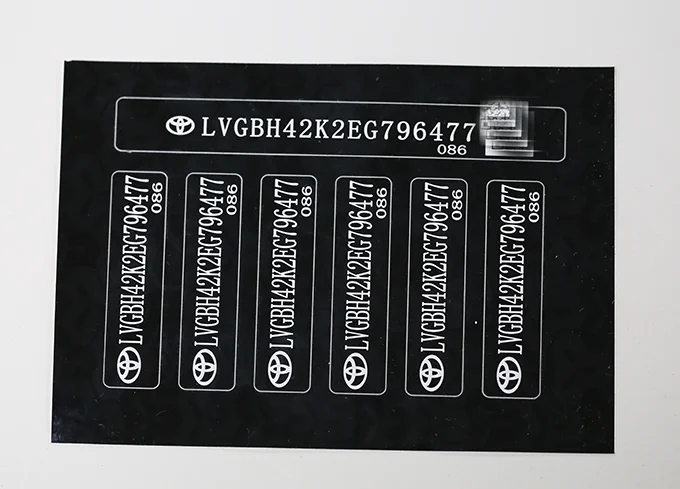
The KINMARK Flexible Fiber Laser Marking Machine is designed for laser marking on flexible film labels from brands such as TESA, 3M, and Schreiner. It supports automated processing that includes unwinding, inspection, leveling, marking, and cutting. The system integrates multiple process steps into one automated solution, producing customized identification labels with stable quality.
The machine supports permanent marking of characters, texts, graphics, 1D barcodes, and 2D codes on flexible label materials. Its modular design allows adaptation to different production requirements and provides flexible integration options for industrial applications. For other industrial marking requirements, KINMARK also provides a range of laser marking machines.
Working Principle
The system processes flexible film labels through a sequence of automated stages. The material is first unwound from the supply reel and fed into the processing path. An inspection stage checks the label material, followed by a leveling step that prepares the surface for consistent marking. The fiber laser then applies the required marking—characters, text, graphics, 1D barcodes, or 2D codes—onto the label surface. After marking, the material advances to a cutting stage that separates the finished labels.
The laser marking process creates permanent marks on the flexible film. Because the marking is applied by the laser system rather than by ink or thermal transfer, the resulting codes are integrated into the label surface and are designed to remain legible for identification and traceability purposes. These capabilities support broader industrial marking and traceability requirements.
Key Features
Automated processing: Unwinding, inspection, leveling, marking, and cutting are integrated into a single automated workflow.
Flexible label compatibility: Designed for laser marking on flexible film labels from brands such as TESA, 3M, and Schreiner.
Permanent marking: Supports characters, texts, graphics, 1D barcodes, and 2D codes on flexible label materials.
Modular design: Allows fast adaptation to different production requirements and provides flexible integration options.
Standardized core components: Core components are standardized and the marking process is mature, supporting reliable operation for continuous production.
Applications
Flexible labels marked with 2D codes are used across automotive manufacturing, automotive components, new energy vehicles, powertrain manufacturing, and intelligent factory automation. The automated processing capability supports production environments where labels must be generated, marked, and cut as part of a continuous workflow. In automotive production, these applications can form part of wider marking and traceability solutions.
Typical label content includes identification data, part numbers, and traceability codes. Because the system supports 1D and 2D barcodes as well as text and graphics, it can produce labels for component identification, regulatory marking, and production tracking. The modular design allows the system to be adapted to different label formats and production requirements.
Benefits
Using a fiber laser marking system for flexible label production offers several practical benefits for manufacturing operations:
Improved traceability: Permanent 2D codes on labels support reliable identification throughout production and logistics.
Process consistency: Automated unwinding, leveling, marking, and cutting reduce manual handling variability.
Production integration: The modular system can be integrated into existing production lines for automated label processing.
Flexible adaptation: The system can be adapted to different label materials and production requirements.
Continuous operation: Standardized core components and a mature marking process support reliable operation in continuous production.
Why Choose KINMARK
KINMARK has been engaged in marking and traceability systems since 1996, developing from marking equipment into a manufacturer of intelligent automotive automation equipment. The company's product lines include marking and traceability systems, servo press systems, fluid filling systems, and robot automation systems.
KINMARK serves automotive manufacturing, automotive components, new energy vehicles, powertrain manufacturing, and intelligent factory automation. The company has established long-term cooperation with domestic and international automotive manufacturers and also provides automation solutions to industrial enterprises. The Flexible Fiber Laser Marking Machine reflects this experience in marking and traceability, with a focus on standardized core components and mature marking processes.
Integration note: The system supports automated unwinding, inspection, leveling, marking, and cutting. When planning integration, confirm label material specifications, required code types, and production line interface requirements with the equipment supplier.
Frequently Asked Questions
What types of codes can be marked on flexible labels?
The system supports marking of characters, texts, graphics, 1D barcodes, and 2D codes on flexible film labels. This allows labels to carry identification data, part numbers, and traceability codes as required by the production process.
Which flexible label materials are supported?
The equipment is designed for laser marking on flexible film labels from brands such as TESA, 3M, and Schreiner. Specific material compatibility should be confirmed with the supplier for each application.
What processing steps are automated?
The system integrates unwinding, inspection, leveling, marking, and cutting into an automated workflow. This reduces manual handling and supports consistent label production.
Can the system be integrated into an existing production line?
The modular design provides flexible integration options for industrial applications. Integration requirements depend on the specific production line configuration and should be reviewed with the equipment supplier.
What support is available after installation?
The complete machine is covered by a 12-month warranty. KINMARK provides installation, commissioning, and operator training, along with after-sales support, remote diagnosis, and technical assistance.
Conclusion
Marking 2D codes on flexible labels requires a system that can handle the material consistently while producing permanent, machine-readable marks. The KINMARK Flexible Fiber Laser Marking Machine addresses this by combining automated unwinding, inspection, leveling, marking, and cutting with fiber laser marking of characters, texts, graphics, 1D barcodes, and 2D codes. For automotive and industrial manufacturers, this supports traceability requirements and integration into production workflows.
If you're interested in any of the equipment mentioned in this article, feel free to contact our sales engineers for detailed product information and customized technical solutions.