How to Improve VIN Traceability in Automotive Manufacturing
Introduction
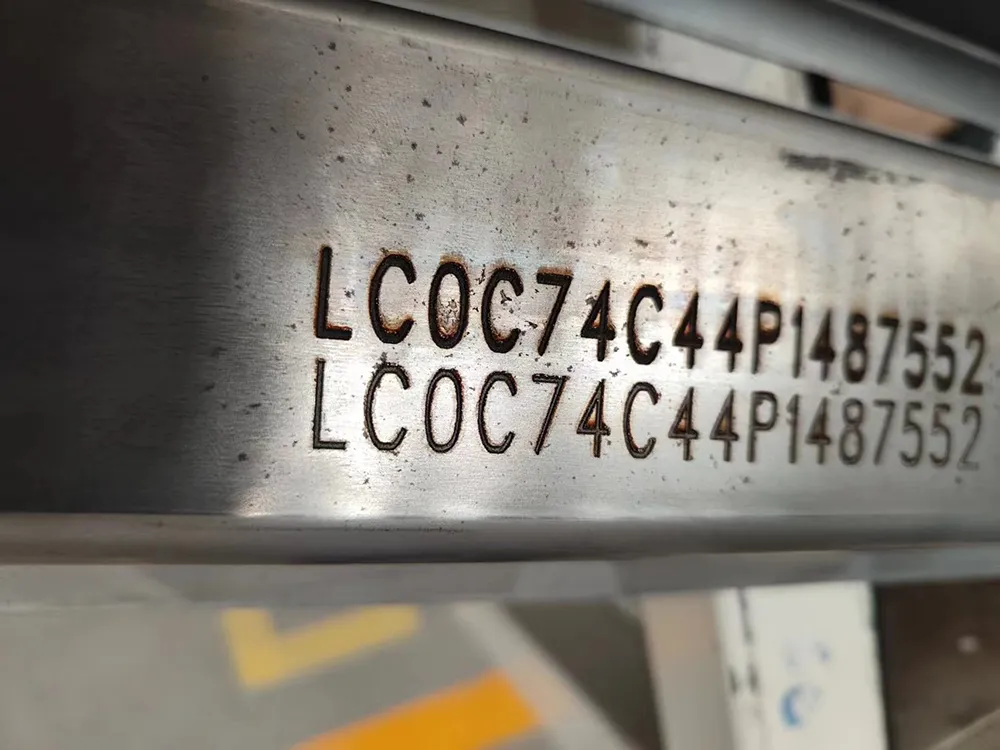
VIN traceability is a core requirement in automotive manufacturing. The Vehicle Identification Number links a finished vehicle to its body-in-white, powertrain, components, and production records. When a VIN is incomplete, illegible, or difficult to verify on the line, traceability breaks down at the exact point where it matters most: the marking station on the body-in-white line.
Improving VIN traceability is not only a marking quality issue. It involves marking depth, material compatibility, integration with automated production lines, and online verification of the marked characters. This article explains the practical factors that affect VIN traceability and how deep laser marking, vision guidance, and automatic inspection systems support reliable VIN identification in automotive manufacturing.
Why VIN Traceability Is Challenging in Automotive Manufacturing
Modern body structures increasingly use high-strength and hot-formed steel. These materials improve crash performance and reduce weight, but they also make permanent marking more difficult. A shallow mark may become unreadable after painting or rubbing, while an inconsistent mark can fail OCR recognition during inspection.
Production environments add further challenges. Body-in-white lines operate at high cycle rates, with robots, conveyors, and assisted manipulators moving parts through the marking station. If the marking system cannot be integrated into this flow, or if positioning is inaccurate, VIN quality and traceability suffer.
In practice, VIN traceability problems usually come from a combination of factors:
Marking depth that is too shallow for high-strength steel
Poor rubbing performance after the painting process
Inaccurate positioning on the body-in-white
No online inspection to confirm marking quality
Marking equipment that is difficult to integrate with robots or manipulators
Product Overview: Deep Laser Marking for VIN Applications
KINMARK Deep Laser Marking Machine is designed for deep VIN marking on high-strength materials. It enables permanent VIN deep marking on high-strength steel plates with yield strength exceeding 700 MPa and hot-formed steel plates with strength up to 1500 MPa. The marking depth on body-in-white can reach more than 0.2 mm.
The system is intended for automotive mass production environments where the VIN must remain clear, readable, and traceable throughout the vehicle lifecycle. It supports robot integration and intelligent traceability, and it is positioned as part of a marking and traceability system rather than a standalone marking device.
Technical Specifications
| Power Supply | AC220V ±10%, 50Hz ±2% |
| Power Consumption | <1000W |
| Laser Power | 200W |
| Marking Area | 112mm × 112mm |
| Marking Depth | ≥0.2mm |
| Operating Temperature | 0~40℃ |
| Operating Humidity | ≤90% RH (Non-condensing) |
Working Principle of Deep VIN Marking
Deep laser marking uses a focused laser beam to remove or alter material at the surface of the body-in-white, creating a permanent VIN with a defined depth. The marking depth is a key parameter: on high-strength and hot-formed steel, a deeper mark is more likely to remain legible after painting and rubbing.
KINMARK Deep Laser Marking Machine adopts a special marking process to ensure clear rubbing results after painting. This process-oriented approach addresses the real production condition in which the VIN is marked before paint, then inspected and traced after paint.
For automated lines, the marking head can be integrated with industrial robots or assisted manipulators. When a 3D vision guidance system is optionally configured, the system performs precise positioning and accurate marking, which supports consistent VIN placement on the body-in-white. Explore KINMARK's industrial marking solutions for automated production applications.
Key Features That Support VIN Traceability
Deep VIN Marking: Permanent VIN deep marking on high-strength steel plates with yield strength exceeding 700 MPa and hot-formed steel plates up to 1500 MPa, with marking depth on body-in-white reaching more than 0.2 mm.
Easy Rubbing: A special marking process ensures clear rubbing results after painting, which is essential for VIN readability and traceability.
Easy Integration: Various mounting interfaces allow quick integration with industrial robots or assisted manipulators for automated production lines.
Vision Guidance: An optional 3D vision guidance system enables precise positioning and accurate marking to improve production efficiency.
Automatic Traceability: Optional 3D laser scanning measurement and OCR recognition systems provide online inspection of marking quality and support 100% traceability.
How to Improve VIN Traceability: Practical Measures
1. Select a Marking Depth Suitable for the Material
VIN traceability starts with a mark that survives the painting process and remains readable over time. For high-strength steel and hot-formed steel, a marking depth of more than 0.2 mm on body-in-white provides a more durable mark than shallow surface marking. The KINMARK deep laser marking system is specified for this depth range on these materials.
2. Verify Rubbing Performance After Painting
A VIN that is clear before painting may become difficult to rub after painting. Choosing a marking process designed for clear rubbing results after painting helps maintain VIN legibility through the paint shop and into final assembly.
3. Integrate Marking into the Automated Line
Manual marking stations introduce variability in position and depth. Integrating the marking head with robots or assisted manipulators, using the mounting interfaces provided by the system, supports consistent VIN marking within the production cycle.
4. Use Vision Guidance for Positioning
Accurate positioning is a prerequisite for accurate marking. An optional 3D vision guidance system enables precise positioning and accurate marking, reducing the risk of misplaced or incomplete VINs on the body-in-white.
5. Add Online Inspection and OCR Recognition
Traceability requires verification, not just marking. Optional 3D laser scanning measurement and OCR recognition systems provide online inspection of marking quality and support 100% traceability. This allows marking quality to be checked in the production flow rather than discovered later.
Traceability tip: Treat VIN marking, positioning, and inspection as one connected process. Improving only the laser source, without addressing positioning and verification, rarely resolves traceability issues on a body-in-white line.
Applications
Deep laser VIN marking is applied in automotive manufacturing environments where permanent identification is required on high-strength body structures. Typical application areas include:
Body-in-white VIN marking on high-strength steel and hot-formed steel
Automated production lines with robot or manipulator integration
Marking and traceability systems linked to intelligent factory automation
Automotive manufacturing and automotive components production
New energy vehicle body and structural marking
Benefits of a Deep Laser Marking Approach
Improved traceability: Deep, permanent VIN marks combined with optional OCR and 3D scanning support online quality inspection and 100% traceability.
Better process consistency: Robot integration and optional 3D vision guidance support repeatable positioning and marking.
Production integration: Mounting interfaces allow the marking system to be integrated into automated production lines.
Material compatibility: The system is designed for high-strength steel exceeding 700 MPa and hot-formed steel up to 1500 MPa.
Quality management: Online inspection of marking quality helps identify issues within the production process.
Why Choose KINMARK
KINMARK (Jinan Zhongzheng Jinma Technology Co., Ltd.) was founded in 1996 and is a manufacturer of marking and traceability systems, servo press systems, fluid filling systems, and robot automation systems. The company is a Shandong Province "Gazelle" enterprise and a "Specialized and Sophisticated" enterprise, with offices and maintenance centers in Shanghai, Beijing, Guangzhou, Changchun, Wuhan, and Chongqing.
KINMARK began with marking machines and has developed into automotive intelligent automation equipment. Its marking and traceability product line has supported automotive manufacturers and suppliers across vehicle assembly, powertrain, automotive components, new energy vehicles, and intelligent factory automation. For VIN traceability projects, this background means the marking system can be considered as part of a broader traceability and automation solution.
The Deep Laser Marking Machine is covered by a 12-month warranty for the complete machine, with professional technical support and long-term maintenance service. After-sales support includes remote diagnosis and technical assistance, and engineers provide equipment installation, commissioning, and operator training.
Frequently Asked Questions
What marking depth is required for VIN traceability on high-strength steel?
The KINMARK Deep Laser Marking Machine enables VIN deep marking on body-in-white with a marking depth of more than 0.2 mm. It is designed for high-strength steel plates with yield strength exceeding 700 MPa and hot-formed steel plates with strength up to 1500 MPa.
How does the system ensure the VIN remains readable after painting?
The system adopts a special marking process to ensure clear rubbing results after painting. Combined with a marking depth of more than 0.2 mm on body-in-white, this supports VIN legibility through the paint process.
Can the marking system be integrated with robots on an automated line?
Yes. The system is designed with various mounting interfaces and can be quickly integrated with industrial robots or assisted manipulators for automated production lines.
How is marking quality verified for traceability?
Optional 3D laser scanning measurement and OCR recognition systems provide online inspection of marking quality and support 100% traceability. An optional 3D vision guidance system supports precise positioning and accurate marking.
What are the power and environmental requirements?
The system operates on AC220V ±10%, 50Hz ±2%, with power consumption below 1000W. The operating temperature range is 0~40℃, and operating humidity is ≤90% RH (non-condensing). The laser power is 200W and the marking area is 112mm × 112mm.
Conclusion
Improving VIN traceability in automotive manufacturing depends on more than marking speed or equipment selection. It requires a marking depth suitable for high-strength and hot-formed steel, a process that maintains readability after painting, integration into automated production lines, accurate positioning, and online verification of marking quality.
Deep laser marking addresses these requirements by enabling permanent VIN marking with a depth of more than 0.2 mm on body-in-white, supporting robot integration, and offering optional 3D vision guidance, 3D laser scanning measurement, and OCR recognition for online inspection. For manufacturers working with high-strength body structures, treating VIN marking as a connected traceability process is the most practical path to reliable vehicle identification.
If you're interested in any of the equipment mentioned in this article, feel free to contact our sales engineers for detailed product information and customized technical solutions.