How Does Laser Marking on Flexible Labels Work?
Introduction
Laser marking on flexible labels is a production process used to create permanent identification marks on flexible film label materials. In automotive and industrial manufacturing, labels are not simple printed tags. They carry part numbers, serial numbers, 1D barcodes, and 2D codes that must remain readable throughout the life of a component. When a label is applied to a powertrain part, an electrical module, or a vehicle assembly, its marking becomes part of the product traceability record.
Flexible film labels present specific handling challenges. The material is thin, can stretch or shift during transport, and is often supplied in roll form. Marking must be accurate, repeatable, and integrated with other operations such as unwinding, inspection, leveling, and cutting. This article explains how laser marking on flexible labels works, what equipment is involved, and how the process supports industrial traceability requirements.
Product Overview
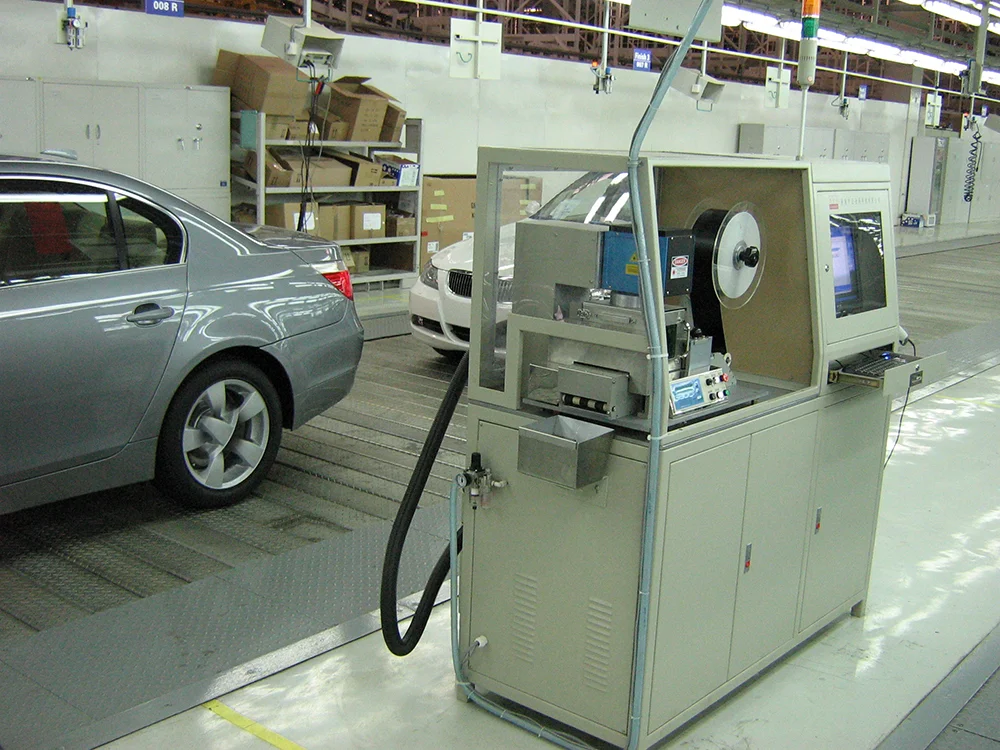
A flexible fiber laser marking machine is designed specifically for laser marking on flexible film labels. KINMARK's Flexible Fiber Laser Marking Machine is built for laser marking on flexible film labels from brands such as TESA, 3M, and Schreiner. It supports automated processing that includes unwinding, inspection, leveling, marking, and cutting.
The system integrates multiple process steps into one automated solution. Instead of treating marking as an isolated operation, it handles the label from the input roll through to the finished, cut label. This integrated approach is intended to produce customized identification labels with stable quality.
The machine supports permanent marking of characters, texts, graphics, 1D barcodes, and 2D codes on flexible label materials. The modular design allows adaptation to different production requirements and provides flexible integration options for industrial applications.
Working Principle
Laser marking on flexible labels uses a focused laser beam to create marks on the surface of the label material. In a fiber laser marking machine, the laser source generates a beam that is directed and focused onto the label surface. The interaction between the laser energy and the material produces a permanent mark. Depending on the material and the marking parameters, the result can be a color change, a surface modification, or another controlled effect that remains visible and machine-readable.
For flexible film labels, the process is not only about the laser itself. The label must be presented to the marking position in a stable and consistent way. This is why the machine integrates several handling steps before marking.
Step 1: Unwinding
Labels are supplied on rolls. The unwinding stage feeds the flexible film from the roll into the processing line. Controlled unwinding helps maintain consistent tension, which is important because flexible materials can stretch or become misaligned if tension varies.
Step 2: Inspection
The inspection stage checks the label material as it moves through the machine. This step helps identify issues before marking, so that defective or misaligned material is not processed further. Inspection supports stable quality in the final marked label.
Step 3: Leveling
Because flexible labels can have slight unevenness or curl, a leveling step prepares the material for marking. A flat and stable label surface helps the laser maintain consistent focus and marking quality across the label area.
Step 4: Marking
At the marking station, the fiber laser writes the required content onto the label. This content can include characters, texts, graphics, 1D barcodes, and 2D codes. The marking is permanent, which means it is intended to remain legible and scannable after the label is applied to a product.
Step 5: Cutting
After marking, the label is cut to the required format. The cutting step completes the automated process and produces the finished label that can be used in downstream operations.
Process note: The sequence of unwinding, inspection, leveling, marking, and cutting is an integrated workflow. The exact configuration can be adapted to different production requirements because the system uses a modular design.
Key Features
Flexible label compatibility: Designed for laser marking on flexible film labels from brands such as TESA, 3M, and Schreiner.
Automated processing: Supports unwinding, inspection, leveling, marking, and cutting in one system.
Permanent marking: Supports marking of characters, texts, graphics, 1D barcodes, and 2D codes on flexible label materials.
Clear and reliable results: The marking process is intended to produce clear and reliable marks suitable for identification and traceability.
Modular design: Allows fast adaptation to different production requirements and provides flexible integration options for industrial applications.
Standardized core components: KINMARK laser marking technology uses standardized core components and mature marking processes.
Stable industrial performance: Designed for reliable operation in continuous production environments.
Applications
Laser marking on flexible labels is used in industrial environments where durable identification and traceability are required. The following application areas are relevant to this type of equipment.
Automotive Manufacturing
In vehicle assembly, labels are used to identify components, assemblies, and parts. Permanent marking of 1D and 2D codes supports tracking through production and after delivery.
Automotive Components
Component suppliers need labels that remain readable in service. Flexible film labels with laser-marked codes can be applied to parts where traceability is part of quality management.
New Energy Vehicles
New energy vehicle production involves battery systems, electric drive units, and electronic components. Labels used in these areas require clear and permanent marking for identification.
Powertrain Manufacturing
Engines, transmissions, and related powertrain components often require serialized identification. Laser-marked flexible labels can support this requirement.
Intelligent Factory Automation
Automated label production fits into intelligent factory environments where marking, inspection, and material handling are integrated. The modular design of the machine supports integration into automated lines.
Benefits
The use of laser marking on flexible labels offers several practical benefits for industrial production.
Improved traceability: Permanent 1D and 2D codes support product identification and tracking.
Better process consistency: Integrated unwinding, inspection, leveling, marking, and cutting help maintain stable quality.
Production integration: The automated system can be integrated into industrial production environments.
Flexible adaptation: The modular design allows the system to respond to different production requirements.
Reliable operation: Standardized core components and mature marking processes support continuous production.
These benefits relate to process capability and traceability. They do not represent specific performance percentages or cost figures, which depend on the individual production setup.
Why Choose KINMARK
KINMARK has been involved in marking and traceability systems since its early development. The company started with marking machines and expanded into intelligent automotive automation equipment. Its product lines include marking and traceability systems, servo press systems, fluid filling systems, and robot automation systems.
The Flexible Fiber Laser Marking Machine is part of KINMARK's marking and traceability product range. It is designed for flexible label processing and supports automated production of customized identification labels.
KINMARK provides a 12-month warranty for the complete machine, professional technical support, and long-term maintenance service. The company also offers fast response service, including efficient after-sales support, remote diagnosis, and technical assistance. Engineers provide equipment installation, commissioning, and operator training to help customers start production smoothly.
KINMARK has established long-term cooperation with automotive manufacturers and also provides automation solutions to other industrial companies. This background supports its work in marking and traceability applications.
Frequently Asked Questions
What materials can be marked with a flexible label laser marking machine?
The KINMARK Flexible Fiber Laser Marking Machine is designed for laser marking on flexible film labels from brands such as TESA, 3M, and Schreiner. It supports marking of characters, texts, graphics, 1D barcodes, and 2D codes on flexible label materials.
What steps are included in the automated label production process?
The automated process includes unwinding, inspection, leveling, marking, and cutting. These steps are integrated into one system to produce customized identification labels with stable quality.
Can the machine be integrated into an existing production line?
The machine uses a modular design that allows fast adaptation to different production requirements and provides flexible integration options for industrial applications.
What support does KINMARK provide after installation?
KINMARK provides a 12-month warranty for the complete machine, professional technical support, and long-term maintenance service. Fast response service includes remote diagnosis and technical assistance. Engineers also provide installation, commissioning, and operator training.
Conclusion
Laser marking on flexible labels is an automated process that combines material handling with permanent marking. The workflow typically includes unwinding, inspection, leveling, marking, and cutting. Each step contributes to the final quality of the label and its suitability for identification and traceability.
For automotive and industrial manufacturers, flexible film labels are a practical way to carry serial numbers, part numbers, and barcodes. A fiber laser marking machine designed for flexible labels supports this requirement by marking characters, texts, graphics, 1D barcodes, and 2D codes on materials from brands such as TESA, 3M, and Schreiner.
KINMARK's Flexible Fiber Laser Marking Machine integrates these capabilities into one automated solution. With a modular design, standardized core components, and support services that include installation, commissioning, and training, it is positioned for use in automotive manufacturing, automotive components, new energy vehicles, powertrain manufacturing, and intelligent factory automation.
If you're interested in any of the equipment mentioned in this article, feel free to contact our sales engineers for detailed product information and customized technical solutions.