
What Determines Refrigerant Filling Accuracy?
Introduction
Filling accuracy is one of the most important quality characteristics of any fluid filling process on an automotive production or assembly line. Whether the medium is coolant, antifreeze or a comparable service fluid, the volume and the final liquid level inside the component must match the specification. If the fill is short, the system may not provide sufficient thermal protection. If the fill is excessive, expansion during operation can lead to overflow, pressure build-up or component damage.
Filling accuracy is therefore not a single number produced by one component. It is the result of a controlled sequence of process steps, each of which contributes to the final result. This technical guide explains what determines filling accuracy in an automated vacuum filling system, how the individual process stages interact, and which equipment characteristics support a repeatable and stable fill.
What Filling Accuracy Means in Practice
Filling accuracy describes how closely the actual amount of fluid delivered into a system matches the target value. In industrial filling equipment, accuracy is usually expressed as a percentage of the filling volume, and it is often accompanied by a separate specification for liquid level accuracy, expressed in millimetres.
The two values describe different aspects of the same process. Filling precision refers to the quantity of medium introduced into the circuit. Liquid level accuracy refers to the position of the fluid surface inside the reservoir or component after filling is complete. A process can deliver the correct volume and still produce an incorrect liquid level if air remains trapped in the system or if the fluid settles after the fill.
For automotive production, both values matter. The filled component must contain the specified amount of fluid, and the visible level must remain stable so that downstream inspection and the end customer both see the correct condition.
The Process Sequence Behind an Accurate Fill
In an automated vacuum filling machine, accuracy is produced by a defined sequence of operations rather than by a single filling action. A typical cycle includes vacuum evacuation, leak testing, a secondary vacuum, pressure filling, pressure equilibrium, venting to atmospheric pressure and back suction.
Vacuum Evacuation
The first step removes air and moisture from the circuit before any fluid is introduced. By lowering the internal pressure, the system reduces the amount of trapped gas that could otherwise remain inside the component. Residual air is one of the most common causes of unstable liquid levels, because trapped gas expands or migrates after the fill and changes the apparent level.
Leak Testing Under Vacuum and Pressure
Before filling, the system verifies that the circuit is tight. Negative pressure leak testing and positive pressure leak testing confirm that the component does not lose fluid or pressure through an undetected opening. If a leak is present, no filling volume can be considered accurate, because part of the medium will escape after the process is complete. Leak testing therefore protects the accuracy of the fill by confirming that the system can hold what it receives.
Secondary Vacuum
After tightness is confirmed, a secondary vacuum is created before the coolant is introduced under controlled pressure. This step stabilises the internal conditions of the circuit and prepares it for filling. A consistent starting condition is essential for a repeatable result from cycle to cycle.
Pressure Filling and Equilibrium
The medium is introduced under controlled pressure. When the filling pressure reaches equilibrium, the system automatically vents to atmospheric pressure. This controlled transition prevents sudden pressure changes that could disturb the fluid distribution inside the circuit.
Back Suction and Liquid Level Correction
After venting, the system performs back suction to remove excess coolant. This step brings the fluid to the specified liquid level and helps prevent the coolant level from dropping after filling. Back suction is the stage that directly links filling accuracy to visible liquid level accuracy.
Key Factors That Determine Filling Accuracy
Process control method: A PLC-controlled system automates the full sequence, which keeps each cycle consistent and reduces variation caused by manual operation.
Vacuum quality: The capacity of the vacuum pump and the achievable negative pressure influence how completely air and moisture are removed before filling.
Leak tightness of the circuit: Verified tightness under vacuum and pressure conditions ensures that the measured fill remains in the system.
Filling pressure control: A controlled pressure range supports a stable flow of medium into the circuit.
Back suction control: Correct back suction determines the final liquid level and prevents the level from dropping after the fill.
Measurement and display: A defined measurement display range allows the operator to monitor the delivered volume during the cycle.
Product Overview: Antifreeze Vacuum Filling Machine
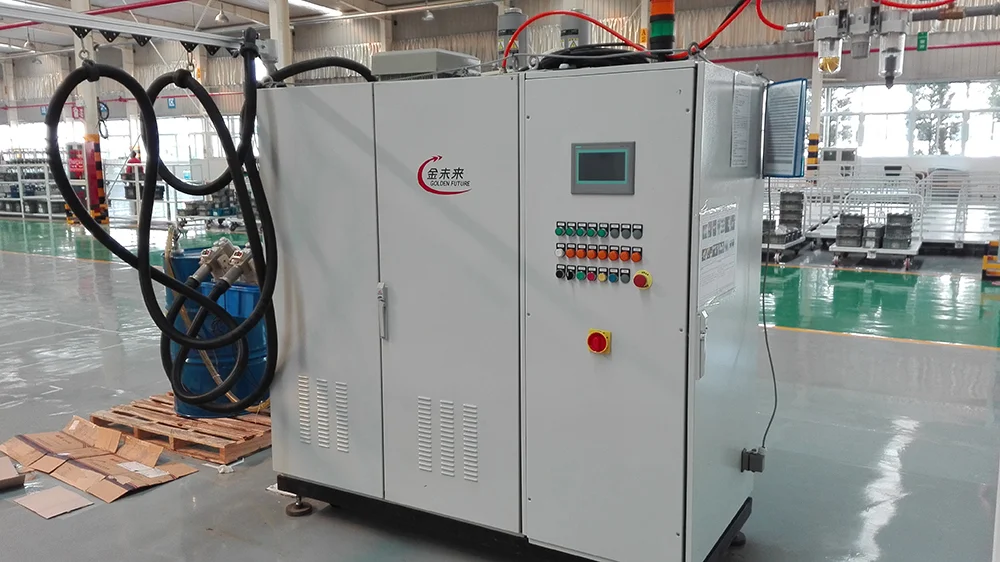
The Antifreeze Vacuum Filling Machine is designed for automated vacuum filling and leak testing, providing precise coolant and antifreeze filling with a stable liquid level. It is intended for automated coolant and antifreeze filling applications on automotive production and assembly lines.
The machine uses a PLC-controlled system to automate the complete coolant filling process. The equipment integrates vacuum evacuation, leak testing, pressure filling and back suction into a single cycle, which allows the filling process to run as part of a production line rather than as a separate manual operation.
Technical Specifications
| Parameter | Specification |
| Filling Medium | Antifreeze / Coolant |
| Filling Volume | 1–400 L |
| Filling Pressure | 1–4 bar |
| Maximum Filling Speed | 60 L/min |
| Filling Precision | ±0.5% |
| Liquid Level Accuracy | ±2 mm |
| Measurement Display Range | 0.0–999.9 L |
| Vacuum Pump Capacity | 40–65 m³/h |
| Negative Pressure Leak Rate | ≤0.5 mbar / 60 s |
| Positive Pressure Leakage | <1.4 g/year |
| Power Supply | AC 380 V ±10%, 50 Hz ±2% |
| Equipment Dimensions | 1800 × 1000 × 800 mm (customizable) |
How These Specifications Support Filling Accuracy
The specifications above show how the machine supports accuracy across the full process rather than at a single point. The filling precision of ±0.5% defines the accuracy of the delivered volume, while the liquid level accuracy of ±2 mm defines the accuracy of the final fluid surface. Together they cover both the quantity and the visible result of the fill.
The vacuum pump capacity of 40–65 m³/h supports the evacuation stage that removes air and moisture before filling. The negative pressure leak rate of ≤0.5 mbar / 60 s and the positive pressure leakage of <1.4 g/year define the tightness verification that takes place before the medium is introduced. The filling pressure range of 1–4 bar and the maximum filling speed of 60 L/min define the controlled introduction of the medium, while the measurement display range of 0.0–999.9 L allows the delivered volume to be monitored during the cycle.
Applications
The Antifreeze Vacuum Filling Machine is suitable for automated coolant and antifreeze filling applications on automotive production and assembly lines. Typical areas of use include:
Automotive manufacturing and final assembly
Powertrain manufacturing
Automotive components production
Intelligent factory automation environments
In these settings, the filling process is normally part of a larger production sequence, so the machine is designed to integrate vacuum evacuation, leak testing, pressure filling and back suction into one automated cycle.
Benefits of an Integrated Vacuum Filling Process
Improved process consistency: Automating the full sequence reduces variation between cycles.
Better traceability of the fill: The measurement display range allows the delivered volume to be observed during the process.
Stable liquid level: Back suction helps achieve the specified liquid level and prevents the level from dropping after filling.
Verified tightness: Leak testing under vacuum and pressure conditions confirms the circuit before filling.
Production integration: The complete cycle supports automated filling on production and assembly lines.
Why Choose KINMARK
KINMARK is a manufacturer of marking and traceability systems, servo press systems, fluid filling systems and robot automation systems for automotive intelligent manufacturing. The company has worked with automotive manufacturers and industrial customers across vehicle assembly, powertrain, automotive components and new energy vehicle production.
Fluid filling is one of the company's core product areas, alongside marking and traceability, servo press and robot automation systems. This focus allows filling equipment to be developed with an understanding of how the filling process fits into a broader production line.
KINMARK provides a 12-month warranty covering the complete machine, together with professional technical support and long-term maintenance service. The company also offers fast response service, including efficient after-sales support, remote diagnosis and technical assistance, as well as installation and commissioning by engineers, including operator training to help customers start production smoothly.
Note: Filling accuracy depends on the complete process sequence, not on a single component. Vacuum quality, verified tightness, controlled filling pressure and correct back suction all contribute to the final result.
Frequently Asked Questions
What is refrigerant filling accuracy?
Filling accuracy describes how closely the amount of fluid delivered into a system matches the target value. In industrial filling equipment, it is commonly expressed as a percentage of the filling volume, and it is often paired with a separate liquid level accuracy value expressed in millimetres.
Why is leak testing performed before filling?
Leak testing confirms that the circuit is tight before any medium is introduced. If a leak is present, part of the filling volume will escape after the process, so the fill cannot be considered accurate. Testing under vacuum and pressure conditions verifies tightness in advance.
What is the purpose of back suction in the filling cycle?
Back suction removes excess coolant after the system vents to atmospheric pressure. This helps achieve the specified liquid level and prevents the coolant level from dropping after filling.
What filling precision and liquid level accuracy does the Antifreeze Vacuum Filling Machine provide?
The machine provides a filling precision of ±0.5% and a liquid level accuracy of ±2 mm, with a filling volume range of 1–400 L and a filling pressure range of 1–4 bar.
Which applications is the Antifreeze Vacuum Filling Machine suitable for?
It is designed for automated coolant and antifreeze filling applications on automotive production and assembly lines, including vehicle manufacturing, powertrain manufacturing, automotive components production and new energy vehicle production.
Conclusion
Filling accuracy is the outcome of a controlled process sequence. Vacuum evacuation removes trapped air and moisture, leak testing confirms that the circuit can hold the medium, controlled pressure filling introduces the correct volume, and back suction establishes the specified liquid level. Each stage contributes to the final result, and each stage depends on the others.
For automotive production and assembly lines, an integrated vacuum filling machine supports this sequence within a single automated cycle. By combining vacuum evacuation, leak testing, pressure filling and back suction, the Antifreeze Vacuum Filling Machine supports precise coolant and antifreeze filling with a stable liquid level.
If you're interested in any of the equipment mentioned in this article, feel free to contact our sales engineers for detailed product information and customized technical solutions.