
Laser VIN Marking System for Vehicle Traceability
Introduction
The Vehicle Identification Number (VIN) is the primary identity record for every vehicle produced on a modern assembly line. It links the body-in-white to production data, quality records, registration documents, and after-sales service history. Because the VIN must remain readable for the entire life of the vehicle, the marking method used to apply it has a direct effect on traceability, regulatory compliance, and long-term data integrity.
A laser VIN marking system is an automated marking solution designed to apply permanent VIN characters directly onto vehicle body structures. Unlike surface printing or label-based identification, deep laser marking produces characters that penetrate into the material itself, which makes the identification resistant to paint, abrasion, and normal production handling.
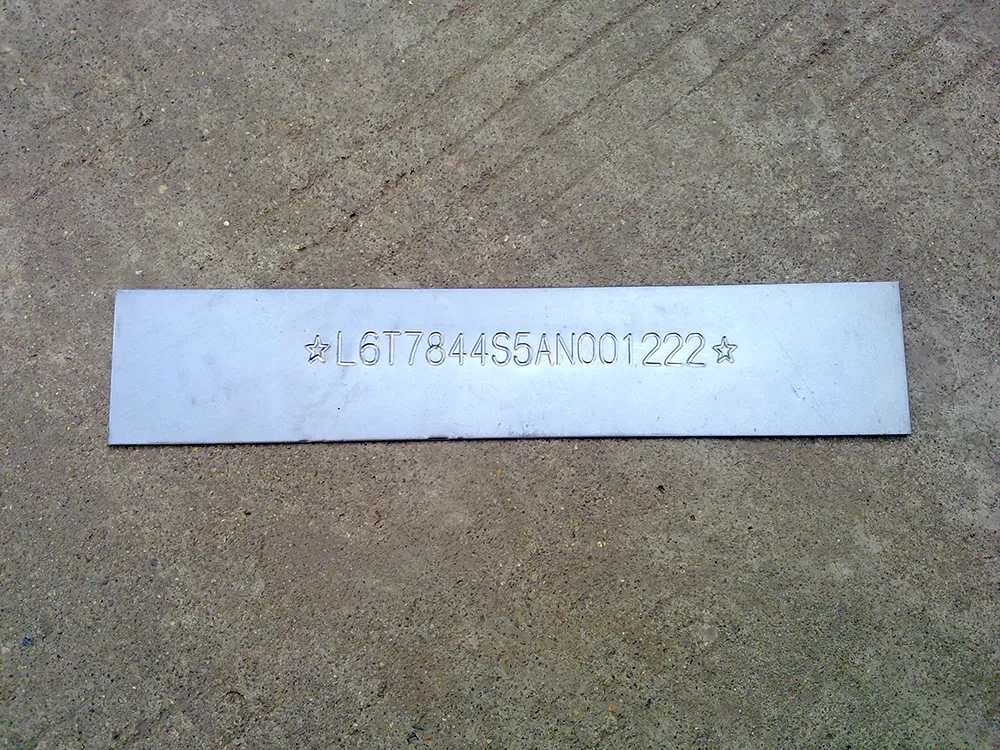
This guide examines how laser VIN marking systems work in automotive production, what technical capabilities are required for high-strength body materials, how the equipment integrates with automated lines, and how marking quality can be verified inline for full vehicle traceability.
Product Overview
TheKINMARK Deep Laser Marking Machine is a marking and traceability system developed for VIN deep marking on automotive body structures. It is positioned within the marking and traceability product family, alongside servo press systems, fluid filling systems, and robot automation systems used in vehicle and powertrain manufacturing.
The system is designed for one specific and demanding task: applying permanent VIN characters on high-strength steel and hot-formed steel body panels while maintaining marking depth and character legibility after the painting process. This is a different requirement from general-purpose industrial laser marking, where marking depth and post-paint readability are often secondary considerations.
Typical deployment scenarios include:
VIN marking stations on body-in-white assembly lines
Automated marking cells integrated with industrial robots or assisted manipulators
Marking stations requiring inline quality inspection and traceability data capture
Production environments where marking must remain readable after paint and rubbing
The system is supplied as a complete marking unit with defined electrical, environmental, and marking specifications, and it is intended for integration into automotive mass production lines rather than standalone manual operation.
Working Principle
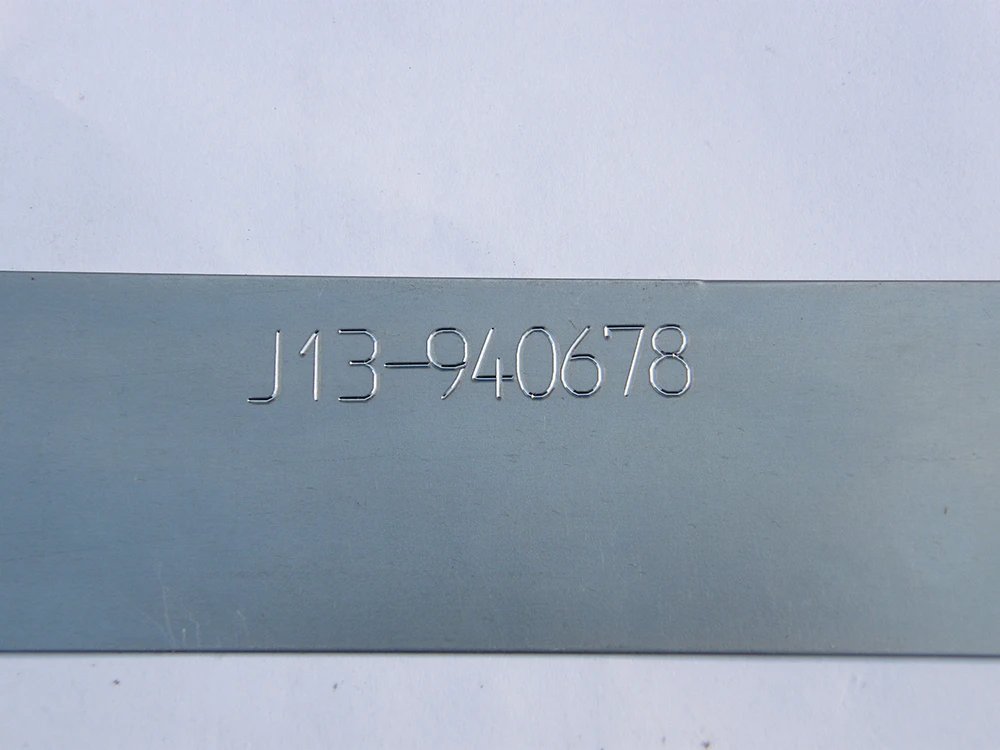
The deep laser marking process uses a focused laser beam to remove or displace material from the workpiece surface, creating a recessed character rather than a surface deposit or color change. Because the marking is formed below the original surface level, it survives subsequent processes such as painting, where the paint layer can fill the recess and still allow the character to be read or rubbed.
In the KINMARK Deep Laser Marking Machine, the laser source operates at 200W and produces a marking area of 112mm × 112mm, which accommodates a full VIN character string within a single marking field. The marking depth on body-in-white reaches ≥0.2mm, which is the key process parameter for ensuring the VIN remains identifiable after paint.
The system uses a special marking process to ensure clear rubbing results after painting. This matters because VIN verification in many production and registration workflows involves physically rubbing the marked area to transfer the character impression. A marking that is too shallow, or that produces irregular character edges, can result in an unreadable rubbing even if the characters appear visible on the surface.
For automated production, the marking head can be mounted on an industrial robot or assisted manipulator. Optional 3D vision guidance can be added to position the marking head accurately relative to the body surface before marking begins. After marking, optional 3D laser scanning measurement and OCR recognition systems can inspect the characters online, verifying both marking depth and character identity.
Key Features
Deep VIN marking on high-strength materials — the system performs permanent VIN deep marking on high-strength steel plates with yield strength exceeding 700 MPa and on hot-formed steel plates with strength up to 1500 MPa.
Marking depth ≥0.2mm on body-in-white — the specified marking depth supports post-paint readability and rubbing.
Easy rubbing — a special marking process ensures clear rubbing results after the painting process.
Easy integration — the system is designed with various mounting interfaces for rapid integration with industrial robots or assisted manipulators on automated production lines.
Vision guidance (optional) — an optional 3D vision guidance system enables precise positioning and accurate marking to improve production efficiency.
Automatic traceability (optional) — optional 3D laser scanning measurement and OCR recognition systems provide online inspection of marking quality and support 100% traceability.
Defined marking area — a 112mm × 112mm marking area accommodates VIN character strings within a single marking field.
Technical Specifications
| Power Supply | AC220V ±10%, 50Hz ±2% |
| Power Consumption | <1000W |
| Laser Power | 200W |
| Marking Area | 112mm × 112mm |
| Marking Depth | ≥0.2mm |
| Operating Temperature | 0~40℃ |
| Operating Humidity | ≤90% RH (Non-condensing) |
Applications
Laser VIN marking systems are used where permanent, machine-readable vehicle identification is required as part of the production record. The following application areas are directly supported by the system design and specifications.
Automotive Manufacturing
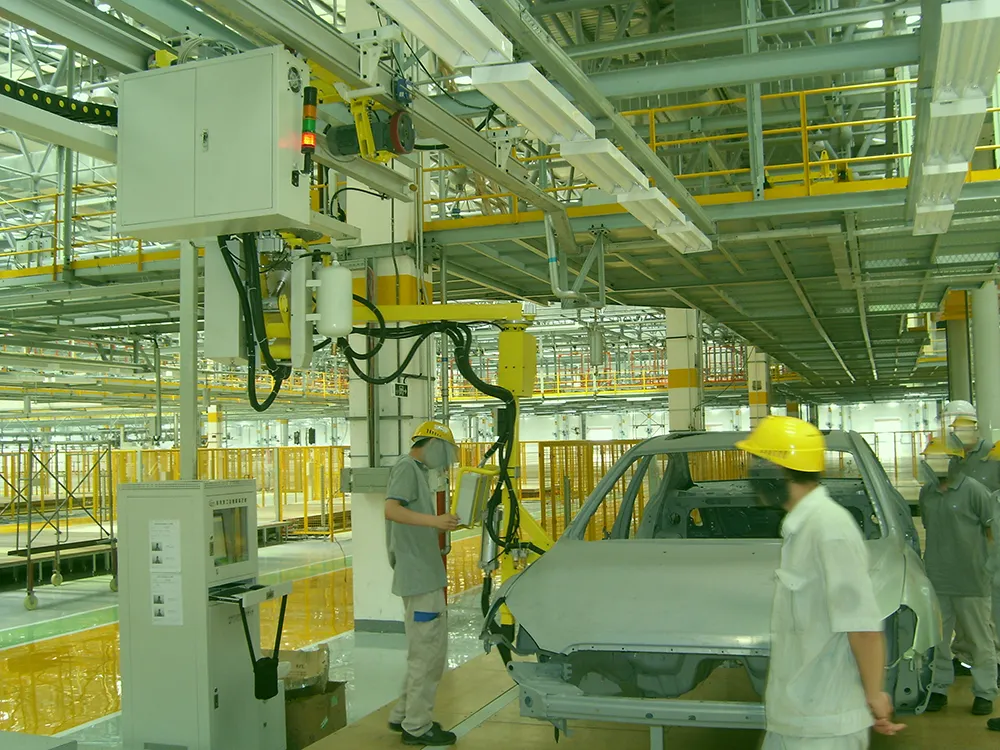
VIN marking on body-in-white structures is a standard station in vehicle assembly. The marking is applied before paint, which means the marking process must produce a depth that remains legible after the paint layer is applied. The KINMARK system is designed specifically for this sequence, with a marking depth of ≥0.2mm on body-in-white and a marking process that supports clear rubbing after painting.
High-Strength and Hot-Formed Steel Bodies
Modern vehicle bodies increasingly use high-strength steel and hot-formed steel in safety-critical areas. These materials present a challenge for marking because their hardness makes it difficult to achieve consistent depth. The system is specified to mark on high-strength steel plates with yield strength exceeding 700 MPa and hot-formed steel plates with strength up to 1500 MPa, which allows VIN marking on body structures that use these materials.
Automated Production Lines
The system is designed for integration with industrial robots or assisted manipulators. Various mounting interfaces allow the marking head to be adapted to different line configurations. When combined with optional 3D vision guidance, the system can position the marking head accurately before each marking cycle, which supports consistent marking results in automated production.
Vehicle Traceability and Quality Records
Traceability requires that the VIN on the vehicle can be reliably linked to production data. The optional 3D laser scanning measurement and OCR recognition systems provide online inspection of marking quality and character identity, supporting 100% traceability of the marking process. This allows marking quality to be verified as part of the production flow rather than through offline sampling.
New Energy Vehicle and Powertrain Manufacturing
KINMARK marking and traceability systems are used across vehicle manufacturing, powertrain manufacturing, automotive components, and new energy vehicle production. The deep laser marking machine addresses the body marking requirement within this broader traceability scope, where identification data must remain attached to the physical product throughout its production and service life.
Benefits
The value of a laser VIN marking system in automotive production comes from the combination of permanent marking, material capability, and inline verification.
Permanent identification — deep marking creates characters that are part of the material surface rather than an applied layer, which supports long-term readability.
Post-paint legibility — the marking process is designed so that characters remain clear after painting and can be verified by rubbing.
Material compatibility — marking is supported on high-strength steel and hot-formed steel used in modern body structures.
Production integration — mounting interfaces and robot compatibility allow the system to be incorporated into automated assembly lines.
Positioning accuracy — optional 3D vision guidance supports precise positioning before marking.
Inline quality verification — optional 3D laser scanning and OCR recognition allow marking quality and character identity to be checked online.
Traceability support — verified marking data supports 100% traceability requirements in vehicle production.
Integration note: The 3D vision guidance system and the 3D laser scanning measurement with OCR recognition are optional configurations. Marking stations that require only the marking function can be specified without these options, while stations that require inline verification and traceability data capture can include them.
Why Choose KINMARK
KINMARK (Jinan Zhongzheng Jinma Technology Co., Ltd.) has been active in automotive intelligent automation equipment since 1996, beginning with marking equipment and expanding into marking and traceability, servo press, fluid filling, and robot automation systems. The company is recognized as a Shandong Province "Gazelle" enterprise and a "Specialized and Refined" enterprise.
The deep laser marking machine reflects this background in automotive marking. It is a production-oriented system rather than a general-purpose marking device, with specifications defined around the actual requirements of VIN marking on body-in-white: high-strength material capability, a marking depth of ≥0.2mm, post-paint rubbing clarity, and integration with robot-based automation.
KINMARK maintains offices and service centers in multiple Chinese cities, including Shanghai, Beijing, Guangzhou, Changchun, Wuhan, and Chongqing, and provides installation, commissioning, operator training, remote diagnosis, and after-sales technical support. The complete machine is covered by a 12-month warranty with long-term maintenance service.
For manufacturers evaluating a laser VIN marking system, the relevant considerations are whether the system can mark the specific body materials in use, whether the marking depth meets post-paint readability requirements, and whether the system can be integrated into the existing production line with the required level of verification. The KINMARK deep laser marking machine is specified to address these points.
Frequently Asked Questions
What materials can the laser VIN marking system mark?
The system performs VIN deep marking on high-strength steel plates with yield strength exceeding 700 MPa and on hot-formed steel plates with strength up to 1500 MPa. Marking depth on body-in-white reaches ≥0.2mm.
Will the VIN remain readable after painting?
The system uses a special marking process designed to ensure clear rubbing results after painting. The specified marking depth of ≥0.2mm on body-in-white supports character legibility after the paint process.
Can the marking system be integrated with robots?
Yes. The system is designed with various mounting interfaces for rapid integration with industrial robots or assisted manipulators, supporting use in automated production lines.
How is marking quality verified?
An optional 3D laser scanning measurement system and OCR recognition system provide online inspection of marking quality and character recognition, supporting 100% traceability. An optional 3D vision guidance system is also available for precise positioning before marking.
What are the power and environmental requirements?
The system operates on AC220V ±10%, 50Hz ±2%, with power consumption below 1000W. The operating temperature range is 0~40℃ and operating humidity is ≤90% RH, non-condensing. The laser power is 200W and the marking area is 112mm × 112mm.
Conclusion
A laser VIN marking system sits at the point where physical vehicle identification and production data meet. The marking must be deep enough to survive painting and rubbing, capable of being applied to high-strength and hot-formed body materials, and integrated into an automated line without disrupting production flow. Verification must also be possible, so that the VIN on the vehicle can be reliably linked to production and quality records.
The KINMARK Deep Laser Marking Machine addresses these requirements with a 200W laser source, a 112mm × 112mm marking area, marking depth of ≥0.2mm on body-in-white, compatibility with high-strength steel exceeding 700 MPa and hot-formed steel up to 1500 MPa, and support for robot integration, optional 3D vision guidance, and optional 3D laser scanning with OCR recognition for inline traceability. For automotive manufacturers building or upgrading VIN marking stations, the system provides a defined technical basis for evaluating fit with body materials, line integration, and traceability requirements.
If you're interested in any of the equipment mentioned in this article, feel free to contact our sales engineers for detailed product information and customized technical solutions.