
Deep Laser Marking Machine for Automotive VIN Marking
Introduction
Vehicle identification number (VIN) marking is a critical process in automotive manufacturing. The VIN is a unique 17-character code that identifies every vehicle, and it must be permanently marked on the body-in-white (BIW) or chassis. As modern vehicles increasingly use high-strength steel and hot-formed steel for safety and weight reduction, traditional marking methods such as stamping or scribing often struggle to achieve the required marking depth and durability. A deep laser marking machine addresses these challenges by using a high-power laser to create permanent, deep marks on advanced materials.
This article provides a product guide to deep laser marking machines for automotive VIN marking. It covers the working principle, key features, applications, benefits, and selection considerations. The content is intended for automotive engineers, manufacturing engineers, production managers, and purchasing professionals who are evaluating marking solutions for vehicle assembly lines.
Product Overview
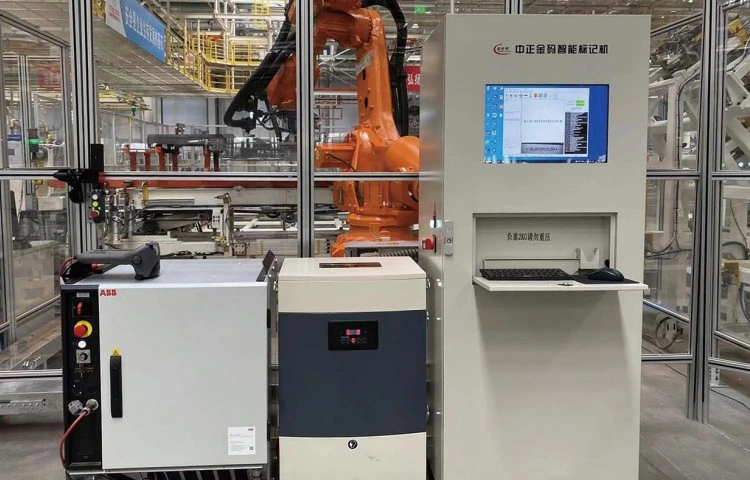
A deep laser marking machine is a specialized industrial laser system designed to produce permanent, deep marks on metal surfaces. Unlike standard laser marking that creates shallow surface marks, deep laser marking achieves a marking depth of 0.2 mm or more, making it suitable for VIN marking on high-strength steel plates and hot-formed steel plates. The machine is typically integrated into automated production lines, either as a standalone station or as part of a robotic workcell.
The KINMARK Deep Laser Marking Machine is engineered for deep VIN marking on high-strength materials. It supports marking on steel plates with yield strength exceeding 700 MPa and hot-formed steel plates with strength up to 1500 MPa. The marking depth on body-in-white can reach more than 0.2 mm, ensuring the VIN remains legible and traceable throughout the vehicle's life. The system is designed for easy integration with industrial robots or assisted manipulators, making it suitable for automated production lines.
This product guide focuses on the technical characteristics, operational principles, and application scenarios of deep laser marking machines in automotive VIN marking. It does not cover standard laser marking or other marking technologies such as dot peen or scribe marking.
Working Principle
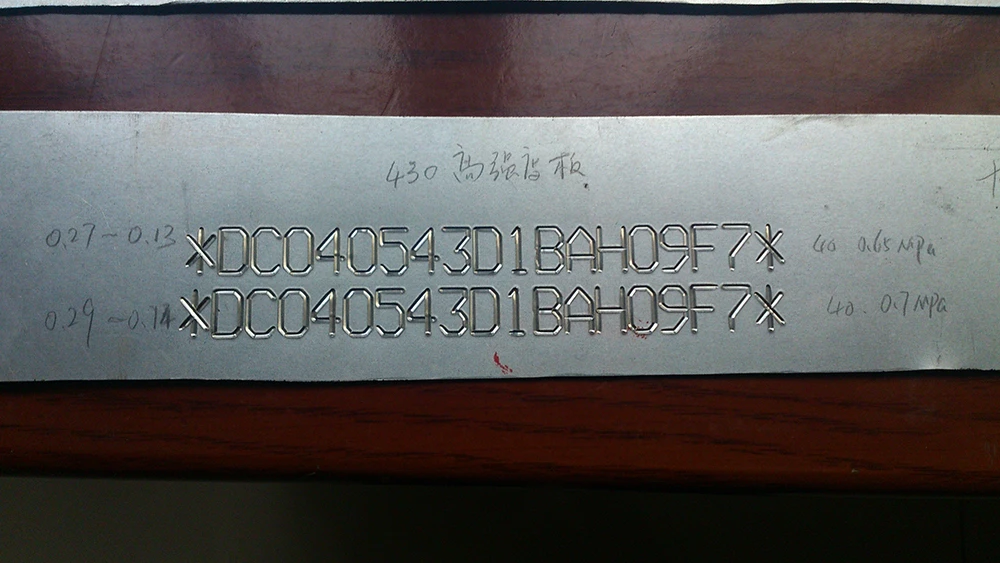
Deep laser marking uses a focused high-power laser beam to melt and vaporize material from the workpiece surface, creating a permanent cavity. The process is controlled by a galvanometer scanning system that directs the laser beam according to the VIN pattern. The depth of the mark is determined by laser power, marking speed, and the number of passes. For automotive VIN marking, the system is typically configured to achieve a depth of at least 0.2 mm on high-strength steel.
The KINMARK Deep Laser Marking Machine uses a 200W laser and a marking area of 112 mm × 112 mm. The system operates on AC220V ±10%, 50Hz ±2% power supply with power consumption below 1000W. It is designed to work in operating temperatures from 0 to 40°C and humidity up to 90% RH (non-condensing). The marking process is controlled by software that allows operators to input VIN data and adjust marking parameters. For automated lines, the machine can be integrated with a robot or manipulator, and optional 3D vision guidance can be used for precise positioning.
After marking, the VIN can be inspected using optional 3D laser scanning measurement and OCR recognition systems. These systems provide online inspection of marking quality and ensure 100% traceability. The deep marking process also ensures that the VIN remains readable after painting, as the mark is deep enough to survive the paint shop process.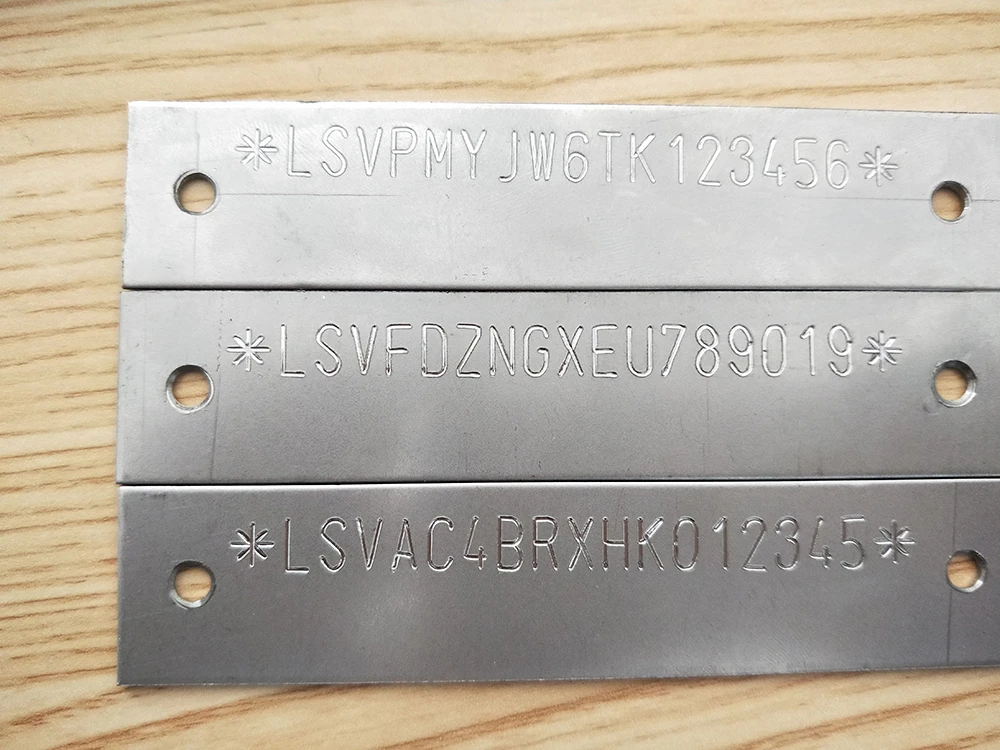
Key Features
Deep VIN Marking: Achieves marking depth of 0.2 mm or more on high-strength steel plates with yield strength over 700 MPa and hot-formed steel plates up to 1500 MPa. Suitable for body-in-white VIN marking.
Easy Rubbing: Special marking process ensures clear rubbing results after painting. The deep mark remains legible even after the paint shop process.
Easy Integration: Designed with various mounting interfaces for quick integration with industrial robots or assisted manipulators. Suitable for automated production lines.
Vision Guidance (Optional): Optional 3D vision guidance system enables precise positioning and accurate marking to improve production efficiency.
Automatic Traceability (Optional): Optional 3D laser scanning measurement and OCR recognition systems provide online inspection of marking quality and ensure 100% traceability.
Robust Design: Operates in industrial environments with ambient temperature 0–40°C and humidity up to 90% RH (non-condensing).
Technical Specifications
| Power Supply | AC220V ±10%, 50Hz ±2% |
| Power Consumption | <1000W |
| Laser Power | 200W |
| Marking Area | 112mm × 112mm |
| Marking Depth | ≥0.2mm |
| Operating Temperature | 0~40℃ |
| Operating Humidity | ≤90% RH (Non-condensing) |
Applications
Deep laser marking machines for VIN marking are used in automotive manufacturing and assembly plants. They are suitable for marking VIN on body-in-white (BIW) and chassis components. The system is particularly relevant for vehicles that use high-strength steel and hot-formed steel, such as modern passenger cars, electric vehicles, and commercial vehicles.
Typical application areas include:
Automotive Manufacturing: VIN marking on BIW in the body shop or assembly line. The deep mark ensures the VIN remains readable after painting and throughout the vehicle's life.
New Energy Vehicles: VIN marking on high-strength steel structures used in electric vehicle bodies and battery enclosures. The deep marking process is compatible with advanced materials.
Powertrain Manufacturing: Marking of engine and transmission components where permanent identification is required for traceability.
Automotive Components: Marking of safety-critical components such as chassis parts, suspension components, and structural parts made of high-strength steel.
Intelligent Factory Automation: Integration with robotic cells and automated production lines for unmanned marking operations. Optional vision guidance and traceability systems support smart manufacturing initiatives.
The system is designed for mass production environments where cycle time, marking quality, and traceability are critical. It can be integrated into existing production lines or specified as part of a new line.
Benefits
Deep laser marking offers several advantages for automotive VIN marking compared to conventional methods:
Permanent Marking: The deep mark (≥0.2mm) is resistant to wear, corrosion, and paint shop processes. It remains legible for the life of the vehicle.
Material Compatibility: The system can mark high-strength steel (yield strength >700 MPa) and hot-formed steel (up to 1500 MPa), which are increasingly used in modern vehicle bodies.
Process Integration: The machine can be integrated with robots and manipulators, allowing automated marking in production lines. Optional vision guidance improves positioning accuracy.
Traceability: Optional 3D scanning and OCR systems provide online inspection and 100% traceability, supporting quality management and regulatory compliance.
Consistency: Laser marking is a non-contact process that produces consistent marks without tool wear. This reduces variability compared to mechanical marking methods.
Flexibility: The system can mark different VIN patterns and characters by software control, making it suitable for mixed-model production lines.
These benefits contribute to improved production efficiency, quality control, and traceability in automotive manufacturing. However, actual results depend on specific production conditions and system configuration.
Why Choose KINMARK
KINMARK (Jinan Zhongzheng Jinma Technology Co., Ltd.) has been developing and manufacturing marking and traceability systems since 1996. The company is a "Gazelle" and "Specialized and Sophisticated" enterprise in Shandong Province, with a focus on automotive intelligent automation equipment. KINMARK offers marking and traceability systems, servo press systems, fluid filling systems, and robot automation systems.
The KINMARK Deep Laser Marking Machine is designed for deep VIN marking on high-strength materials. It is supported by a 12-month warranty, fast response service, and installation and commissioning by KINMARK engineers. The company has established long-term cooperation with automotive manufacturers including Mercedes-Benz, BMW, Toyota, Volkswagen, Tesla, General Motors, Nissan, FAW Hongqi, GAC, Changan Automobile, BYD, Great Wall Motor, Geely Automobile, Chery Automobile, XPeng, and NIO. KINMARK also provides automation solutions for companies such as Bosch, BorgWarner, Gree, CRRC, Meritor, and AGCO.
When selecting a deep laser marking machine for automotive VIN marking, consider the material type, marking depth requirement, integration needs, and traceability requirements. KINMARK's experience in automotive marking and traceability can help you specify the right system for your production line.
Note: Technical specifications are based on standard configurations. Actual performance may vary depending on material, marking pattern, and system settings. Please consult KINMARK for application-specific recommendations.
Frequently Asked Questions
What is the marking depth of the deep laser marking machine?
The marking depth on body-in-white can reach more than 0.2 mm. This depth is achieved on high-strength steel plates with yield strength exceeding 700 MPa and hot-formed steel plates with strength up to 1500 MPa.
Can the deep laser marking machine be integrated with robots?
Yes. The machine is designed with various mounting interfaces for quick integration with industrial robots or assisted manipulators. This makes it suitable for automated production lines.
Does the system support traceability?
The system offers optional 3D laser scanning measurement and OCR recognition systems. These provide online inspection of marking quality and ensure 100% traceability.
What materials can be marked with the deep laser marking machine?
The machine is suitable for marking high-strength steel plates with yield strength over 700 MPa and hot-formed steel plates with strength up to 1500 MPa. It is also suitable for other metals used in automotive manufacturing.
What is the warranty and support for the deep laser marking machine?
The complete machine is covered by a 12-month warranty. KINMARK provides fast response service, remote diagnosis, technical assistance, installation, commissioning, and operator training.
Conclusion
Deep laser marking machines are essential for automotive VIN marking on high-strength steel and hot-formed steel. They provide permanent, deep marks that survive the paint shop and remain legible for the vehicle's life. The KINMARK Deep Laser Marking Machine offers a marking depth of ≥0.2 mm, a 200W laser, and a marking area of 112 mm × 112 mm. It supports integration with robots and manipulators, and offers optional vision guidance and traceability systems for automated production lines.
When evaluating a deep laser marking machine for your VIN marking application, consider material type, marking depth, cycle time, integration requirements, and traceability needs. KINMARK's experience in automotive marking and traceability can help you select a system that meets your production requirements. For more information or to discuss your specific application, please contact KINMARK.
If you're interested in any of the equipment mentioned in this article, feel free to contact our sales engineers for detailed product information and customized technical solutions.