
Antifreeze Vacuum Filling Machine Manufacturer for Automotive Applications
Introduction
Coolant and antifreeze filling is one of the final process steps on an automotive assembly line, and it is also one of the most sensitive. An underfilled system can trigger coolant warnings at end-of-line testing, while an overfilled or inconsistently filled system can lead to spillage, air pockets, and level complaints after the vehicle leaves the plant. Because the cooling circuit must be sealed and free of entrapped air before the engine or battery thermal system is commissioned, filling is not simply a matter of pumping liquid into a reservoir.
An antifreeze vacuum filling machine addresses this by combining vacuum evacuation, leak testing, pressure filling, and back suction into a single automated cycle. For production and manufacturing engineers evaluating equipment suppliers, the choice of an antifreeze vacuum filling machine manufacturer affects cycle consistency, line integration, and long-term serviceability. This article explains how the equipment works, what specifications matter, where it is applied in automotive production, and what to evaluate when selecting a supplier.
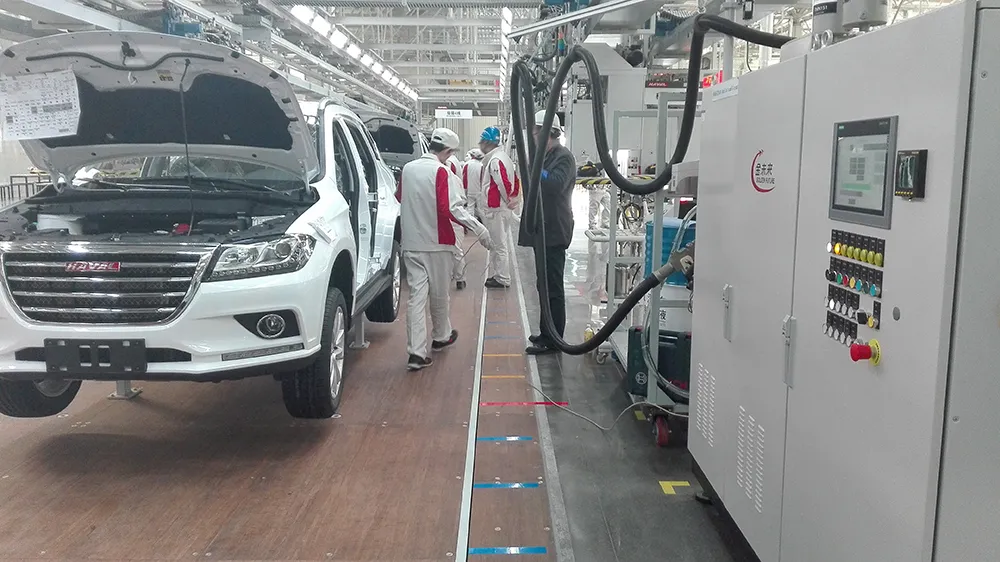
Product Overview
The Antifreeze Vacuum Filling Machine is a PLC-controlled system designed to automate the complete coolant and antifreeze filling process. It is built for automotive production and assembly line environments where filling must be repeatable, verifiable, and integrated into an existing station workflow.
The machine handles antifreeze and coolant as the filling medium and is designed for a filling volume range of 1–400 L, which allows the same equipment platform to serve different vehicle and component filling requirements. Rather than relying on gravity or simple pressure filling, the system evacuates the circuit first, verifies tightness, and then introduces coolant under controlled pressure before correcting the final liquid level through back suction.
Its primary purpose is to deliver a precise fill with a stable liquid level while confirming that the cooling circuit is leak-free before the vehicle or component moves to the next station. This makes it suitable for automated coolant and antifreeze filling applications on automotive production and assembly lines, particularly where consistent fill results and documented leak verification are required.
Working Principle
The filling cycle follows a defined sequence controlled by the PLC. Understanding this sequence helps engineers assess how the machine fits into a station cycle time and what process checks are performed at each stage.
Step 1: Vacuum Evacuation
The system first performs vacuum evacuation of the cooling circuit. Removing air from the system creates the conditions for a complete fill and reduces the risk of trapped air pockets that can affect cooling performance or trigger level faults later in the process.
Step 2: Leak Testing Under Vacuum and Pressure
After evacuation, the system performs leak testing under vacuum and pressure conditions. Confirming system tightness before coolant is introduced prevents filling a circuit that may leak, and it allows the station to identify a non-conforming vehicle or component before it continues down the line.
Step 3: Secondary Vacuum and Controlled Pressure Filling
Once tightness is confirmed, a secondary vacuum is created before the coolant is introduced under controlled pressure. Filling under controlled pressure within the specified 1–4 bar range supports a stable and repeatable fill rather than a fill that depends on operator technique.
Step 4: Venting and Back Suction
When the filling pressure reaches equilibrium, the system automatically vents to atmospheric pressure and performs back suction to remove excess coolant. This step helps achieve the specified liquid level and prevents the coolant level from dropping after filling, which is a common source of rework and end-of-line level complaints.
The complete cycle integrates vacuum evacuation, leak testing, pressure filling, and back suction into one automated operation.
Technical Specifications
The following equipment specifications are relevant when matching the machine to a specific filling application and station layout.
| Parameter | Specification |
|---|---|
| Filling Medium | Antifreeze / Coolant |
| Filling Volume | 1–400 L |
| Filling Pressure | 1–4 bar |
| Maximum Filling Speed | 60 L/min |
| Filling Precision | ±0.5% |
| Liquid Level Accuracy | ±2 mm |
| Measurement Display Range | 0.0–999.9 L |
| Vacuum Pump Capacity | 40–65 m³/h |
| Negative Pressure Leak Rate | ≤0.5 mbar / 60 s |
| Positive Pressure Leakage | <1.4 g/year |
| Power Supply | AC 380 V ±10%, 50 Hz ±2% |
| Equipment Dimensions | 1800 × 1000 × 800 mm (customizable) |
The equipment dimensions are customizable, which allows the machine to be adapted to available floor space and station layout constraints on an assembly line.
Key Features
PLC-controlled automated cycle — the complete filling process, from evacuation through back suction, is automated under PLC control.
Integrated leak testing — vacuum and pressure leak testing is performed before coolant is introduced, with a negative pressure leak rate of ≤0.5 mbar / 60 s and positive pressure leakage of <1.4 g/year.
Stable liquid level through back suction — automatic venting and back suction remove excess coolant to achieve the specified level and prevent level drop after filling, with liquid level accuracy of ±2 mm.
Precise filling control — filling precision of ±0.5% across a filling volume range of 1–400 L.
Controlled filling pressure — filling pressure adjustable within 1–4 bar, with a maximum filling speed of 60 L/min.
Clear measurement display — measurement display range of 0.0–999.9 L supports monitoring of fill quantities during operation.
Customizable dimensions — the standard 1800 × 1000 × 800 mm footprint can be customized for specific installation requirements.
Applications
The machine is intended for automated coolant and antifreeze filling on automotive production and assembly lines. Typical application areas include:
Automotive Manufacturing and Assembly
Coolant filling at the end of the assembly process, where a verified fill and confirmed circuit tightness are required before the vehicle proceeds to testing and final inspection.
Powertrain Manufacturing
Filling of engine cooling circuits and related powertrain assemblies where evacuation, leak verification, and precise fill volume are part of the production process.
New Energy Vehicles
Coolant filling for vehicles with thermal management circuits, where a stable liquid level and confirmed tightness support reliable operation of the cooling system. See KINMARK solutions for new energy vehicle cooling systems.
Automotive Components
Filling and leak verification of coolant circuits on components and subassemblies before they are delivered to the vehicle assembly line.
Benefits
Repeatable fill results — PLC-controlled sequencing and back suction reduce dependence on operator technique and help maintain a consistent liquid level.
Leak verification before filling — testing under vacuum and pressure conditions confirms circuit tightness before coolant is introduced, supporting quality control at the station.
Reduced rework risk — preventing the coolant level from dropping after filling helps avoid rechecks and corrections downstream.
Production line integration — the automated cycle is designed for assembly line operation and can be matched to station layout through customizable dimensions.
Process documentation — measurement display and controlled process parameters support traceable filling records.
Why Choose KINMARK
KINMARK is a developer and manufacturer of marking and traceability systems, servo press systems, fluid filling systems, and robot automation systems for automotive intelligent manufacturing. The company was founded in 1996 and has grown from marking equipment into broader automotive intelligent automation equipment, with fluid filling and dispensing systems as one of its core product lines.
KINMARK serves vehicle manufacturers, powertrain producers, automotive component suppliers, and new energy vehicle manufacturers, and has established long-term cooperation with automotive manufacturers and industrial companies in China and internationally. The company maintains offices and service centers in cities including Shanghai, Beijing, Guangzhou, Changchun, Wuhan, and Chongqing.
For filling equipment, KINMARK provides:
12-month warranty — the complete machine is covered by a 12-month warranty, with professional technical support and long-term maintenance service.
Fast response service — efficient after-sales support, remote diagnosis, and technical assistance to support continuous operation.
Installation and commissioning — engineers provide equipment installation, commissioning, and operator training to help customers start production smoothly.
KINMARK's development history includes the delivery of robot automatic marking systems, VIN automatic identification systems, and laser deep marking systems, as well as fluid filling projects for automotive assembly plants. This background in automotive automation supports the integration of filling equipment into production lines alongside other station equipment.
Selection note: Filling volume, filling pressure, and vacuum pump capacity should be matched to the specific cooling circuit and station cycle time. Confirm the required fill volume range and leak test criteria with the equipment supplier before finalizing the configuration.
Frequently Asked Questions
What filling media can the Antifreeze Vacuum Filling Machine handle?
The machine is designed for antifreeze and coolant as the filling medium.
What filling volume range does the machine support?
The filling volume range is 1–400 L, with a filling pressure range of 1–4 bar and a maximum filling speed of 60 L/min.
How does the machine prevent the coolant level from dropping after filling?
After the filling pressure reaches equilibrium, the system automatically vents to atmospheric pressure and performs back suction to remove excess coolant. This helps achieve the specified liquid level and prevents the level from dropping after filling.
Is leak testing included in the filling cycle?
Yes. The system performs vacuum evacuation followed by leak testing under vacuum and pressure conditions. Only after system tightness is confirmed is a secondary vacuum created and coolant introduced.
What support is provided after purchase?
The complete machine is covered by a 12-month warranty. KINMARK provides technical support, remote diagnosis, long-term maintenance service, and engineering support for installation, commissioning, and operator training.
Conclusion
Antifreeze vacuum filling combines several process steps that are critical to cooling system quality: evacuation, leak verification, controlled pressure filling, and final level correction through back suction. For automotive production and assembly lines, automating these steps under PLC control supports repeatable fill results and confirmed circuit tightness at the station.
When evaluating an antifreeze vacuum filling machine manufacturer, engineers and purchasing teams should review the filling volume and pressure ranges, leak test criteria, liquid level accuracy, and the level of installation, commissioning, and after-sales support offered. KINMARK's vacuum filling machines, developed alongside its marking, servo press, and robot automation product lines, are positioned to support automotive manufacturers seeking integrated filling solutions for production and assembly operations.
If you're interested in any of the equipment mentioned in this article, feel free to contact our sales engineers for detailed product information and customized technical solutions.