
What Affects the Price of an Automotive Coolant Vacuum Filling Machine?
Introduction
An automotive coolant vacuum filling machine is a PLC-controlled station that evacuates air from a vehicle cooling circuit, verifies tightness under vacuum and pressure, and then fills the system with antifreeze or coolant under controlled pressure before performing back suction to reach a stable liquid level. On a vehicle assembly or powertrain line, this station sits at the point where the cooling system must be filled correctly and consistently before the vehicle moves to the next operation.
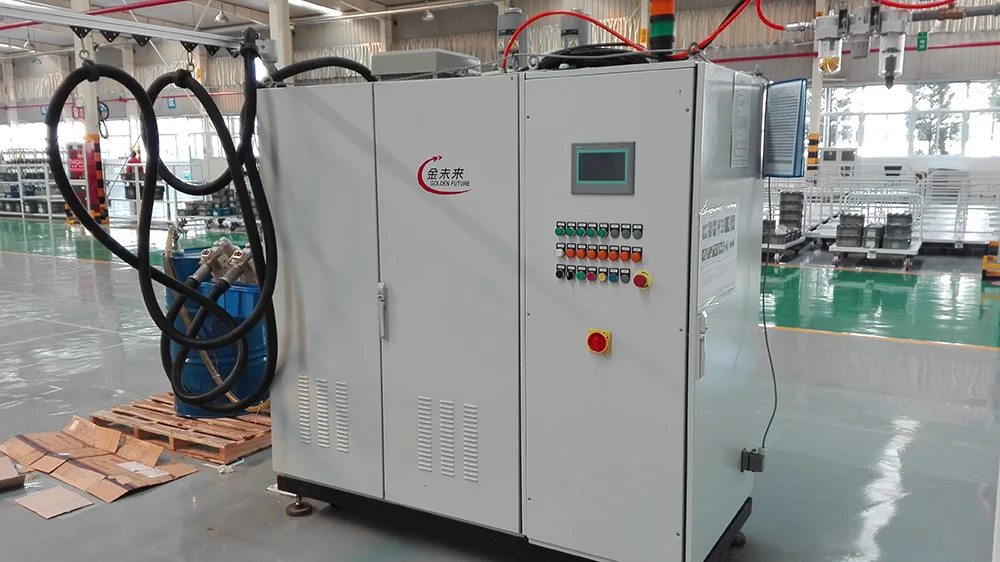
When production engineers and purchasing teams investigate the automotive coolant vacuum filling machine price, they quickly find that quotations vary considerably between suppliers. The variation is not random. It usually reflects differences in filling volume range, pressure and vacuum capability, leak testing performance, level control strategy, mechanical construction, and the degree of integration with the production line.
This pricing guide explains the technical and commercial factors that typically influence the cost of a coolant vacuum filling machine. It is written for engineers and buyers who need to compare offers on a like-for-like basis rather than on headline price alone, and who want to understand which specifications actually drive cost in an automotive filling application.
Product Overview
The Antifreeze Vacuum Filling Machine is designed for automated coolant and antifreeze filling with a stable liquid level. The machine uses a PLC-controlled system to automate the complete filling cycle. It first performs vacuum evacuation, followed by leak testing under vacuum and pressure conditions. After system tightness is confirmed, a secondary vacuum is created before coolant is introduced under controlled pressure.
Once the filling pressure reaches equilibrium, the system automatically vents to atmospheric pressure and performs back suction to remove excess coolant. This back suction step is what helps achieve the specified liquid level and prevents the coolant level from dropping after filling, a common issue on lines where residual coolant in the fill line or expansion behaviour affects the final level.
Because the complete cycle integrates vacuum evacuation, leak testing, pressure filling and back suction, the equipment is positioned as a production-ready station for automotive production and assembly lines rather than a simple dispensing unit. This integrated scope is one of the first things to keep in mind when comparing prices, because a machine that performs leak testing and back suction is a different class of equipment from a basic fill-only unit.
Working Principle
The operating sequence of the machine follows a defined cycle that can be summarised as follows:
Vacuum evacuation: air is removed from the cooling circuit to create a negative pressure condition.
Leak testing: the system is checked for tightness under vacuum and pressure conditions before any coolant is introduced.
Secondary vacuum: after tightness is confirmed, a secondary vacuum is created to prepare the circuit for filling.
Pressure filling: coolant is introduced under controlled pressure until the filling pressure reaches equilibrium.
Venting and back suction: the system automatically vents to atmospheric pressure and performs back suction to remove excess coolant, achieving the specified liquid level.
This sequence matters for pricing because each stage depends on different hardware and control functions. The vacuum stage depends on pump capacity and circuit design. The leak test stage depends on pressure and vacuum measurement capability and on the leak rate thresholds the system must resolve. The filling stage depends on pressure regulation and flow capacity. The back suction stage depends on valve sequencing and level control logic. A machine specified to perform all of these steps reliably at production cycle times carries more engineering content than a machine that only fills.
Key Technical Factors That Influence Price
Filling Volume Range
The machine is specified for a filling volume of 1–400 L, with a measurement display range of 0.0–999.9 L. Filling volume range affects price because it determines the size of the coolant reservoir, the piping and valve sizing, the flow measurement approach, and the structural design of the unit. A machine intended to serve a wide range of vehicles and cooling circuit capacities must be engineered to remain accurate across that entire range, which is a different design task from a machine dedicated to a single narrow volume band.
Filling Pressure and Flow Capacity
The filling pressure is specified at 1–4 bar, with a maximum filling speed of 60 L/min. Pressure and flow capability influence cost because they determine pump selection, pressure regulation components, hose and fitting ratings, and the safety provisions required around a pressurised filling circuit. Buyers should compare offers at the same pressure and flow specification, since a machine quoted at a lower pressure or flow rating is not directly comparable to one quoted at the full specified range.
Filling Precision and Liquid Level Accuracy
The machine is specified with a filling precision of ±0.5% and a liquid level accuracy of ±2 mm. Precision and level accuracy requirements are among the most direct cost drivers in filling equipment. Achieving a tight level tolerance requires reliable measurement, controlled valve sequencing, and the back suction function described above. Where a production line requires a stable liquid level to avoid rework or downstream level checks, this capability is central to the specification and should be evaluated explicitly rather than assumed.
Leak Testing Capability
The machine performs leak testing under both vacuum and pressure conditions. The specified performance includes a negative pressure leak rate of ≤0.5 mbar / 60 s and a positive pressure leakage of <1.4 g/year. Leak test capability is a significant cost factor because it requires pressure and vacuum sensing, stable circuit design, and control logic capable of resolving small changes over a defined test period. A machine that integrates leak testing into the fill cycle removes the need for a separate test station, which changes the overall line configuration and therefore the total equipment cost.
Vacuum Pump Capacity
The vacuum pump capacity is specified at 40–65 m³/h. Vacuum capacity affects evacuation time and the ability to handle different cooling circuit volumes, and it is one of the components that directly contributes to machine cost. The appropriate capacity depends on the range of circuits the station must serve and the cycle time the line requires.
Power Supply and Site Requirements
The machine is specified for a power supply of AC 380 V ±10%, 50 Hz ±2%. Site electrical conditions, available space, and utility connections should be confirmed early, because adapting a machine to a site with different supply conditions can add cost to a project. Buyers comparing quotations should check that each offer is based on the same site conditions.
Equipment Dimensions and Customisation
The standard equipment dimensions are 1800 × 1000 × 800 mm, and the dimensions are noted as customisable. Customisation is a common reason why two quotations for what appears to be the same machine differ. Changes to footprint, fill head arrangement, hose routing, or the way the station interfaces with a conveyor or vehicle position can all affect engineering effort and therefore price.
Comparison tip: When reviewing quotations for an automotive coolant vacuum filling machine, build a specification table covering filling volume, filling pressure, maximum filling speed, filling precision, liquid level accuracy, vacuum pump capacity, and leak test thresholds. Offers that omit these values cannot be compared on price alone.
Applications
The Antifreeze Vacuum Filling Machine is intended for automated coolant and antifreeze filling applications on automotive production and assembly lines. Typical contexts include:
Vehicle assembly: coolant filling at the final assembly stage, where a stable liquid level after filling is required before the vehicle proceeds.
Powertrain and component manufacturing: filling and tightness verification of cooling circuits on engines and related assemblies where leak testing is part of the process requirement.
New energy vehicle production: filling of thermal management and cooling circuits where evacuation, leak testing and controlled filling are combined in one cycle.
Automated line integration: stations that must operate as part of a wider assembly line sequence rather than as a standalone manual operation.
The application scope directly affects price, because a station integrated into an automated line typically requires more engineering work in interface, cycle coordination, and commissioning than a standalone unit.
Benefits That Justify the Investment
Understanding the benefits helps buyers judge whether a given price reflects value for their process. The machine's integrated cycle supports:
Process consistency: automated vacuum, leak test, fill and back suction steps reduce dependence on operator technique.
Stable liquid level: back suction after filling helps achieve the specified level and prevents the level from dropping after filling.
Tightness verification: leak testing under vacuum and pressure conditions is performed before coolant is introduced.
Production integration: the complete cycle is designed for automated filling on production and assembly lines.
Controlled filling: pressure filling at a defined pressure range supports repeatable results across different circuit volumes.
These are process benefits rather than financial claims. Buyers should map them to their own quality and cycle time requirements when evaluating quotations.
Why Choose KINMARK
KINMARK (Jinan Zhongzheng Jinma Technology Co., Ltd.) was founded in 1996 and is a developer and manufacturer of marking and traceability systems, servo press systems, fluid filling systems, and robot automation systems. The company is recognised as a Shandong Province "Gazelle" enterprise and a "Specialised, Refined, Distinctive and Innovative" enterprise, with offices and service centres in Shanghai, Beijing, Guangzhou, Changchun, Wuhan and Chongqing.
KINMARK's fluid filling systems form one of its core product lines, alongside marking and traceability and servo press systems. The company's business covers vehicle manufacturing, powertrain, automotive components, construction machinery, home appliances, new energy, electronic communications, and rail transit. Its automation solutions are used in automotive production environments and by industrial manufacturers in related sectors.
For a coolant vacuum filling project, this background is relevant in several practical ways. The machine is offered with a 12-month warranty covering the complete machine, supported by professional technical support and long-term maintenance service. Fast response service includes efficient after-sales support, remote diagnosis, and technical assistance. Installation and commissioning are supported by engineers who provide equipment installation, commissioning, and operator training to help customers start production smoothly.
When comparing prices, buyers should weigh these service and support arrangements alongside the technical specification, since installation, commissioning, training and after-sales response form part of the total cost of ownership of an automated filling station.
How to Evaluate a Quotation
A structured evaluation helps ensure that price differences reflect real specification differences. The following approach is practical for purchasing and manufacturing engineering teams:
Confirm the filling medium and the range of cooling circuit volumes the station must handle, and check the quoted filling volume range against it.
Compare filling pressure range and maximum filling speed at identical values.
Check whether filling precision and liquid level accuracy are stated, and at what tolerance.
Verify whether leak testing is included and what vacuum and pressure leak thresholds are specified.
Confirm vacuum pump capacity and the resulting evacuation performance for your circuit sizes.
Clarify what is standard and what is customised, including dimensions and line interface scope.
Confirm the scope of installation, commissioning, training, warranty and after-sales support included in the price.
Quotations that address all of these points can be compared meaningfully. Quotations that leave them open should be clarified before a purchasing decision is made.
Frequently Asked Questions
What filling volume range does the Antifreeze Vacuum Filling Machine support?
The machine is specified for a filling volume of 1–400 L, with a measurement display range of 0.0–999.9 L. The required range for your production line should be confirmed during specification, since the volume range affects machine sizing and cost.
Does the machine include leak testing?
Yes. The cycle includes leak testing under vacuum and pressure conditions before coolant is introduced. The specified performance is a negative pressure leak rate of ≤0.5 mbar / 60 s and a positive pressure leakage of <1.4 g/year.
What filling pressure and speed can the machine achieve?
The filling pressure range is 1–4 bar and the maximum filling speed is 60 L/min. Filling precision is specified at ±0.5%, with a liquid level accuracy of ±2 mm.
Why does back suction matter for coolant filling?
After the filling pressure reaches equilibrium, the system automatically vents to atmospheric pressure and performs back suction to remove excess coolant. This helps achieve the specified liquid level and prevents the coolant level from dropping after filling.
What site requirements should be confirmed before ordering?
The machine is specified for a power supply of AC 380 V ±10%, 50 Hz ±2%, with standard dimensions of 1800 × 1000 × 800 mm that are customisable. Site electrical conditions, available space and utility connections should be confirmed early so that the quotation matches your actual installation conditions.
Conclusion
The price of an automotive coolant vacuum filling machine is driven by the technical scope of the station rather than by a single headline figure. Filling volume range, pressure and flow capacity, filling precision, liquid level accuracy, leak testing performance, vacuum pump capacity, mechanical construction and customisation all contribute to the cost, and so does the level of installation, commissioning, training and after-sales support included in the offer.
For buyers investigating the automotive coolant vacuum filling machine price, the most reliable approach is to define the process requirements first, then compare quotations against a common specification table. A machine that integrates vacuum evacuation, leak testing, pressure filling and back suction in one automated cycle represents a different investment from a basic filling unit, and evaluating offers on that basis leads to a decision that holds up in production. Explore vacuum filling machines and fluid filling solutions for related equipment and applications.
If you're interested in any of the equipment mentioned in this article, feel free to contact our sales engineers for detailed product information and customized technical solutions.