
Automotive Steel Component Traceability
Introduction
Traceability of automotive steel components is a fundamental requirement in modern vehicle manufacturing. Steel components such as body-in-white panels, structural reinforcements, and powertrain parts must be identifiable throughout the production process and for the entire service life of the vehicle. This is particularly important for safety-critical parts made from high-strength steel and hot-formed steel, where material properties and manufacturing history must be documented.
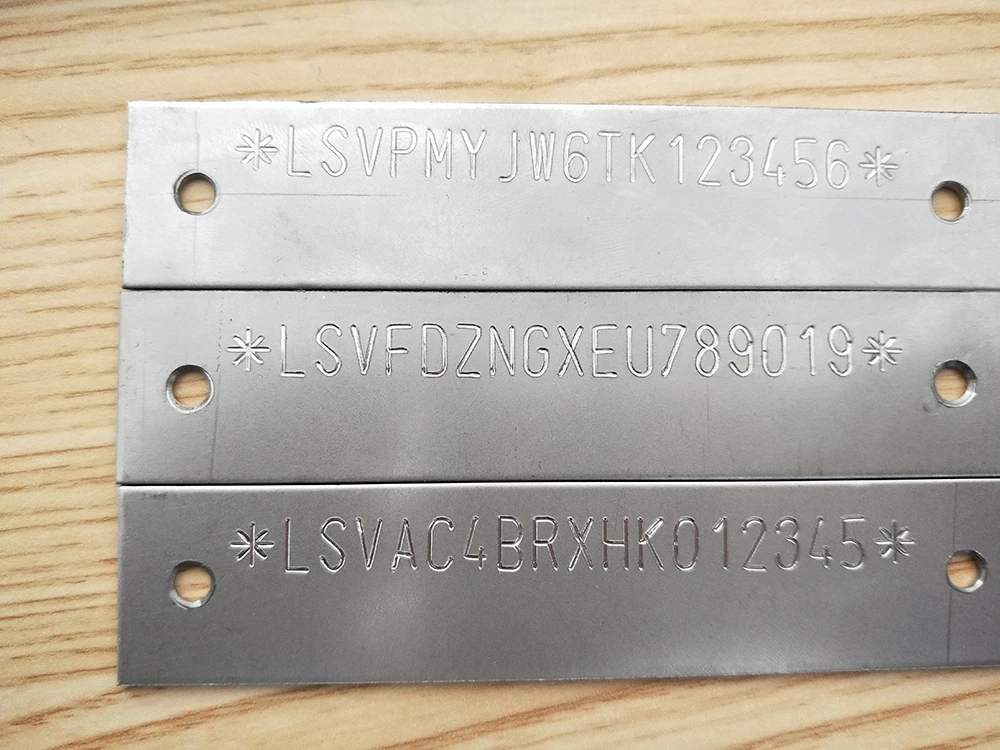
A common challenge in automotive steel component traceability is that conventional marking methods often fail to produce durable, machine-readable identification on hard materials. High-strength steel with yield strength exceeding 700 MPa and hot-formed steel with strength up to 1500 MPa can resist shallow marking, and the marking may become illegible after painting or e-coating. This article explains how deep laser marking technology addresses these challenges and how it supports automotive steel component traceability in mass production environments.
Product Overview
The KINMARK Deep Laser Marking Machine is designed for permanent VIN deep marking on high-strength steel plates and hot-formed steel plates. It is part of the company's marking and traceability systems, which are used in automotive manufacturing, automotive components, new energy vehicles, powertrain manufacturing, and intelligent factory automation.
The system enables marking depth on body-in-white of more than 0.2 mm. It adopts a special marking process to ensure clear rubbing results after painting. The machine is designed with various mounting interfaces for quick integration with industrial robots or assisted manipulators, making it suitable for automated production lines.
Optional modules include a 3D vision guidance system for precise positioning and a 3D laser scanning measurement system with OCR recognition for online inspection of marking quality and 100% traceability.
Working Principle
The deep laser marking process uses a 200W laser to create a permanent mark on the surface of high-strength steel components. The laser power and marking parameters are controlled to achieve a marking depth of at least 0.2 mm on body-in-white. This depth ensures that the identification remains legible even after painting and rubbing.
The system can be integrated with a robot or assisted manipulator through various mounting interfaces. When equipped with the optional 3D vision guidance system, the marking head can be positioned accurately relative to the component, compensating for part variation. After marking, the optional 3D laser scanning measurement system with OCR recognition can inspect the mark online, verifying character quality and depth, and feeding the data into the traceability system.
Key Features
Deep VIN Marking: Permanent VIN deep marking on high-strength steel plates with yield strength exceeding 700 MPa and hot-formed steel plates with strength up to 1500 MPa. Marking depth on body-in-white can reach more than 0.2 mm.
Easy Rubbing: Special marking process ensures clear rubbing results after painting.
Easy Integration: Various mounting interfaces allow quick integration with industrial robots or assisted manipulators for automated production lines.
Vision Guidance (Optional): 3D vision guidance system enables precise positioning and accurate marking to improve production efficiency.
Automatic Traceability (Optional): 3D laser scanning measurement and OCR recognition systems provide online inspection of marking quality and ensure 100% traceability.
Technical Specifications
| Power Supply | AC220V ±10%, 50Hz ±2% |
| Power Consumption | <1000W |
| Laser Power | 200W |
| Marking Area | 112mm × 112mm |
| Marking Depth | ≥0.2mm |
| Operating Temperature | 0~40℃ |
| Operating Humidity | ≤90% RH (Non-condensing) |
Applications
The deep laser marking machine is used for automotive steel component traceability in various production stages. Typical applications include:
VIN marking on body-in-white of passenger cars and commercial vehicles.
Traceability marking on high-strength steel structural components.
Marking on hot-formed steel parts such as B-pillars and door reinforcements.
Integration into automated production lines with robot or manipulator handling.
Online inspection and traceability of marked characters using 3D scanning and OCR.
These applications are relevant to automotive manufacturers, component suppliers, and new energy vehicle producers who require durable and verifiable identification on steel components.
Benefits
Implementing deep laser marking for automotive steel component traceability offers several practical benefits:
Permanent identification: The marking depth of ≥0.2 mm ensures the VIN or component code remains readable after painting and throughout the vehicle's life.
Process consistency: The special marking process provides clear rubbing results, reducing the need for rework or manual verification.
Production integration: Various mounting interfaces allow quick integration with robots and manipulators, supporting automated production lines.
Quality management: Optional 3D scanning and OCR provide online inspection, enabling 100% traceability and early detection of marking defects.
Flexibility: Optional 3D vision guidance allows precise positioning on complex parts, improving efficiency in high-mix production.
Why Choose KINMARK
KINMARK (Jinan Zhongzheng Jinma Technology Co., Ltd.) has been developing and manufacturing marking and traceability systems since 1996. The company is a Shandong Province "Gazelle" enterprise and a "Specialized and Sophisticated" enterprise. Its deep laser marking machine is part of a product portfolio that also includes servo press systems, fluid filling systems, and robot automation systems.
KINMARK has established long-term cooperation with automotive manufacturers such as Mercedes-Benz, BMW, Toyota, Volkswagen, Tesla, GM, Nissan, FAW Hongqi, GAC, Changan Automobile, BYD, Great Wall Motor, Geely Automobile, Chery Automobile, XPeng Motors, and NIO. The company also provides automation solutions to industrial companies including Bosch, BorgWarner, Gree, CRRC, Meritor, and AGCO.
With service offices and maintenance centers in Shanghai, Beijing, Guangzhou, Changchun, Wuhan, and Chongqing, KINMARK supports customers with installation, commissioning, operator training, and after-sales service. The deep laser marking machine is covered by a 12-month warranty, with remote diagnosis and technical assistance available.
Frequently Asked Questions
What materials can the deep laser marking machine mark?
The system is designed for high-strength steel plates with yield strength exceeding 700 MPa and hot-formed steel plates with strength up to 1500 MPa. It is particularly suitable for body-in-white VIN marking.
What is the marking depth on body-in-white?
The marking depth on body-in-white can reach more than 0.2 mm, ensuring the mark remains legible after painting and rubbing.
Can the system be integrated into an automated production line?
Yes. The machine is designed with various mounting interfaces for quick integration with industrial robots or assisted manipulators. Optional 3D vision guidance enables precise positioning for automated marking.
How does the system ensure traceability?
An optional 3D laser scanning measurement system with OCR recognition provides online inspection of marking quality, verifying character depth and readability. This enables 100% traceability of marked components.
What is the warranty and support for the machine?
The complete machine is covered by a 12-month warranty. KINMARK provides installation, commissioning, operator training, remote diagnosis, and long-term maintenance service through its offices in major Chinese cities.
Conclusion
Automotive steel component traceability requires marking methods that can withstand hard materials and subsequent painting processes. Deep laser marking technology, such as the KINMARK Deep Laser Marking Machine, addresses this need by producing permanent VIN marks with a depth of ≥0.2 mm on high-strength and hot-formed steel. With optional 3D vision guidance and OCR-based inspection, the system supports automated production and 100% traceability. For automotive manufacturers and component suppliers, this technology provides a reliable foundation for quality management and regulatory compliance.
If you're interested in any of the equipment mentioned in this article, feel free to contact our sales engineers for detailed product information and customized technical solutions.