
Vehicle Production Traceability Marking
Introduction
Vehicle production traceability marking is the process of applying a permanent, machine-readable identification mark to a vehicle body or major component so that it can be identified, verified, and traced throughout manufacturing and beyond. In automotive assembly, the most familiar example is the Vehicle Identification Number (VIN), which must remain legible for the entire life of the vehicle.
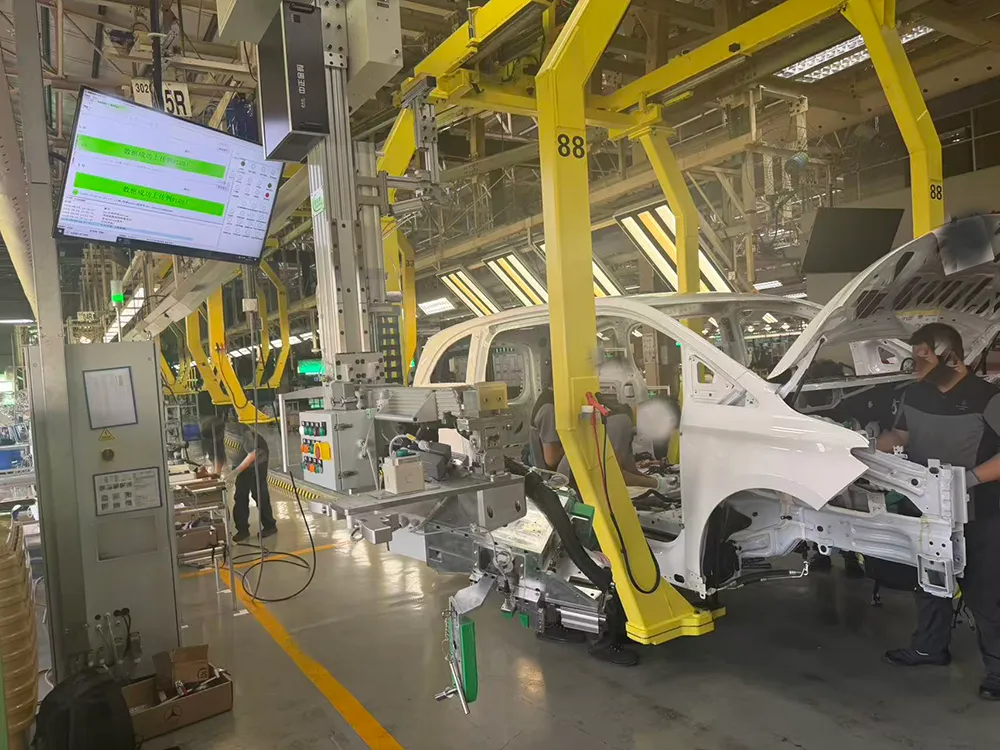
Traceability marking is not a standalone operation. It sits at the intersection of body-in-white (BIW) production, paint shop processes, final assembly, and quality management. A mark that is too shallow can become unreadable after painting, rubbing, or years of service. A marking process that cannot be integrated into an automated line becomes a manual bottleneck. This guide explains how deep laser marking technology addresses these requirements, what technical factors matter, and how marking and traceability systems fit into modern automotive manufacturing.
Product Overview
KINMARK's Deep Laser Marking Machine is a marking system designed for permanent VIN deep marking on high-strength materials. It is positioned within the company's Marking & Traceability product family, which also includes marking heads, automated marking stations, and traceability integration.
The system is built for automotive mass production environments. Its purpose is to create a durable identification mark on body-in-white and similar structures, where the material may be high-strength steel or hot-formed steel. The machine supports integration with industrial robots or assisted manipulators, allowing marking to be performed inside an automated production line rather than at a separate offline station.
Typical application scenarios include VIN marking on BIW, marking of components that require permanent identification, and production lines where marking quality must be verified online. The system can also be paired with optional vision guidance and traceability modules, which are described later in this article.
Working Principle
The Deep Laser Marking Machine uses a 200W laser source to remove or displace material from the workpiece surface, creating a mark with a defined depth rather than a surface discoloration. This is the key difference between deep marking and conventional surface marking: the mark is produced by material removal, so it remains readable after subsequent processes such as painting and rubbing.
The marking area is 112mm × 112mm, and the system is specified to achieve a marking depth of ≥0.2mm on body-in-white. This depth is what allows the VIN to survive the paint shop and remain traceable. The machine operates from an AC220V ±10%, 50Hz ±2% power supply with power consumption below 1000W, and is rated for an operating temperature of 0~40℃ and humidity up to 90% RH (non-condensing).
For automated lines, the marking head is mounted on a robot or manipulator and positioned relative to the workpiece. When the optional 3D vision guidance system is used, the system can locate the marking position precisely before marking begins. When the optional 3D laser scanning measurement and OCR recognition system is used, the mark can be inspected online after it is applied.
Key Features
Deep VIN marking: The system enables permanent VIN deep marking on high-strength steel plates with yield strength exceeding 700 MPa and hot-formed steel plates with strength up to 1500 MPa. Marking depth on body-in-white can reach more than 0.2mm.
Easy rubbing: A special marking process is used to ensure clear rubbing results after painting.
Easy integration: Various mounting interfaces allow the system to be quickly integrated with industrial robots or assisted manipulators for automated production lines.
Vision guidance (optional): An optional 3D vision guidance system enables precise positioning and accurate marking.
Automatic traceability (optional): An optional 3D laser scanning measurement and OCR recognition system provides online inspection of marking quality and supports 100% traceability.
Applications in Vehicle Production Traceability Marking
Traceability marking is relevant wherever a vehicle or major assembly needs a permanent identity that can be read at multiple points in the production process. The following applications are directly supported by the Deep Laser Marking Machine's design and specifications.
Body-in-White VIN Marking
The primary application is VIN deep marking on body-in-white. Because BIW structures increasingly use high-strength and hot-formed steels, the marking process must be capable of producing a durable mark on these materials. The system's specified capability on steel with yield strength above 700 MPa and hot-formed steel up to 1500 MPa addresses this requirement.
Automated Line Integration
In high-volume assembly, marking is typically performed by a robot or manipulator. The machine's mounting interfaces are designed for this kind of integration, so the marking operation can be embedded in the line sequence rather than handled as a separate manual step.
Online Quality Inspection and Traceability
When equipped with the optional 3D laser scanning measurement and OCR recognition system, the marking station can verify mark quality and character recognition online. This supports traceability because the recorded result is tied to the specific vehicle or component being marked.
Post-Paint Identification
Because the mark is created with a defined depth and a process designed for clear rubbing after painting, the VIN remains identifiable after the paint shop. This is important for downstream operations such as final assembly, registration, and service.
Benefits for Automotive Manufacturers
The value of deep laser marking in vehicle production traceability marking comes from the combination of mark durability, process integration, and inspection capability.
Improved traceability: A permanent, deep mark provides a reliable identity that can be read and verified throughout production.
Better process consistency: Automated marking with defined parameters helps maintain consistent mark depth and appearance across units.
Production integration: Robot and manipulator compatibility allows marking to be part of the automated line flow.
Quality management: Optional online inspection supports the verification of marking quality and OCR results.
Material flexibility: The system is specified for high-strength and hot-formed steels used in modern body structures.
Note: Optional functions such as 3D vision guidance and 3D laser scanning measurement with OCR are configured according to the application. They are not part of the base machine unless specified.
Why Choose KINMARK
KINMARK (Jinan Zhongzheng Jinma Technology Co., Ltd.) has been engaged in marking and traceability equipment since 1996 and is a manufacturer of marking & traceability systems, servo press systems, fluid filling systems, and robot automation systems. The company is recognized as a Shandong "Gazelle" enterprise and a "Specialized and Sophisticated" enterprise.
Its marking technology has been applied in automotive production since the late 1990s, beginning with printing equipment for engine lines and expanding to automatic printing equipment for engines, bodies, and nameplates, followed by robot automatic marking systems, VIN automatic recognition systems, and laser deep marking systems. The VIN laser deep marking system was developed and put into operation in 2023.
KINMARK serves vehicle manufacturers, powertrain and component producers, and new energy vehicle makers, and also provides automation solutions to industrial companies outside the automotive sector. Service offices and maintenance centers are located in Shanghai, Beijing, Guangzhou, Changchun, Wuhan, and Chongqing.
For a traceability marking project, this background matters in three practical ways: experience with automotive production environments, a product family that includes both marking hardware and traceability options, and local service coverage for installation, commissioning, and maintenance.
Frequently Asked Questions
What is vehicle production traceability marking?
Vehicle production traceability marking is the application of a permanent identification mark, such as a VIN, to a vehicle body or component so it can be identified and traced through production. Deep laser marking creates this mark by material removal rather than surface discoloration, which helps it remain readable after painting and rubbing.
What materials can the Deep Laser Marking Machine mark?
The system is specified for VIN deep marking on high-strength steel plates with yield strength exceeding 700 MPa and hot-formed steel plates with strength up to 1500 MPa. On body-in-white, the marking depth can reach more than 0.2mm.
Can the marking system be integrated into an automated production line?
Yes. The machine is designed with various mounting interfaces for quick integration with industrial robots or assisted manipulators. This allows marking to be performed as part of an automated line rather than as a separate manual operation.
How is marking quality verified?
An optional 3D laser scanning measurement and OCR recognition system provides online inspection of marking quality and character recognition. This optional module supports 100% traceability by verifying the mark after it is applied.
What is the difference between deep marking and surface marking?
Surface marking changes the appearance of the material at or near the surface, while deep marking removes material to create a mark with a defined depth. The Deep Laser Marking Machine is specified to achieve a marking depth of ≥0.2mm on body-in-white, which is intended to keep the VIN legible after painting and rubbing.
Conclusion
Vehicle production traceability marking depends on a mark that stays readable through painting, assembly, and the service life of the vehicle. Deep laser marking addresses this by creating a permanent, depth-controlled VIN mark on high-strength and hot-formed steels, with a marking depth of ≥0.2mm on body-in-white.
For automotive engineers and production managers, the practical considerations are material capability, line integration, and inspection. The Deep Laser Marking Machine is designed around these points: a 200W laser with a 112mm × 112mm marking area, mounting interfaces for robot or manipulator integration, and optional 3D vision guidance and 3D laser scanning measurement with OCR for positioning and online quality verification. Together, these elements support traceability marking as a reliable part of an automated vehicle production process.
If you're interested in any of the equipment mentioned in this article, feel free to contact our sales engineers for detailed product information and customized technical solutions.