
How to Improve Consistency in Automated Flexible Label Marking
Introduction
Automated flexible label marking is a critical process in automotive manufacturing and component identification. Flexible film labels made from materials supplied by brands such as TESA, 3M, and Schreiner are widely used for permanent identification, traceability, and barcode-based logistics. However, achieving consistent marking results on these thin, flexible substrates is more challenging than marking rigid metal or plastic parts. Variations in material handling, web tension, laser focus, and environmental conditions can all affect mark quality, contrast, and code readability.
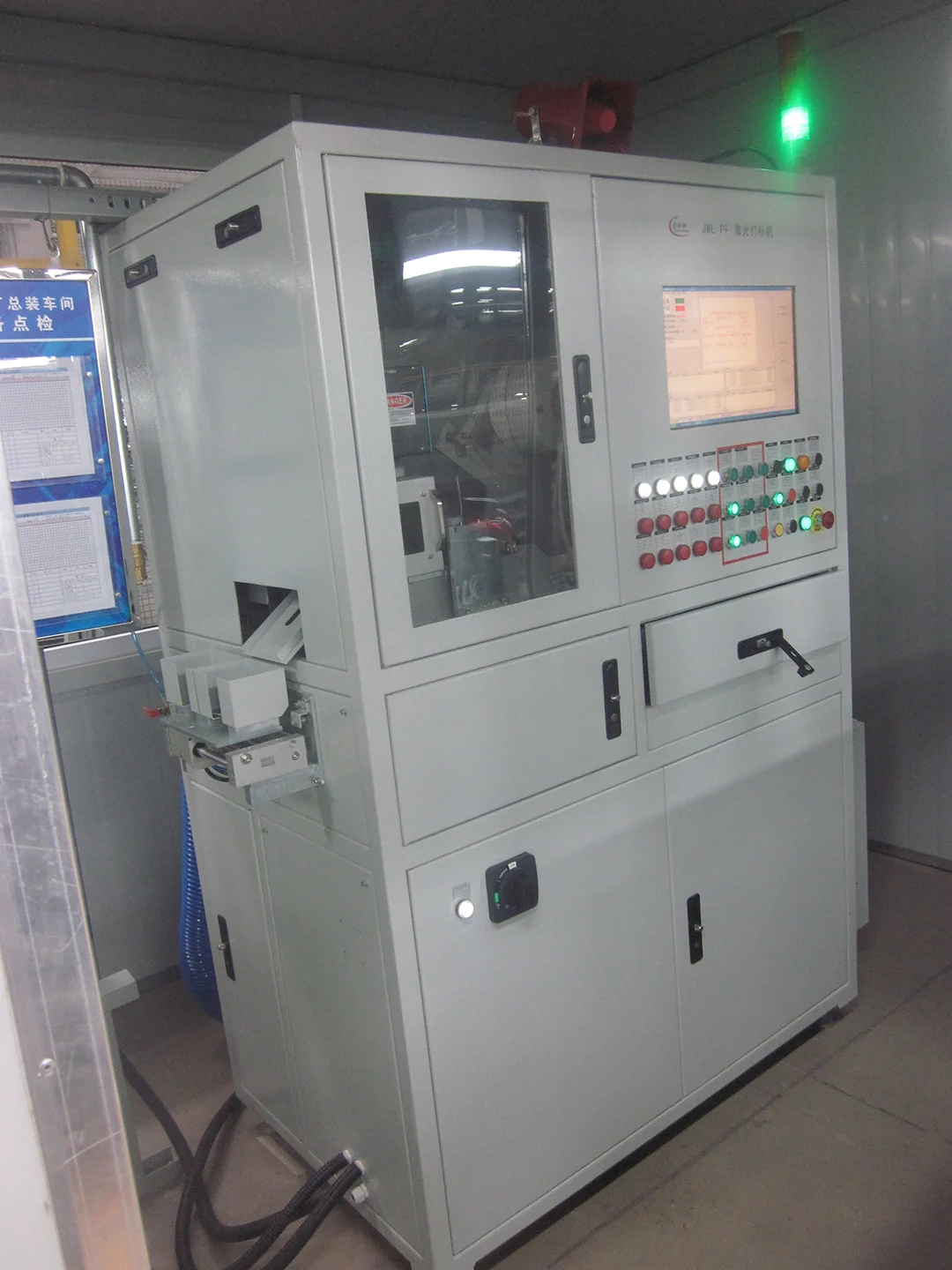
This article examines the practical factors that influence consistency in automated flexible label marking. It outlines how a properly integrated fiber laser marking system—such as the KINMARK Flexible Fiber Laser Marking Machine—can help manufacturers stabilize their label production processes. The discussion focuses on process control, equipment design, and quality verification rather than theoretical concepts, providing actionable guidance for engineers and production managers.
Understanding the Flexible Label Marking Process
Flexible label marking involves creating permanent marks—characters, text, graphics, 1D barcodes, or 2D codes—on a flexible film substrate. Unlike traditional pressure-sensitive labels that are printed with ink, laser marking uses a focused beam to alter the surface of the film, producing a durable mark that resists abrasion, chemicals, and environmental exposure.
In an automated setup, the process typically includes several stages: unwinding the label roll, inspecting the web for defects or splices, leveling the material to ensure flatness, laser marking, and cutting the labels to the required dimensions. Each stage introduces variables that can affect the final mark. For example, inconsistent web tension can cause the label to shift during marking, leading to distorted characters or misaligned barcodes. Similarly, variations in the film's surface properties can change how the laser energy is absorbed, affecting mark contrast.
The KINMARK Flexible Fiber Laser Marking Machine is designed to handle these stages in a single automated solution. It supports unwinding, inspection, leveling, marking, and cutting, which helps reduce manual intervention and the associated variability. By integrating these functions, the system aims to deliver stable, repeatable results across production runs.
Key Factors Affecting Marking Consistency
Several factors can cause inconsistency in flexible label marking. Understanding these variables is the first step toward improving process reliability.
Material Handling and Web Tension
Flexible films are prone to stretching, wrinkling, and shifting. If the web tension is not controlled, the label may not be perfectly flat at the marking station, causing the laser focus to vary. This can result in marks of different depths or widths. A well-designed unwinding and leveling system helps maintain consistent tension and flatness, ensuring that the laser beam interacts with the material uniformly.
Laser Parameters and Focus
The laser power, pulse frequency, marking speed, and focal position must be matched to the specific film material. Different brands and grades of flexible labels may have different absorption characteristics. If the parameters are not optimized, the mark may be too light, too dark, or inconsistent across the label. Standardized core components and mature marking processes—as featured in KINMARK's laser marking technology—help maintain stable output over long production runs.
Environmental Conditions
Temperature, humidity, and airborne contaminants can affect both the film and the laser optics. For instance, high humidity may cause the film to absorb moisture, altering its surface properties. Dust on the lens can scatter the laser beam, reducing marking intensity. Maintaining a controlled environment and a regular cleaning schedule for optical components supports consistent results.
Inspection and Feedback
Without inline inspection, defects may go unnoticed until downstream assembly. Automated inspection systems that check mark presence, contrast, and code readability can provide immediate feedback, allowing operators to adjust parameters before large quantities of non-conforming labels are produced.
How Automated Systems Improve Consistency
Automation reduces human error and variability. In flexible label marking, an automated system can perform the following functions to enhance consistency:
Automated unwinding and leveling: Maintains uniform web tension and flatness, ensuring the label is positioned correctly at the marking station.
Inline inspection: Detects material defects, splices, or missing labels before marking, preventing wasted laser energy on flawed areas.
Precise motion control: Moves the web accurately so that each label is marked at the same position relative to the laser head.
Integrated marking and cutting: Eliminates handling steps between marking and cutting, reducing the risk of misalignment or damage.
Standardized core components: Uses proven laser sources, optics, and control modules that deliver repeatable performance.
The KINMARK Flexible Fiber Laser Marking Machine incorporates these automation features. Its modular design allows adaptation to different production requirements, while the standardized core components and mature marking processes support reliable operation for continuous production. The system is capable of marking characters, text, graphics, 1D barcodes, and 2D codes on flexible label materials, making it suitable for a range of identification and traceability applications.
Best Practices for Consistent Flexible Label Marking
Beyond selecting the right equipment, manufacturers can adopt several best practices to improve consistency:
Characterize the material: Work with the label supplier to understand the film's composition and recommended laser parameters. TESA, 3M, and Schreiner offer various flexible films, each with unique properties.
Establish a parameter library: Store optimized settings for each label type in the marking system. This reduces setup time and prevents operator errors.
Monitor web tension: Use tension sensors and closed-loop controls to keep the web stable throughout the roll.
Clean optics regularly: Follow a preventive maintenance schedule to keep lenses and mirrors free of dust and debris.
Verify marks inline: Implement a vision system or barcode verifier to check mark quality and readability immediately after marking.
Train operators: Ensure that personnel understand the impact of parameter changes and can respond to alarms or quality issues.
These practices, combined with a robust automated marking system, can significantly reduce variability and improve overall process capability.
Applications in Automotive and Industrial Manufacturing
Consistent flexible label marking is essential in several industries, particularly automotive manufacturing. Flexible labels are used for VIN plates, component identification, safety labels, and logistics tracking. In powertrain manufacturing, labels on engines and transmissions must withstand harsh conditions while remaining legible for traceability. New energy vehicle (NEV) production also relies on durable labels for battery packs and electronic components.
KINMARK's flexible fiber laser marking machine is designed to support these applications by providing a reliable, automated solution for marking flexible film labels. Its ability to integrate into intelligent factory automation environments makes it suitable for manufacturers seeking to enhance marking and traceability and quality management.
Frequently Asked Questions
What types of flexible labels can be marked with a fiber laser?
Fiber laser marking is suitable for various flexible film labels, including those from brands such as TESA, 3M, and Schreiner. The specific film composition and coating determine the optimal laser parameters. It is important to test each material to ensure compatibility and desired mark quality.
How does web tension affect marking consistency?
Web tension directly influences the flatness of the label at the marking station. If tension is too low, the film may wrinkle or sag; if too high, it may stretch. Both conditions can cause the laser focus to vary, leading to inconsistent mark depth, width, or contrast. Automated tension control helps maintain stable conditions.
Can automated inspection improve marking consistency?
Yes. Inline inspection systems can verify mark presence, contrast, and barcode readability immediately after marking. This allows operators to detect deviations early and adjust parameters before producing large volumes of non-conforming labels. Automated inspection also provides data for continuous process improvement.
What maintenance is required to keep a fiber laser marking system consistent?
Regular maintenance includes cleaning optical components, checking web tension sensors, verifying laser power calibration, and inspecting mechanical parts for wear. Following the manufacturer's recommended maintenance schedule helps ensure stable performance over time.
Is fiber laser marking suitable for high-volume production?
Fiber laser marking systems are designed for industrial production environments. With standardized core components and automated material handling, they can operate continuously and maintain consistent marking quality. The modular design of KINMARK's system allows adaptation to different production requirements.
Conclusion
Improving consistency in automated flexible label marking requires a systematic approach that addresses material handling, laser parameters, environmental control, and inline inspection. By understanding the factors that cause variability and implementing best practices, manufacturers can achieve reliable, repeatable marking results that support traceability and quality goals.
The KINMARK Flexible Fiber Laser Marking Machine offers a comprehensive solution for flexible label processing, integrating unwinding, inspection, leveling, marking, and cutting into one automated system. Its standardized core components and mature marking processes are designed to deliver stable performance for continuous production. For automotive and industrial manufacturers seeking to enhance their label marking consistency, investing in a well-engineered automated system is a practical step toward higher quality and efficiency.
If you're interested in any of the equipment mentioned in this article, feel free to contact our sales engineers for detailed product information and customized technical solutions.