
How to Automate Refrigerant Vacuum Filling on a Production Line
Introduction
Automating refrigerant vacuum filling on a production line is a practical challenge for engineers working in automotive assembly, powertrain manufacturing, and component production. Manual filling methods often struggle to deliver a consistent liquid level, and they can leave air or moisture inside the system. A PLC-controlled vacuum filling process addresses these issues by combining vacuum evacuation, leak testing, pressure filling, and back suction into one repeatable cycle.
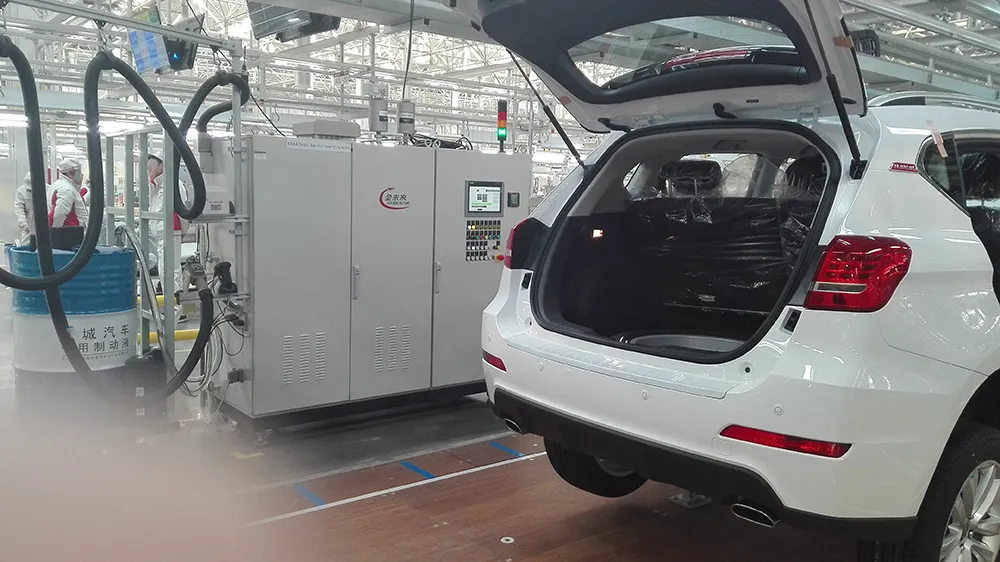
This guide explains how an automated vacuum filling machine works, what steps are involved in the filling cycle, and how to integrate this type of equipment into an existing production line. It is written for manufacturing engineers, production managers, and purchasing teams who need a clear understanding of the process before specifying or installing a system. For equipment options, see KINMARK's antifreeze vacuum filling machine.
What Is an Automated Refrigerant Vacuum Filling Machine
An automated refrigerant vacuum filling machine is equipment that fills coolant or antifreeze into a vehicle or component system under controlled vacuum and pressure conditions. The machine is typically controlled by a PLC and performs the complete filling sequence automatically, from vacuum evacuation through final liquid level correction.
The machine is designed for automated coolant and antifreeze filling applications on automotive production and assembly lines. It handles filling media such as antifreeze and coolant, and it is intended for use where a stable liquid level and repeatable filling results are required. Related equipment options are available in KINMARK's vacuum filling machines range.
Working Principle of Vacuum Filling
The automated cycle follows a defined sequence that combines vacuum and pressure to fill the system and verify its tightness.
Vacuum evacuation: The system first performs vacuum evacuation to remove air and moisture from the circuit.
Leak testing: Leak testing is carried out under vacuum and pressure conditions to confirm system tightness.
Secondary vacuum: After tightness is confirmed, a secondary vacuum is created before the coolant is introduced.
Pressure filling: The coolant is introduced under controlled pressure.
Pressure equilibrium and venting: Once the filling pressure reaches equilibrium, the system automatically vents to atmospheric pressure.
Back suction: The system performs back suction to remove excess coolant and achieve the specified liquid level.
This integrated cycle helps prevent the coolant level from dropping after filling, which is a common issue when air remains trapped in the system.
Key Steps to Automate Refrigerant Vacuum Filling on a Production Line
Step 1: Define the Filling Requirements
Before selecting equipment, define the filling volume and medium for each station. The machine supports a filling volume range of 1–400 L and is suitable for antifreeze and coolant. Confirm the required filling precision and liquid level accuracy for your application so the equipment can be configured accordingly.
Step 2: Select a PLC-Controlled Filling System
Choose a machine that uses a PLC-controlled system to automate the complete coolant filling process. PLC control allows the vacuum evacuation, leak testing, pressure filling, and back suction stages to run as one automatic cycle, which reduces dependence on operator judgment and improves repeatability.
Step 3: Configure Vacuum and Pressure Parameters
The filling pressure range is 1–4 bar, and the vacuum pump capacity is 40–65 m³/h. These parameters should be matched to the system being filled and the production takt time. The negative pressure leak rate is specified as ≤0.5 mbar / 60 s, and positive pressure leakage is specified as <1.4 g/year, which provides a basis for leak testing acceptance criteria.
Step 4: Integrate Leak Testing into the Cycle
Leak testing should be part of the automatic cycle rather than a separate manual operation. The machine performs leak testing under vacuum and pressure conditions before filling, so any system that does not hold tightness can be identified before coolant is introduced.
Step 5: Set Up Liquid Level Control and Back Suction
Liquid level accuracy is specified as ±2 mm, and filling precision is ±0.5%. The back suction function removes excess coolant after the filling pressure reaches equilibrium, helping to achieve the specified liquid level and preventing the level from dropping after filling.
Step 6: Plan for Line Layout and Power Supply
The equipment dimensions are 1800 × 1000 × 800 mm and can be customized. The power supply requirement is AC 380 V ±10%, 50 Hz ±2%. These details should be considered during line layout and utility planning. The measurement display range is 0.0–999.9 L, which supports monitoring of the filling process.
Technical Specifications
| Parameter | Specification |
|---|---|
| Filling Medium | Antifreeze / Coolant |
| Filling Volume | 1–400 L |
| Filling Pressure | 1–4 bar |
| Maximum Filling Speed | 60 L/min |
| Filling Precision | ±0.5% |
| Liquid Level Accuracy | ±2 mm |
| Measurement Display Range | 0.0–999.9 L |
| Vacuum Pump Capacity | 40–65 m³/h |
| Negative Pressure Leak Rate | ≤0.5 mbar / 60 s |
| Positive Pressure Leakage | <1.4 g/year |
| Power Supply | AC 380 V ±10%, 50 Hz ±2% |
| Equipment Dimensions | 1800 × 1000 × 800 mm (customizable) |
Key Features
PLC-controlled automation: The complete coolant filling process is automated, including vacuum evacuation, leak testing, pressure filling, and back suction.
Integrated leak testing: Leak testing is performed under vacuum and pressure conditions before filling.
Stable liquid level: Back suction removes excess coolant to achieve the specified liquid level and prevent the level from dropping after filling.
Wide filling volume range: The system supports filling volumes from 1 to 400 L.
Measurement display: The measurement display range is 0.0–999.9 L for process monitoring.
Customizable dimensions: Equipment dimensions can be customized to suit line layout requirements.
Applications
The machine is suitable for automated coolant and antifreeze filling applications on automotive production and assembly lines. Typical use cases include:
Automotive manufacturing and final assembly
Automotive components requiring coolant filling
New energy vehicle thermal management systems
Powertrain manufacturing
Intelligent factory automation lines
The system is designed for production environments where repeatable filling and leak verification are required before a vehicle or component moves to the next station. For broader system integration options, explore KINMARK's fluid filling solutions.
Benefits of Automated Vacuum Filling
Improved process consistency: PLC control and defined vacuum and pressure stages reduce variation between filling cycles.
Better traceability: The automatic cycle records the filling sequence, and the measurement display range supports process monitoring.
Reduced rework risk: Leak testing before filling helps identify systems that do not hold tightness.
Stable liquid level: Back suction helps achieve the specified liquid level and prevents level drop after filling.
Production integration: The machine can be integrated into automated coolant and antifreeze filling applications on production and assembly lines.
Why Choose KINMARK for Refrigerant Vacuum Filling
KINMARK is a manufacturer of marking and traceability systems, servo press systems, fluid filling systems, and robot automation systems. The company was founded in 1996 and has served the automotive manufacturing, automotive components, new energy vehicle, powertrain manufacturing, and intelligent factory automation sectors. Learn more about the company on the KINMARK company profile.
KINMARK provides a 12-month warranty covering the complete machine, with professional technical support and long-term maintenance service. The company offers fast response service, including efficient after-sales support, remote diagnosis, and technical assistance to help maintain continuous operation. Engineers also provide equipment installation, commissioning, and operator training to help customers start production smoothly.
With a focus on fluid filling systems and automation, KINMARK supports customers who need reliable filling equipment for automotive production lines.
Frequently Asked Questions
What media can the Antifreeze Vacuum Filling Machine handle?
The machine is designed for antifreeze and coolant as the filling medium.
What is the filling volume range of the machine?
The filling volume range is 1–400 L, with a filling pressure range of 1–4 bar and a maximum filling speed of 60 L/min.
How does the machine prevent the coolant level from dropping after filling?
After the filling pressure reaches equilibrium, the system automatically vents to atmospheric pressure and performs back suction to remove excess coolant. This helps achieve the specified liquid level and prevents the level from dropping after filling.
Is leak testing part of the automatic cycle?
Yes. The machine performs leak testing under vacuum and pressure conditions. The negative pressure leak rate is specified as ≤0.5 mbar / 60 s, and positive pressure leakage is specified as <1.4 g/year.
What are the power supply and dimension requirements?
The power supply requirement is AC 380 V ±10%, 50 Hz ±2%. The standard equipment dimensions are 1800 × 1000 × 800 mm and can be customized.
Conclusion
Automating refrigerant vacuum filling on a production line is achievable with a PLC-controlled filling system that combines vacuum evacuation, leak testing, pressure filling, and back suction in one cycle. By defining filling requirements, configuring vacuum and pressure parameters, integrating leak testing, and setting up liquid level control, manufacturers can achieve stable and repeatable coolant filling results.
For automotive manufacturing, component production, new energy vehicle, and powertrain applications, an automated vacuum filling machine provides a practical way to improve process consistency and reduce manual intervention. KINMARK's fluid filling systems and engineering support can help production teams implement this type of solution on their assembly lines.
If you're interested in any of the equipment mentioned in this article, feel free to contact our sales engineers for detailed product information and customized technical solutions.