
Why VIN Marks Need Clear Rubbing Results After Painting
Introduction
Vehicle Identification Number (VIN) marking is one of the most important traceability operations in automotive manufacturing. The VIN is not only an identification code; it is a permanent record that links a vehicle to its production history, components, and compliance documentation. In many production lines, the VIN is marked on the body-in-white before painting. After the painting process, the marking must still be readable through a rubbing or transfer process. If the rubbing result is unclear, the VIN cannot be reliably recorded, inspected, or traced.
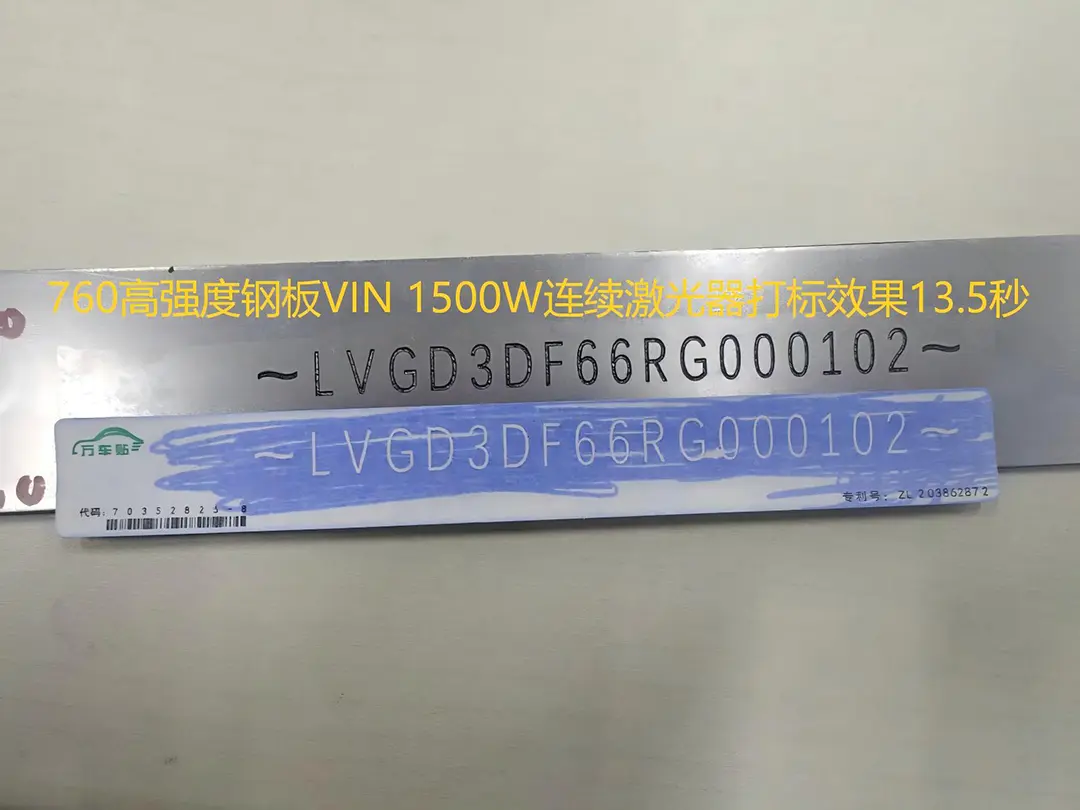
This article explains why VIN marks need clear rubbing results after painting, what causes unclear marks, and how marking depth, process control, and inspection systems contribute to reliable VIN traceability. It is written for automotive engineers, manufacturing engineers, and production managers who are responsible for body shop and paint shop processes.
What Is VIN Rubbing and Why Does It Matter After Painting?
VIN rubbing is the process of transferring the VIN characters from the marked metal surface onto a paper or film using a rubbing or etching method. This is often required for documentation, registration, and internal traceability after the vehicle body has been painted. Because paint can cover the original marking, the rubbing result depends on the depth and quality of the mark beneath the paint layer.
If the VIN mark is too shallow, the paint can fill or obscure the characters, making the rubbing incomplete or unreadable. This creates problems for production and quality teams: vehicles may need rework, additional inspection, or manual verification. In worst cases, an unclear VIN can affect compliance with traceability requirements.
Why VIN Marks Become Unclear After Painting
Several factors can cause VIN marks to lose clarity after painting. The most common reasons are related to marking depth, material properties, and process consistency.
Insufficient Marking Depth
The most direct cause of unclear rubbing is a marking depth that is too shallow. If the VIN is marked only on the surface, the paint layer can easily cover the characters. For reliable rubbing after painting, the marking depth must be sufficient to remain visible through the paint. In deep laser marking, a marking depth of more than 0.2 mm on body-in-white is typically required for permanent VIN marking on high-strength steel.
High-Strength and Hot-Formed Steel
Modern vehicle bodies increasingly use high-strength steel and hot-formed steel to improve safety and reduce weight. These materials can have yield strength exceeding 700 MPa, and hot-formed steel can reach strengths up to 1500 MPa. Marking such materials requires a process that can achieve consistent depth without damaging the material or creating inconsistent character shapes. If the marking system cannot handle these materials properly, the VIN mark may be uneven, which leads to unclear rubbing after painting.
Paint Thickness and Coverage
Paint processes vary in thickness and coverage. A thicker paint layer or multiple coating stages can fill shallow marks more easily. This is why VIN marking specifications often define a minimum depth that must be maintained after painting. Without a controlled marking process, paint can reduce the legibility of the VIN characters.
Positioning and Marking Accuracy
If the marking position is not accurate, the VIN may be placed on a curved or uneven surface, which can affect depth consistency. In automated production lines, positioning errors can also cause the marking head to be at an incorrect angle or distance, resulting in variable depth. This variability becomes more visible after painting, when the rubbing process reveals inconsistent character depth.
How Deep Laser Marking Supports Clear Rubbing Results
Deep laser marking is a process designed to create permanent, deep marks on metal surfaces. Unlike surface marking, deep laser marking removes or displaces material to a controlled depth. This depth is what allows the VIN to remain readable after painting and rubbing.
KINMARK Deep Laser Marking Machine is developed for deep VIN marking on high-strength materials. It adopts a special marking process to ensure clear rubbing results after painting. The system is designed to mark VIN on body-in-white with a marking depth of more than 0.2 mm, including high-strength steel plates with yield strength exceeding 700 MPa and hot-formed steel plates with strength up to 1500 MPa.
Key point: Clear rubbing after painting depends on marking depth and consistency. A deep laser marking process helps ensure the VIN remains legible through the paint layer.
Key Features That Address Unclear VIN Marks
The following features are relevant to solving the problem of unclear VIN marks after painting. They are based on the KINMARK Deep Laser Marking Machine product information.
Deep VIN Marking: Enables permanent VIN deep marking on high-strength steel and hot-formed steel, with marking depth on body-in-white reaching more than 0.2 mm.
Easy Rubbing: Adopts a special marking process to ensure clear rubbing results after painting.
Easy Integration: Designed with various mounting interfaces for quick integration with industrial robots or assisted manipulators for automated production lines.
Vision Guidance (Optional): Optional 3D vision guidance system enables precise positioning and accurate marking to improve production efficiency.
Automatic Traceability (Optional): Optional 3D laser scanning measurement and OCR recognition systems provide online inspection of marking quality and ensure 100% traceability.
Technical Specifications
The following specifications are provided for the KINMARK Deep Laser Marking Machine.
| Power Supply | AC220V ±10%, 50Hz ±2% |
| Power Consumption | <1000W |
| Laser Power | 200W |
| Marking Area | 112mm × 112mm |
| Marking Depth | ≥0.2mm |
| Operating Temperature | 0~40℃ |
| Operating Humidity | ≤90% RH (Non-condensing) |
Applications in Automotive Manufacturing
Deep laser marking for VIN is used in automotive body-in-white production, where traceability and identification are critical. The process is relevant to:
Automotive manufacturing lines requiring permanent VIN marking before painting.
Production of high-strength steel and hot-formed steel body structures.
Automated production lines where marking systems are integrated with robots or manipulators.
Traceability systems that require online inspection of marking quality and OCR recognition.
These applications are directly related to the need for clear rubbing results after painting, because the VIN must remain readable through the paint layer and during subsequent documentation processes.
Benefits of Reliable Deep VIN Marking
When VIN marks are deep and consistent, the rubbing results after painting are clearer. This supports several production and quality objectives:
Improved traceability: A clear VIN allows accurate identification and tracking of the vehicle body throughout production.
Better process consistency: Controlled marking depth reduces variability that can lead to unclear rubbing.
Production integration: Marking systems with flexible mounting interfaces can be integrated into automated lines.
Quality management: Optional 3D scanning and OCR inspection provide online verification of marking quality.
Reduced rework: Clear rubbing results help avoid manual verification or re-marking operations.
These benefits are general and do not include specific performance percentages, as such data depends on individual production conditions.
Why Choose KINMARK for Deep VIN Marking
KINMARK has been involved in automotive intelligent automation equipment since 1996. The company develops and manufactures marking and traceability systems, servo press systems, fluid filling systems, and robot automation systems. Its deep laser marking machine is designed for deep VIN marking on high-strength materials, with features that address the need for clear rubbing results after painting.
KINMARK has established long-term cooperation with automotive manufacturers and suppliers. The company also provides installation and commissioning, operator training, and after-sales support, including remote diagnosis and technical assistance. The complete machine is covered by a 12-month warranty.
Frequently Asked Questions
Why do VIN marks become unclear after painting?
VIN marks can become unclear after painting if the marking depth is too shallow, if the paint layer is thick, or if the marking process does not produce consistent depth on high-strength or hot-formed steel. The paint can fill or cover shallow characters, making the rubbing result incomplete.
What marking depth is needed for clear rubbing after painting?
For deep VIN marking on body-in-white, a marking depth of more than 0.2 mm is typically required. The KINMARK Deep Laser Marking Machine is designed to achieve a marking depth of ≥0.2 mm on high-strength steel and hot-formed steel.
Can deep laser marking be integrated into automated production lines?
Yes. The KINMARK Deep Laser Marking Machine is designed with various mounting interfaces for quick integration with industrial robots or assisted manipulators. It also supports optional 3D vision guidance for precise positioning.
How can marking quality be inspected online?
Optional 3D laser scanning measurement and OCR recognition systems can provide online inspection of marking quality and ensure 100% traceability. This helps verify that the VIN mark meets depth and legibility requirements before painting.
What materials can be marked with the deep laser marking machine?
The system is designed for deep VIN marking on high-strength steel plates with yield strength exceeding 700 MPa and hot-formed steel plates with strength up to 1500 MPa. It is suitable for body-in-white applications in automotive manufacturing.
Conclusion
Clear rubbing results after painting depend on the depth and consistency of the VIN mark. Shallow marks, high-strength materials, paint thickness, and positioning errors can all contribute to unclear VIN characters. Deep laser marking provides a controlled process for creating permanent marks on high-strength steel and hot-formed steel, with a marking depth of more than 0.2 mm on body-in-white. By integrating deep marking with optional vision guidance and online inspection, automotive manufacturers can support reliable traceability and reduce the risk of unclear VIN rubbing after painting.
If you're interested in any of the equipment mentioned in this article, feel free to contact our sales engineers for detailed product information and customized technical solutions.