Fiber Laser Marking Technology for Flexible Labels: What to Know
Introduction
Flexible film labels are used across automotive, electronics, and industrial production environments where identification, traceability, and process control depend on durable printed information. Unlike paper labels, flexible film labels must withstand handling, assembly processes, and long-term service conditions. Applying permanent marking to these materials requires a technology that can interact with the film surface without damaging the label or compromising readability.
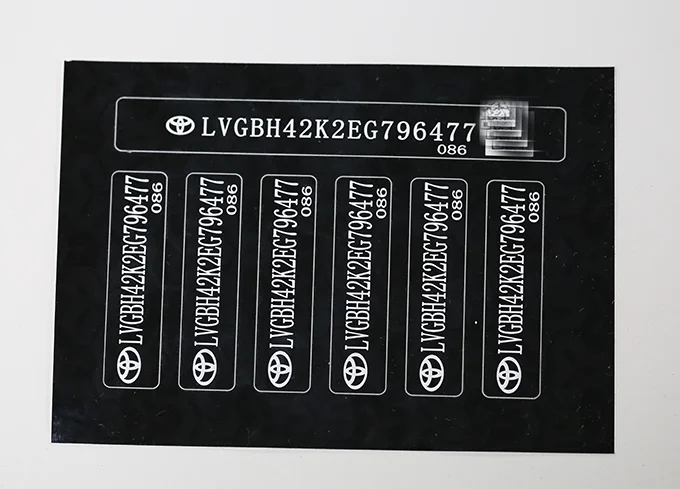
Fiber laser marking technology for flexible labels addresses this requirement. It is a non-contact marking method that uses a focused fiber laser beam to create characters, texts, graphics, 1D barcodes, and 2D codes directly on flexible label materials. The process is integrated into automated equipment that handles unwinding, inspection, leveling, marking, and cutting in one continuous workflow.
This article explains what fiber laser marking technology for flexible labels is, how it works in an automated production line, which features matter to engineers and production managers, and where the technology is applied. It is written for automotive engineers, manufacturing engineers, production managers, and purchasing teams evaluating marking and traceability equipment.
Product Overview
The KINMARK Flexible Fiber Laser Marking Machine is designed for laser marking on flexible film labels from brands such as TESA, 3M, and Schreiner. These labels use ethyl acetate based laser film, a material category specifically suited to laser marking processes. The machine supports automated processing that includes unwinding, inspection, leveling, marking, and cutting, producing customized identification labels in a single integrated system.
The equipment is positioned as a complete flexible label processing solution rather than a standalone marking head. By combining multiple process steps into one automated flow, it enables efficient production of customized labels with stable quality. The system is intended for manufacturers that require permanent, legible marking on flexible film labels as part of their production or component identification processes.
The machine can print a range of content types, including characters, texts, graphics, 1D barcodes, and 2D codes. This range supports identification, traceability, and data capture requirements commonly found in automotive manufacturing, automotive components, new energy vehicles, powertrain manufacturing, and intelligent factory automation environments.
Working Principle
Fiber laser marking for flexible labels operates as a non-contact process. A fiber laser source generates a focused beam that interacts with the label material to create permanent marks. Because the process does not rely on ink, ribbons, or mechanical impression, it avoids consumable handling and physical contact with the film surface.
In the KINMARK flexible label processing system, the workflow is organized as an automated sequence. The label material is first unwound from its supply roll. The web then passes through an inspection stage, followed by leveling, which prepares the film for consistent marking. The marking stage applies the required content, such as characters, texts, graphics, 1D barcodes, or 2D codes, onto the flexible label. Finally, the material is cut to produce the finished labels.
This integrated sequence means that unwinding, inspection, leveling, marking, and cutting are handled within one machine rather than across separate stations. For production engineers, this reduces material handling between process steps and supports a continuous, repeatable label production flow. The modular design of the system allows adaptation to different production requirements and provides flexible integration options for industrial applications.
Process sequence in the KINMARK flexible label system: unwinding → inspection → leveling → marking → cutting. The marking stage supports characters, texts, graphics, 1D barcodes, and 2D codes.
Key Features
The following features are based on the KINMARK Flexible Fiber Laser Marking Machine product information.
Flexible label processing solution: Designed for laser marking on flexible film labels from brands such as TESA, 3M, and Schreiner.
Complete label manufacturing process: Integrates multiple processes into one automated solution, enabling efficient production of customized identification labels with stable quality.
High-quality laser marking: Supports permanent marking of characters, texts, graphics, 1D barcodes, and 2D codes on flexible label materials with clear and reliable marking results.
Flexible automation integration: The modular design allows fast adaptation to different production requirements and provides flexible integration options for industrial applications.
Stable industrial performance: Standardized core components and mature marking processes support reliable operation for continuous production.
Automated handling sequence: Supports automated processing including unwinding, inspection, leveling, marking, and cutting.
Applications
Fiber laser marking technology for flexible labels is relevant wherever durable identification labels are required on flexible film materials. The KINMARK system is designed to produce customized identification labels with permanent marking content, including barcodes and 2D codes that support traceability.
Typical application areas include:
Automotive manufacturing: Identification labels used in vehicle production and assembly environments where permanent marking and traceability are required.
Automotive components: Labeling of component parts and assemblies with characters, texts, graphics, and codes.
New energy vehicles: Identification and traceability labels for components and systems in new energy vehicle production.
Powertrain manufacturing: Durable labeling for powertrain components and related production processes.
Intelligent factory automation: Integration of automated label marking into broader production and traceability workflows.
Because the system supports 1D barcodes and 2D codes, it can produce labels that are read by barcode scanners and vision systems as part of a traceability chain. The automated unwinding, inspection, leveling, marking, and cutting sequence supports continuous label production rather than batch-oriented manual processing. For broader industrial applications, KINMARK also provides marking machine solutions for manufacturing and traceability requirements.
Benefits
The value of fiber laser marking technology for flexible labels comes from combining a non-contact marking process with an automated handling sequence. The following benefits are supported by the product information.
Improved traceability: Permanent marking of 1D barcodes and 2D codes supports identification and data capture across production and logistics processes.
Better process consistency: Integrating unwinding, inspection, leveling, marking, and cutting into one automated solution supports stable label quality.
Production integration: The modular design provides flexible integration options for industrial applications and can adapt to different production requirements.
Marking flexibility: A single system can produce characters, texts, graphics, 1D barcodes, and 2D codes, reducing the need for multiple marking methods.
Continuous operation: Standardized core components and mature marking processes support reliable operation for continuous production.
These benefits are qualitative. Specific performance figures depend on the individual production setup and label material, and should be evaluated against the actual application requirements.
Why Choose KINMARK
KINMARK (Jinan Zhongzheng Jinma Technology Co., Ltd.) was established in 1996 and is a developer and manufacturer of marking and traceability systems, fluid filling systems, servo press systems, and robot automation systems. The company is recognized as a Shandong Province "Gazelle" enterprise and a "Specialized and Sophisticated" enterprise.
The company began with marking machines and expanded into intelligent automotive automation equipment. Its marking and traceability product line has been developed over many years of marking process experience, and core components have been standardized to support modular production. This background is directly relevant to fiber laser marking for flexible labels, where marking quality and process stability are essential.
KINMARK serves industries including complete vehicles, powertrain, automotive components, construction machinery, home appliances, new energy, electronic communications, and rail transit. The company has established long-term cooperative relationships with automotive manufacturers and also provides automation solutions to industrial enterprises. Service support includes a 12-month warranty on the complete machine, fast response service with remote diagnosis and technical assistance, and installation and commissioning with operator training.
Frequently Asked Questions
What types of labels can be processed with fiber laser marking technology for flexible labels?
The KINMARK Flexible Fiber Laser Marking Machine is designed for laser marking on flexible film labels from brands such as TESA, 3M, and Schreiner. These labels use ethyl acetate based laser film, which is suited to the laser marking process. The system produces customized identification labels from these flexible label materials.
What content can be marked on flexible labels?
The system supports permanent marking of characters, texts, graphics, 1D barcodes, and 2D codes on flexible label materials. This range of content supports identification, traceability, and data capture requirements in production environments.
What processing steps does the automated label system include?
The KINMARK flexible label system supports automated processing that includes unwinding, inspection, leveling, marking, and cutting. These steps are integrated into one automated solution, which supports efficient production of customized identification labels with stable quality.
Can the system be integrated into existing production lines?
The system uses a modular design that allows fast adaptation to different production requirements and provides flexible integration options for industrial applications. Integration details depend on the specific production environment and should be reviewed with the equipment supplier.
What support is available after installation?
The complete machine is covered by a 12-month warranty. KINMARK provides fast response service, remote diagnosis, technical assistance, and installation and commissioning with operator training to help customers start production smoothly.
Conclusion
Fiber laser marking technology for flexible labels provides a non-contact method for producing permanent, legible marks on flexible film label materials. By integrating unwinding, inspection, leveling, marking, and cutting into one automated sequence, the KINMARK Flexible Fiber Laser Marking Machine supports efficient production of customized identification labels with stable quality.
For automotive engineers, manufacturing engineers, production managers, and purchasing teams, the key considerations are marking quality, content flexibility, traceability support, and integration into existing production workflows. The ability to mark characters, texts, graphics, 1D barcodes, and 2D codes on TESA, 3M, and Schreiner flexible labels makes the technology relevant to automotive manufacturing, automotive components, new energy vehicles, powertrain manufacturing, and intelligent factory automation.
Evaluating the technology against specific label materials, production requirements, and traceability needs is the practical next step for teams considering flexible label laser marking equipment.
If you're interested in any of the equipment mentioned in this article, feel free to contact our sales engineers for detailed product information and customized technical solutions.