
Automotive Refrigerant Vacuum Evacuation: Process and Purpose
Introduction
Vacuum evacuation is a controlled process step used in automotive fluid filling operations. Before coolant, antifreeze, or refrigerant circuits are charged, air and moisture must be removed from the system. If residual air remains inside a closed circuit, it can affect filling accuracy, liquid level stability, and the repeatability of the filling cycle. Vacuum evacuation addresses this by lowering the pressure inside the circuit so that trapped gases and moisture can be extracted before the fluid is introduced.
In automotive manufacturing and assembly, vacuum evacuation is closely linked to leak testing and pressure filling. These steps are often integrated into a single automated cycle on the production line. This article explains the vacuum evacuation process, its purpose in automotive fluid filling, and how equipment such as the Antifreeze Vacuum Filling Machine applies vacuum evacuation, leak testing, pressure filling, and back suction in one sequence.
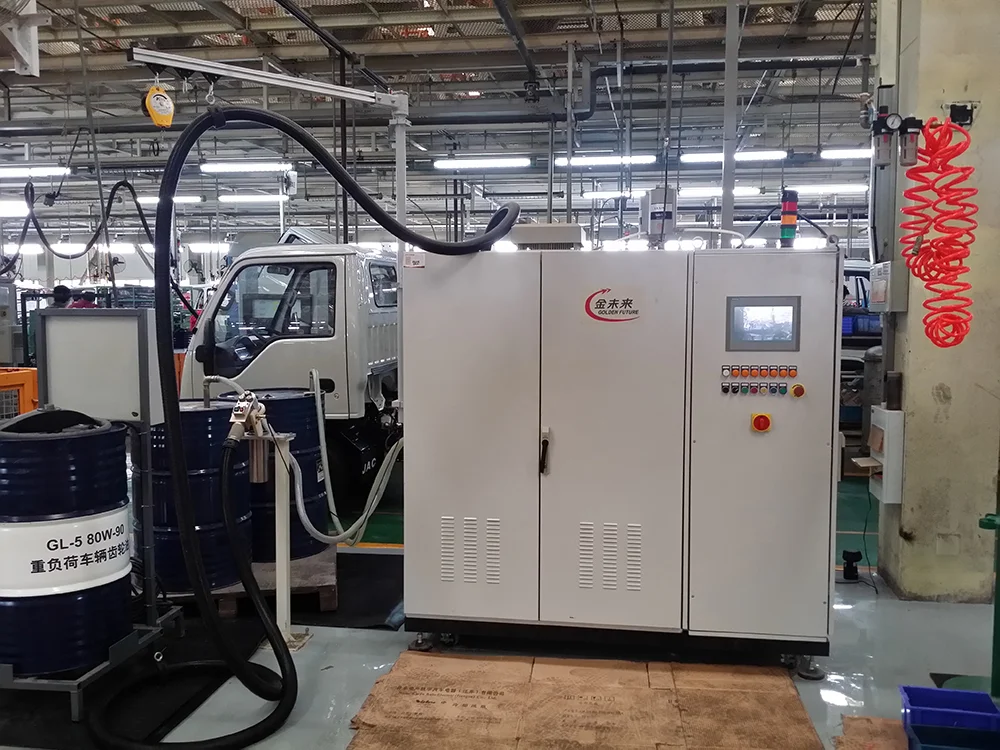
Product Overview
The Antifreeze Vacuum Filling Machine is an automated system designed for precise coolant and antifreeze filling with a stable liquid level. It uses a PLC-controlled system to automate the complete coolant filling process, from vacuum evacuation through leak testing to pressure filling and back suction.
The machine is intended for automated coolant and antifreeze filling applications on automotive production and assembly lines. It handles a filling volume range of 1–400 L and is built to support filling operations where liquid level accuracy and process consistency matter. Rather than treating evacuation, leak testing, and filling as separate manual steps, the system integrates them into one controlled cycle.
Working Principle
The working principle of the Antifreeze Vacuum Filling Machine follows a defined sequence. Understanding this sequence helps clarify what vacuum evacuation does and why it is placed before filling.
Step 1: Vacuum Evacuation
The system first performs vacuum evacuation. Air is drawn out of the circuit to reduce internal pressure. This step prepares the system for leak testing and filling by removing the bulk of trapped air.
Step 2: Leak Testing Under Vacuum and Pressure
After evacuation, the system performs leak testing under vacuum and pressure conditions. This confirms whether the circuit is tight before fluid is introduced. The machine specification lists a negative pressure leak rate of ≤0.5 mbar / 60 s and positive pressure leakage of <1.4 g/year, which are the parameters used to evaluate circuit tightness.
Step 3: Secondary Vacuum
Once system tightness is confirmed, a secondary vacuum is created. This additional evacuation step further reduces residual air and moisture before the coolant is introduced under controlled pressure.
Step 4: Pressure Filling
Coolant is then introduced under controlled pressure. The filling pressure range is 1–4 bar, and the maximum filling speed is 60 L/min. Filling precision is ±0.5%, and liquid level accuracy is ±2 mm.
Step 5: Venting and Back Suction
Once the filling pressure reaches equilibrium, the system automatically vents to atmospheric pressure and performs back suction to remove excess coolant. This helps achieve the specified liquid level and prevents the coolant level from dropping after filling.
Process note: The complete cycle integrates vacuum evacuation, leak testing, pressure filling, and back suction. Each step depends on the previous one, which is why the sequence is controlled automatically rather than performed as separate manual operations.
Key Features
PLC-controlled automation of the complete coolant filling process
Integrated vacuum evacuation, leak testing, pressure filling, and back suction
Leak testing under both vacuum and pressure conditions
Secondary vacuum before coolant introduction
Automatic venting to atmospheric pressure and back suction for liquid level control
Filling volume range of 1–400 L
Filling pressure range of 1–4 bar
Maximum filling speed of 60 L/min
Filling precision of ±0.5%
Liquid level accuracy of ±2 mm
Measurement display range of 0.0–999.9 L
Vacuum pump capacity of 40–65 m³/h
Negative pressure leak rate of ≤0.5 mbar / 60 s
Positive pressure leakage of <1.4 g/year
Power supply of AC 380 V ±10%, 50 Hz ±2%
Equipment dimensions of 1800 × 1000 × 800 mm (customizable)
Applications
The Antifreeze Vacuum Filling Machine is suitable for automated coolant and antifreeze filling applications on automotive production and assembly lines. Its integrated cycle supports filling operations where vacuum evacuation, leak testing, and liquid level control are required in one process.
Typical application areas include automotive manufacturing, automotive components, new energy vehicles, powertrain manufacturing, and intelligent factory automation. The machine is designed for production environments where coolant and antifreeze circuits must be filled consistently and where the filled liquid level must remain stable after the filling cycle is complete.
Benefits
Improved filling consistency: Automated control of evacuation, leak testing, filling, and back suction supports repeatable results across production cycles.
Stable liquid level: Back suction after pressure equilibrium helps achieve the specified liquid level and prevents the coolant level from dropping after filling.
Integrated leak testing: Testing under vacuum and pressure conditions confirms circuit tightness before fluid is introduced.
Production integration: The machine is built for automated coolant and antifreeze filling on automotive production and assembly lines.
Process control: PLC-controlled operation supports consistent execution of the filling sequence.
Why Choose KINMARK
KINMARK is a manufacturer of marking and traceability systems, servo press systems, fluid filling systems, and robot automation systems. The company develops intelligent automotive manufacturing equipment and serves industries including automotive manufacturing, automotive components, new energy vehicles, powertrain manufacturing, and intelligent factory automation.
KINMARK provides installation and commissioning support, with engineers assisting with equipment installation, commissioning, and operator training. The complete machine is covered by a 12-month warranty, and the company provides after-sales support, remote diagnosis, and technical assistance. These service elements are relevant for production environments where continuous operation and reliable filling performance are important.
Frequently Asked Questions
What is the purpose of vacuum evacuation in automotive fluid filling?
Vacuum evacuation removes air and moisture from a closed circuit before fluid is introduced. In the Antifreeze Vacuum Filling Machine, evacuation is followed by leak testing under vacuum and pressure conditions, then a secondary vacuum before coolant is introduced under controlled pressure.
Why is leak testing performed before filling?
Leak testing confirms system tightness before coolant is introduced. The machine performs leak testing under vacuum and pressure conditions, with a negative pressure leak rate of ≤0.5 mbar / 60 s and positive pressure leakage of <1.4 g/year.
What is back suction and why is it used?
After the filling pressure reaches equilibrium, the system automatically vents to atmospheric pressure and performs back suction to remove excess coolant. This helps achieve the specified liquid level and prevents the coolant level from dropping after filling.
What filling volume and pressure does the machine support?
The Antifreeze Vacuum Filling Machine supports a filling volume range of 1–400 L and a filling pressure range of 1–4 bar. The maximum filling speed is 60 L/min, with filling precision of ±0.5% and liquid level accuracy of ±2 mm.
Is the machine suitable for automated production lines?
Yes. The complete cycle integrates vacuum evacuation, leak testing, pressure filling, and back suction, making the machine suitable for automated coolant and antifreeze filling applications on automotive production and assembly lines.
Conclusion
Vacuum evacuation is a foundational step in automotive fluid filling. It removes air and moisture, supports leak testing under vacuum and pressure conditions, and prepares the circuit for controlled pressure filling. When combined with back suction, it also helps achieve a stable liquid level that does not drop after the filling cycle.
The Antifreeze Vacuum Filling Machine applies these steps in one PLC-controlled cycle, integrating vacuum evacuation, leak testing, pressure filling, and back suction. For automotive production and assembly lines that require consistent coolant and antifreeze filling, this integrated approach supports process control, filling accuracy, and stable liquid level results.
If you're interested in any of the equipment mentioned in this article, feel free to contact our sales engineers for detailed product information and customized technical solutions.