Laser Label Marking Machines for Permanent Identification and Traceability
Introduction
Permanent identification and traceability are fundamental requirements in automotive manufacturing and industrial production. Labels that carry part numbers, barcodes, and production data must remain legible and durable throughout the product lifecycle. Laser label marking machines are designed to meet this need by marking flexible film labels with permanent, high-contrast characters, graphics, and codes.
Unlike conventional printing methods that may fade, smear, or delaminate, laser marking creates a permanent mark on the label material itself. This makes laser label marking particularly relevant for automotive components, powertrain assemblies, and other applications where identification must survive harsh environments, handling, and long-term storage.
This article provides a product guide to laser label marking machines, covering their working principle, key features, applications, benefits, and selection considerations. It is intended for automotive engineers, manufacturing engineers, production managers, and purchasing professionals evaluating labeling and traceability solutions.
Product Overview
What Is a Laser Label Marking Machine?
A laser label marking machine is an automated system that uses a fiber laser to mark flexible film labels. KINMARK Flexible Fiber Laser Marking Machine is designed for laser marking on flexible film labels from brands such as TESA, 3M, and Schreiner. It supports automated processing including unwinding, inspection, leveling, marking, and cutting.
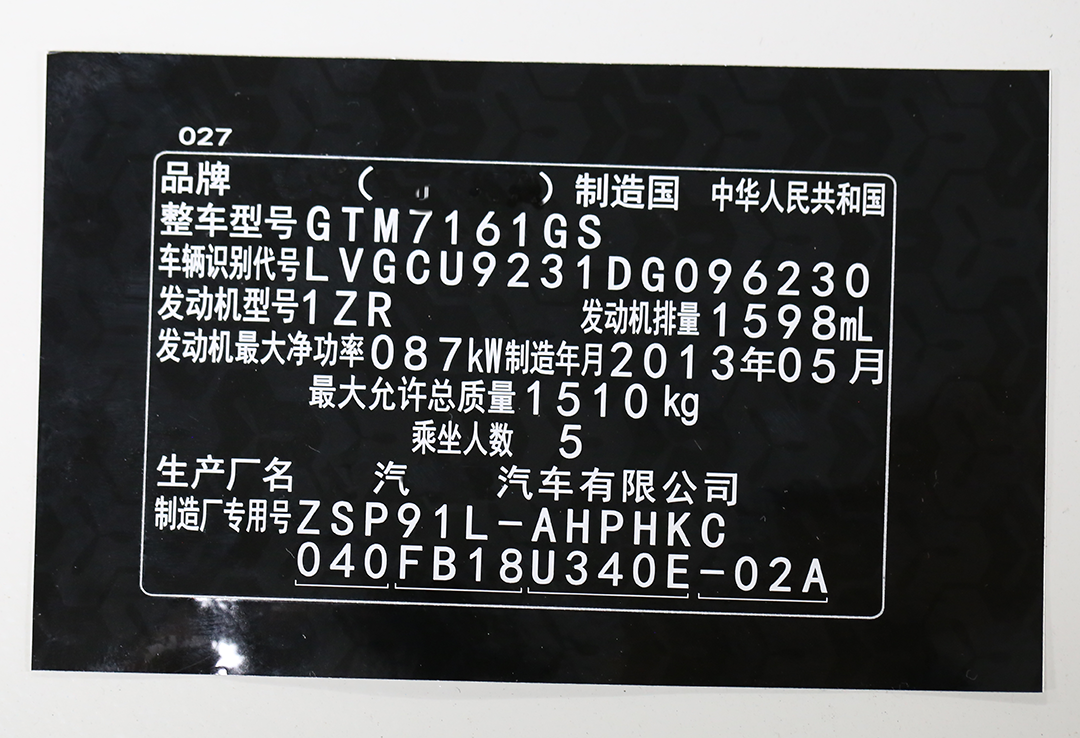
The system integrates multiple processes into one automated solution, enabling efficient production of customized identification labels with stable quality. It is suitable for various brands of ethyl acetate based laser film printing and can produce a wide range of labels required by customers.
Primary Purpose
The primary purpose of a laser label marking machine is to produce permanent, high-quality identification labels for industrial products and components. These labels typically contain characters, texts, graphics, 1D barcodes, and 2D codes that support identification and traceability across manufacturing and supply chain processes.
Industrial Problem Solved
Traditional label printing can produce marks that are susceptible to abrasion, chemical exposure, or environmental degradation. In automotive and industrial environments, such degradation can lead to unreadable labels, lost traceability, and potential compliance issues. Laser label marking addresses this by creating permanent marks directly on flexible film label materials, ensuring identification remains clear and reliable.
Suitable Scenarios
Laser label marking machines are suitable for applications requiring durable, high-contrast labels with barcode and 2D code content. They are used in automotive manufacturing, automotive components, new energy vehicles, powertrain manufacturing, and intelligent factory automation environments where automated label production and traceability are essential.
Working Principle
The KINMARK Flexible Fiber Laser Marking Machine performs automated processing of flexible film labels through a sequence of integrated operations: unwinding, inspection, leveling, marking, and cutting.
Unwinding: The label material is fed from a roll into the processing line.
Inspection: The material is checked to ensure consistent quality before marking.
Leveling: The film is leveled to provide a stable surface for accurate laser marking.
Marking: A fiber laser marks the required characters, texts, graphics, 1D barcodes, and 2D codes onto the flexible label material.
Cutting: The marked labels are cut to the required dimensions.
This integrated process enables efficient production of customized identification labels with stable quality. The use of fiber laser technology allows permanent marking on flexible film materials, producing clear and reliable marking results.
Key Features
Flexible Label Processing Solution
The system is designed for laser marking on flexible film labels from brands such as TESA, 3M, and Schreiner. It supports automated processing including unwinding, inspection, leveling, marking, and cutting.
Complete Label Manufacturing Process
The system integrates multiple processes into one automated solution, enabling efficient production of customized identification labels with stable quality.
High-Quality Laser Marking
Supports permanent marking of characters, texts, graphics, 1D barcodes, and 2D codes on flexible label materials with clear and reliable marking results.
Flexible Automation Integration
The modular design allows fast adaptation to different production requirements and provides flexible integration options for industrial applications.
Stable Industrial Performance
KINMARK laser marking technology features standardized core components and mature marking processes, ensuring reliable operation for continuous production.
Marking Capabilities
The machine can print various characters, texts, graphics, 1D barcodes, and 2D codes, supporting a wide range of identification and traceability requirements.
Applications
Laser label marking machines are used across industries that require permanent identification and traceability. Based on the product capabilities described, the following applications are supported:
Automotive Manufacturing
In automotive manufacturing, labels are used for component identification, VIN plates, and production tracking. Laser label marking produces durable labels that withstand handling and environmental exposure.
Automotive Components
Automotive component suppliers require labels that remain legible throughout the supply chain. Laser marking on flexible film labels provides permanent identification for parts, assemblies, and sub-assemblies.
New Energy Vehicles
New energy vehicle production involves battery packs, electric drive units, and power electronics that require traceability. Laser label marking supports permanent identification for these critical components.
Powertrain Manufacturing
Engines, transmissions, and drivetrain components require durable labels that survive assembly, testing, and operation. Laser label marking provides permanent marks on flexible film labels used in powertrain manufacturing.
Intelligent Factory Automation
Automated label production integrates into intelligent factory workflows, supporting barcode and 2D code traceability for production management and quality control.
Benefits
Permanent Identification: Laser marking creates durable marks on flexible film labels, reducing the risk of unreadable labels due to fading or abrasion.
Improved Traceability: Supports 1D barcodes and 2D codes for tracking components and products through manufacturing and supply chain processes.
Process Consistency: Automated unwinding, inspection, leveling, marking, and cutting provide stable quality and repeatable results.
Production Integration: Modular design allows integration into existing production lines and adaptation to different production requirements.
Manufacturing Efficiency: Combining multiple processes into one automated solution reduces manual handling and supports efficient label production.
Quality Management: Clear and reliable marking results support quality control and compliance documentation.
Why Choose KINMARK
KINMARK is a manufacturer of marking and traceability systems, servo press systems, fluid filling systems, and robot automation systems. Since 1996, the company has developed marking technology for automotive intelligent automation equipment, with core components standardized and mature marking processes.
KINMARK has established long-term cooperation with automotive manufacturers and suppliers across the industry. The company provides installation and commissioning support, operator training, and after-sales service to help customers start production smoothly.
The Flexible Fiber Laser Marking Machine reflects KINMARK's experience in marking and traceability, offering a modular, automated solution for permanent identification labels used in automotive and industrial applications.
Note: For specific technical parameters, marking area, laser power, and production capacity, please contact KINMARK directly. Specifications are configured based on application requirements.
Frequently Asked Questions
What types of labels can be marked with a fiber laser marking machine?
The KINMARK Flexible Fiber Laser Marking Machine is designed for flexible film labels from brands such as TESA, 3M, and Schreiner. It is suitable for various brands of ethyl acetate based laser film printing.
What content can be marked on flexible labels?
The machine can print various characters, texts, graphics, 1D barcodes, and 2D codes on flexible label materials.
What automated processes are included in the system?
The system supports automated processing including unwinding, inspection, leveling, marking, and cutting, producing customized identification labels with stable quality.
Can the machine be integrated into existing production lines?
Yes. The modular design allows fast adaptation to different production requirements and provides flexible integration options for industrial applications.
What support does KINMARK provide for installation and operation?
KINMARK provides equipment installation, commissioning, and operator training. The complete machine is covered by a 12-month warranty, with professional technical support and long-term maintenance service.
Conclusion
Laser label marking machines provide a reliable solution for permanent identification and traceability in automotive and industrial manufacturing. By integrating unwinding, inspection, leveling, marking, and cutting into one automated process, the KINMARK Flexible Fiber Laser Marking Machine supports efficient production of customized labels with clear, durable marks.
For applications requiring permanent identification on flexible film labels, laser label marking offers process consistency, traceability support, and flexible integration into production environments. As manufacturing continues to demand higher levels of traceability and quality control, laser label marking remains a practical and effective solution.
If you're interested in any of the equipment mentioned in this article, feel free to contact our sales engineers for detailed product information and customized technical solutions.