
Automatic Refrigerant Filling Machine for Automotive Production Lines
Introduction
Fluid filling is one of the final and most quality-critical steps on an automotive production or assembly line. Whether the medium is coolant, antifreeze, or a comparable refrigerant circuit fluid, the fill must be accurate, repeatable, and free of trapped air that can cause level drop after the vehicle leaves the station. Manual filling methods struggle to deliver this consistency at line speed, which is why automated vacuum filling equipment is widely adopted in vehicle assembly and powertrain manufacturing.
An automatic refrigerant filling machine combines vacuum evacuation, leak testing, pressure filling, and back suction into a single controlled cycle. This article explains how the equipment works, what it is used for, and the practical factors engineers and production managers should consider when specifying a filling system for a production line.
Product Overview
The Antifreeze Vacuum Filling Machine is an automated filling system designed for precise coolant and antifreeze filling with a stable liquid level. It uses a PLC-controlled system to automate the complete filling process, from vacuum evacuation through to final level correction.
The machine is intended for automated coolant and antifreeze filling applications on automotive production and assembly lines. Its value lies in combining several process steps that are normally handled separately: air removal, tightness verification, controlled filling, and level stabilization. By integrating these steps, the equipment supports a repeatable fill result rather than a fill that depends on operator technique.
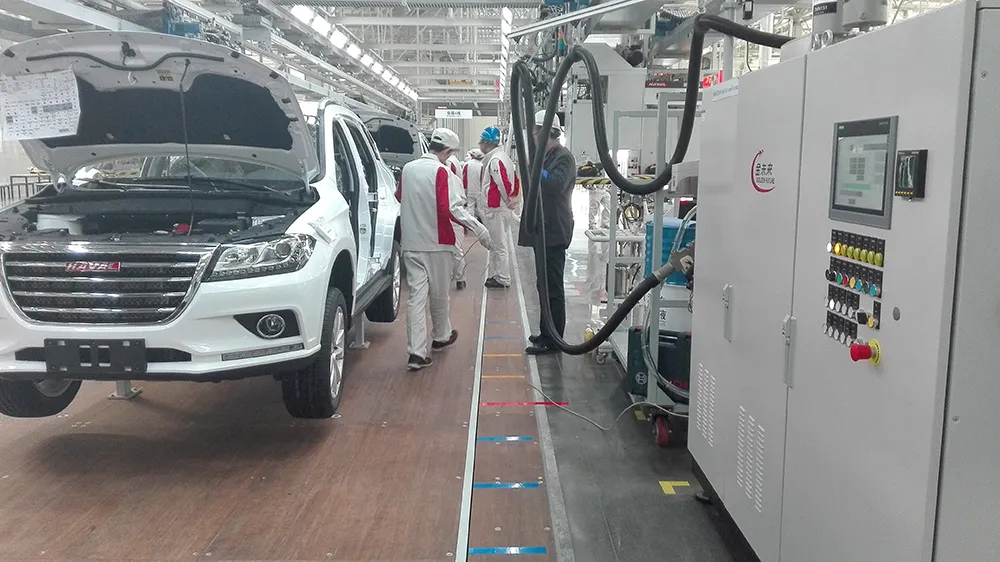
Typical equipment specifications include:
| Parameter | Specification |
|---|---|
| Filling Medium | Antifreeze / Coolant |
| Filling Volume | 1–400 L |
| Filling Pressure | 1–4 bar |
| Maximum Filling Speed | 60 L/min |
| Filling Precision | ±0.5% |
| Liquid Level Accuracy | ±2 mm |
| Measurement Display Range | 0.0–999.9 L |
| Vacuum Pump Capacity | 40–65 m³/h |
| Negative Pressure Leak Rate | ≤0.5 mbar / 60 s |
| Positive Pressure Leakage | <1.4 g/year |
| Power Supply | AC 380 V ±10%, 50 Hz ±2% |
| Equipment Dimensions | 1800 × 1000 × 800 mm (customizable) |
Working Principle
The filling cycle follows a defined sequence that is managed by the PLC control system.
1. Vacuum Evacuation
The system first performs vacuum evacuation of the circuit or vessel being filled. Removing air before filling is essential because trapped air can later escape or compress, causing the liquid level to fall after the fill is complete.
2. Leak Testing Under Vacuum and Pressure
After evacuation, the system performs leak testing under vacuum and pressure conditions. This confirms system tightness before the medium is introduced. The specified negative pressure leak rate is ≤0.5 mbar / 60 s, and positive pressure leakage is <1.4 g/year.
3. Secondary Vacuum
Once tightness is confirmed, a secondary vacuum is created before the coolant is introduced. This additional evacuation step further supports stable filling conditions.
4. Pressure Filling
The coolant is then introduced under controlled pressure, within a filling pressure range of 1–4 bar. Filling volume can range from 1 to 400 L, with a maximum filling speed of 60 L/min.
5. Venting and Back Suction
Once the filling pressure reaches equilibrium, the system automatically vents to atmospheric pressure and performs back suction to remove excess coolant. This helps achieve the specified liquid level and prevents the coolant level from dropping after filling.
Process note: The complete cycle integrates vacuum evacuation, leak testing, pressure filling, and back suction. Filling precision is specified at ±0.5%, and liquid level accuracy at ±2 mm.
Key Features
PLC-controlled automation — the complete coolant filling process is automated under PLC control.
Integrated vacuum evacuation — air is removed before filling to support a stable final level.
Leak testing under vacuum and pressure — system tightness is verified before the medium is introduced.
Secondary vacuum before filling — an additional evacuation step is performed before coolant introduction.
Controlled pressure filling — filling pressure is regulated within a 1–4 bar range.
Automatic venting and back suction — excess coolant is removed to reach the specified liquid level.
Wide filling volume range — supports filling volumes from 1 to 400 L.
Measurement display — measurement display range of 0.0–999.9 L.
Customizable dimensions — standard equipment dimensions are 1800 × 1000 × 800 mm and can be customized.
Applications
The Antifreeze Vacuum Filling Machine is suitable for automated coolant and antifreeze filling applications on automotive production and assembly lines. Its combination of vacuum evacuation, leak testing, and pressure filling makes it relevant to production environments where fill accuracy and system tightness both matter.
Automotive Manufacturing
On vehicle assembly lines, coolant and antifreeze circuits must be filled to a defined level without introducing air pockets. The machine's vacuum-based process targets this requirement directly.
Powertrain Manufacturing
Powertrain components and assemblies often include fluid circuits that require verified tightness and accurate fill volumes. The integrated leak test supports this verification before filling.
New Energy Vehicles
New energy vehicle platforms use dedicated thermal management circuits that require controlled coolant filling. The machine's filling volume range of 1–400 L and liquid level accuracy of ±2 mm support these applications.
Intelligent Factory Automation
Because the cycle is PLC-controlled and automated end to end, the equipment can be integrated into automated production and assembly lines as part of a broader intelligent factory workflow.
Benefits
Improved process consistency — the automated cycle removes dependence on manual filling technique.
Stable liquid level — back suction after filling helps prevent the coolant level from dropping after the fill is complete.
Integrated leak verification — tightness is checked under vacuum and pressure before the medium is introduced.
Reduced trapped air — vacuum evacuation before filling supports a more reliable fill result.
Production line integration — PLC-controlled automation supports use in automated assembly environments.
Accurate measurement — filling precision of ±0.5% and liquid level accuracy of ±2 mm support repeatable results.
Why Choose
KINMARK is a developer and manufacturer of marking and traceability systems, servo press systems, fluid filling systems, and robot automation systems. The company's fluid filling product line addresses coolant and antifreeze filling for automotive production environments. With service and maintenance centers in cities including Shanghai, Beijing, Guangzhou, Changchun, Wuhan, and Chongqing, KINMARK supports customers across major automotive manufacturing regions.
The Antifreeze Vacuum Filling Machine is supplied with a 12-month warranty covering the complete machine, with professional technical support and long-term maintenance service. Installation and commissioning support is available, including equipment installation, commissioning, and operator training to help customers start production smoothly. Remote diagnosis and technical assistance are also provided to support continuous operation.
Frequently Asked Questions
What is an automatic refrigerant filling machine used for?
It is used for automated filling of coolant, antifreeze, and comparable circuit fluids on production and assembly lines. The Antifreeze Vacuum Filling Machine automates vacuum evacuation, leak testing, pressure filling, and back suction in one cycle.
How does the machine prevent the coolant level from dropping after filling?
After the filling pressure reaches equilibrium, the system automatically vents to atmospheric pressure and performs back suction to remove excess coolant. This helps achieve the specified liquid level and prevents the level from dropping after filling.
What filling volume and speed does the machine support?
The filling volume range is 1–400 L, with a maximum filling speed of 60 L/min and a filling pressure range of 1–4 bar.
What is the filling precision and liquid level accuracy?
The specified filling precision is ±0.5%, and the liquid level accuracy is ±2 mm. The measurement display range is 0.0–999.9 L.
Is leak testing included in the filling cycle?
Yes. The system performs leak testing under vacuum and pressure conditions after vacuum evacuation and before the coolant is introduced. The specified negative pressure leak rate is ≤0.5 mbar / 60 s, and positive pressure leakage is <1.4 g/year.
Conclusion
An automatic refrigerant filling machine addresses a specific production requirement: filling coolant and antifreeze circuits accurately, without trapped air, and with a liquid level that remains stable after the vehicle or component leaves the station. The Antifreeze Vacuum Filling Machine meets this requirement by integrating vacuum evacuation, leak testing under vacuum and pressure, controlled pressure filling, and automatic back suction into a single PLC-controlled cycle.
For automotive manufacturing, powertrain, new energy vehicle, and intelligent factory automation applications, the machine's filling volume range, filling precision, and liquid level accuracy provide a defined basis for specification. KINMARK's fluid filling systems, supported by installation, commissioning, training, and after-sales service, offer a practical option for production lines that require consistent coolant filling.
If you're interested in any of the equipment mentioned in this article, feel free to contact our sales engineers for detailed product information and customized technical solutions.