
How PLC Control Coordinates Vacuum Evacuation and Refrigerant Filling
Introduction
Refrigerant charging is one of the final and most quality-sensitive steps on an automotive assembly line. Before a vehicle air conditioning system can accept refrigerant, the circuit must be evacuated to remove air and moisture; after evacuation, the correct mass of refrigerant must be introduced at the correct pressure. Performing these two operations as separate, manually sequenced steps introduces variability into the process and creates opportunities for error.
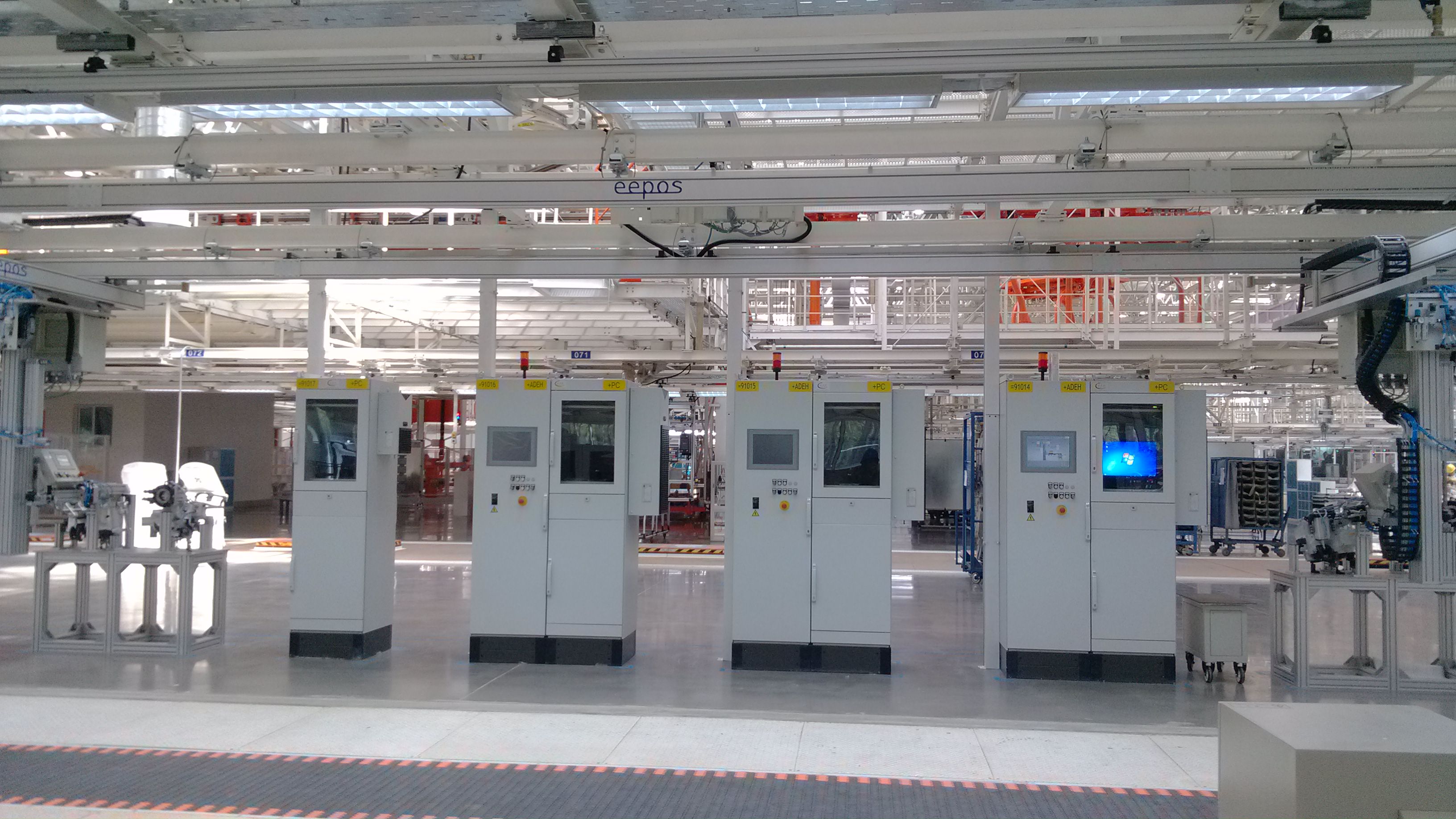
A PLC controlled refrigerant filling system addresses this by placing vacuum evacuation and refrigerant filling under a single programmable control sequence. The controller governs when the vacuum pump runs, when the evacuation step is complete, when the pneumatic plunger pump is activated, and how much refrigerant has passed through the mass flow meter. This article explains how that coordination works, what the main process parameters are, and where such equipment fits in automotive manufacturing.
Product Overview
The refrigerant vacuum filling machine is a station-level system for evacuating and charging automotive air conditioning circuits. It is controlled by a PLC system that automatically performs vacuum evacuation and refrigerant filling in sequence. Refrigerant is delivered by a dedicated pneumatic plunger pump, and the filled quantity is measured by a mass flow meter, which supports precise and high-pressure refrigerant charging.
The machine is built around two process functions that are normally handled by separate equipment or by manual operator sequencing:
Vacuum evacuation — a vacuum pump evacuates the vehicle air conditioning system before any refrigerant is introduced.
Refrigerant filling — a pneumatic plunger pump delivers refrigerant, with the quantity measured by a mass flow meter.
The equipment is intended for automotive air conditioning system filling applications. Its compact structure, convenient maintenance, and high level of automation make it suited to production environments where repeatable charging results and simplified operator interaction are required.
Working Principle
The working principle of the system can be understood as a controlled sequence in which the PLC manages the transition from evacuation to filling, and then verifies that the required quantity has been delivered.
Step 1: Connection and Evacuation
The vehicle air conditioning system is connected to the machine, and the PLC-based control system activates the vacuum pump to evacuate air from the circuit. The vacuum pump has a capacity of 30 m³/h, and the machine is specified to reach a minimum vacuum level below 2 mbar. Because the evacuation step is controlled automatically rather than sequenced by an operator, the transition to filling is governed by the controller rather than by manual judgment.
Step 2: Refrigerant Delivery
Once evacuation is complete, the dedicated pneumatic plunger pump delivers refrigerant into the system. Filling pressure is specified in the range of 1 to 3.5 bar, which supports high-pressure refrigerant charging. The pneumatic plunger principle provides a positive-displacement delivery method suited to controlled dosing rather than simple transfer.
Step 3: Mass Flow Measurement
During filling, a mass flow meter measures the quantity of refrigerant that has passed into the system. Measurement is based on mass rather than volume, which is significant because refrigerant density changes with temperature and pressure. The filling volume display covers 0.0 to 9999 mL, and filling accuracy is specified at ±5 g. Because the measurement is taken in-line during delivery, the filling process can be completed in a single cycle.
Step 4: Sequence Completion
The PLC coordinates the overall sequence so that evacuation and filling are performed as one automated operation. The specified filling cycle time is under 200 seconds, based on a single filling below 2 kg. This figure is tied to that filling quantity and should not be extrapolated to other charge weights.
Process note: The accuracy figure of ±5 g refers to the filling accuracy of the machine as specified. Actual results at a given station depend on the vehicle circuit, connection integrity, and operating conditions, and should be validated during commissioning.
Key Features
Precise Refrigerant Filling
High-precision mass flow measurement supports accurate refrigerant dosing, stable filling performance, and consistent filling quality across cycles. Because the measurement is mass-based, the delivered quantity is tracked directly rather than inferred from time or pressure alone.
Automatic Vacuum Evacuation
The PLC-controlled vacuum pump automatically evacuates the vehicle air conditioning system before refrigerant filling. Automating this step improves process efficiency and reliability by removing manual sequencing from the evacuation stage.
Compact Structure and Easy Maintenance
The machine uses a compact, optimized design intended for convenient operation and easy maintenance, supporting reliable long-term performance in production use.
High Automation Level
Automated control of both vacuum evacuation and refrigerant filling reduces manual intervention, simplifies operation, and improves production efficiency. The operator is not required to manually coordinate the handover between the two process stages.
Technical Specifications
| Parameter | Specification |
| Equipment dimension | 1800 × 1000 × 1800 mm (customizable) |
| Applicable refrigerant | R134A / R1234yf |
| Minimum vacuum level | < 2 mbar |
| Vacuum pump capacity | 30 m³/h |
| Filling volume display | 0.0 ~ 9999 mL |
| Filling pressure | 1 ~ 3.5 bar |
| Filling accuracy | ±5 g |
| Filling cycle time | <200 s (based on single filling below 2 kg) |
| Power supply | AC380V ±10%, 50Hz ±2% |
| Air supply pressure | 0.4 ~ 0.5 MPa |
| Rated power | 5 kW |
Applications
The refrigerant vacuum filling machine is designed for automotive air conditioning system filling applications. Within automotive manufacturing, this places it at the end-of-line or vehicle assembly stage, where the air conditioning circuit is evacuated and charged before the vehicle leaves the station.
Automotive manufacturing — evacuation and charging of vehicle air conditioning systems during assembly.
Refrigerant types — the machine is specified for R134A and R1234yf, covering both conventional and lower-GWP refrigerant charges used in vehicle air conditioning systems.
Because the process is PLC-controlled and automated, the equipment is suited to production lines where charging consistency and reduced manual intervention are priorities, rather than to one-off service workshop use alone.
Benefits
Consistent charging quality — mass flow measurement and automated sequencing support repeatable filling results from vehicle to vehicle.
Reduced manual intervention — the operator does not manually coordinate evacuation and filling, simplifying the station workflow.
Single-cycle filling — high filling accuracy allows the filling process to be completed in one cycle, avoiding repeated topping-up steps.
Process reliability — automatic evacuation before charging reduces the risk of sequencing errors that affect the air conditioning circuit.
Maintainability — the compact structure is designed for convenient maintenance, supporting equipment availability over the production lifecycle.
These benefits are process-level and qualitative. Specific throughput, cost, or efficiency outcomes depend on line configuration, vehicle charge weights, and station integration, and should be assessed against the actual production scenario.
Why Choose KINMARK
KINMARK (Jinan Zhongzheng Jinma Technology Co., Ltd.) was founded in 1996 and is a developer and manufacturer of marking and traceability systems, fluid filling systems, servo press systems, and robot automation systems. The company is recognized as a Shandong Province "Gazelle" enterprise and a "Specialized, Refined, Distinctive, and Innovative" enterprise, with offices and service centers in Shanghai, Beijing, Guangzhou, Changchun, Wuhan, and Chongqing.
Fluid filling is one of the company's core product lines, developed alongside marking and traceability, servo press, and robot automation technologies for automotive intelligent automation applications. This focus on automotive manufacturing equipment means the refrigerant vacuum filling machine is designed within an understanding of vehicle assembly process requirements rather than as a standalone utility device.
KINMARK supports customers through a 12-month warranty on the complete machine, fast-response after-sales support with remote diagnosis and technical assistance, and installation and commissioning services that include operator training to help production start smoothly.
Frequently Asked Questions
How does the PLC coordinate vacuum evacuation and refrigerant filling?
The PLC-based control system automatically controls the vacuum pump to evacuate the vehicle air conditioning system, then controls the filling stage in which a pneumatic plunger pump delivers refrigerant. Because both stages are governed by the same controller, the handover from evacuation to filling is automated rather than manually sequenced by an operator.
How is the refrigerant quantity measured?
A mass flow meter measures the filling quantity during delivery. The machine's filling accuracy is specified at ±5 g, and the filling volume display range is 0.0 to 9999 mL.
Which refrigerants can the machine handle?
The machine is specified for R134A and R1234yf refrigerants.
What vacuum level and filling pressure does the machine achieve?
The minimum vacuum level is below 2 mbar, with a vacuum pump capacity of 30 m³/h. Filling pressure is specified in the range of 1 to 3.5 bar.
What is the filling cycle time?
The specified filling cycle time is under 200 seconds, based on a single filling below 2 kg. Cycle time for other charge quantities should be confirmed for the specific application.
Conclusion
Coordinating vacuum evacuation and refrigerant filling under a single PLC control sequence changes refrigerant charging from a manually sequenced operation into a controlled, repeatable process step. In the refrigerant vacuum filling machine, the PLC governs the vacuum pump and the pneumatic plunger pump, while a mass flow meter verifies the delivered quantity, with filling accuracy specified at ±5 g and a minimum vacuum level below 2 mbar.
For automotive manufacturing and vehicle assembly operations handling R134A or R1234yf air conditioning systems, this combination of automated evacuation, mass-based dosing, and single-cycle filling provides a practical basis for consistent charging quality at the station level.
If you're interested in any of the equipment mentioned in this article, feel free to contact our sales engineers for detailed product information and customized technical solutions.