
How to Create Traceable Labels with Laser Marking
Introduction
Traceability is a core requirement in automotive manufacturing, component production, and other industrial sectors where every part must be identified, tracked, and verified throughout its lifecycle. Laser marking has become a preferred method for creating durable, high-contrast identification labels that carry characters, graphics, 1D barcodes, and 2D codes. Unlike traditional printing methods, laser marking produces permanent marks that resist wear, chemicals, and environmental exposure.
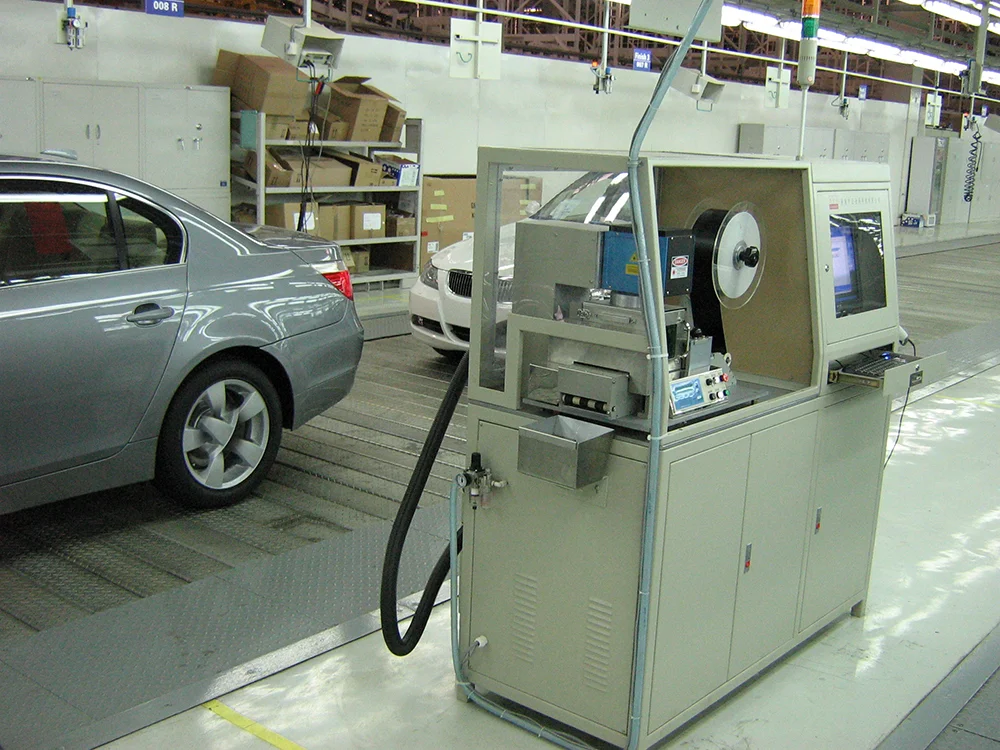
This guide explains how to create traceable labels with laser marking, focusing on flexible film labels commonly used in automotive and industrial applications. It covers the materials involved, the working principle of fiber laser marking on flexible labels, the automated processing steps, and practical considerations for integrating this technology into production lines.
Understanding Traceable Labels
A traceable label is an identification tag that contains machine-readable data, such as 1D barcodes or 2D codes, along with human-readable text and graphics. These labels are attached to parts, assemblies, or packaging to enable tracking through manufacturing, logistics, and service operations. The data encoded on the label typically links to a database that stores production history, quality records, and other relevant information.
For a label to be truly traceable, the marking must be clear, consistent, and permanent. Fading, smudging, or partial marks can cause scanning failures and break the traceability chain. Laser marking addresses these challenges by creating high-contrast, durable marks directly on the label material.
Why Laser Marking for Traceable Labels
Laser marking offers several advantages for producing traceable labels:
Permanence: Laser marks are created by altering the material surface, making them resistant to abrasion, solvents, and temperature changes.
Precision: Fiber laser systems can produce fine characters, complex graphics, and high-density 2D codes with reliable readability.
Flexibility: Marking parameters can be adjusted for different label materials and code types without changing hardware.
Automation compatibility: Laser markers can be integrated into automated lines for continuous label production.
These characteristics make laser marking suitable for applications where labels must remain legible for years and withstand harsh industrial environments.
Materials for Laser-Marked Traceable Labels
The choice of label material affects marking quality and durability. KINMARK's flexible fiber laser marking machine is designed for laser marking on flexible film labels from brands such as TESA, 3M, and Schreiner. These labels are based on ethyl acetate laser film, a material that responds well to fiber laser marking.
When selecting a label material for laser marking, consider the following:
Laser compatibility: Not all films are suitable for laser marking. The material must be able to absorb the laser wavelength and produce a clear mark.
Adhesive properties: The label adhesive must be compatible with the surface where the label will be applied.
Environmental resistance: The label and mark must withstand the conditions of the application, such as temperature, humidity, and chemical exposure.
Using a laser marking system specifically designed for flexible labels helps ensure consistent results across different materials.
Working Principle: Fiber Laser Marking on Flexible Labels
Fiber laser marking uses a focused laser beam to create permanent marks on the surface of the label material. The laser beam is directed by a galvanometer scanner that moves the beam according to the desired pattern. When the beam interacts with the label material, it causes a localized change in the material, such as discoloration or ablation, producing a visible mark.
The process is controlled by software that defines the marking pattern, including characters, text, graphics, 1D barcodes, and 2D codes. The marking parameters, such as laser power, marking speed, and pulse frequency, can be adjusted to achieve the required contrast and readability on different label materials.
For flexible label processing, the laser marking machine is integrated with a handling system that performs unwinding, inspection, leveling, marking, and cutting. This automated approach enables continuous production of customized labels with stable quality.
How to Create Traceable Labels with Laser Marking: Step-by-Step
The following steps outline the process of creating traceable labels using a flexible fiber laser marking machine:
Step 1: Label Design and Data Preparation
Define the content of the label, including human-readable text, graphics, and machine-readable codes. The data should be structured to support traceability requirements, such as unique serial numbers, batch codes, and production dates. Prepare the marking file in a format compatible with the laser marking software.
Step 2: Material Selection and Loading
Select a flexible film label material that is compatible with fiber laser marking, such as TESA, 3M, or Schreiner ethyl acetate laser film. Load the label roll onto the unwinding unit of the marking machine. Ensure the material is properly aligned and tensioned for smooth processing.
Step 3: Unwinding and Inspection
The machine automatically unwinds the label roll and feeds the material into the inspection station. The inspection system checks for defects, such as surface irregularities or contamination, that could affect marking quality. Any problematic sections can be flagged or removed before marking.
Step 4: Leveling
The label material passes through a leveling stage to ensure it is flat and free from wrinkles or curls. A flat surface is essential for consistent laser marking, as variations in focus distance can lead to inconsistent mark quality.
Step 5: Laser Marking
The leveled label enters the marking station, where the fiber laser marks the programmed content. The system can mark characters, texts, graphics, 1D barcodes, and 2D codes on the flexible label material. The marking parameters are set according to the material and the required contrast.
Step 6: Cutting and Finishing
After marking, the label is cut to the required shape and size. The cutting process can be integrated with the marking system to produce finished labels ready for application. The cut labels are collected or fed into downstream equipment for further processing.
Step 7: Verification and Traceability Integration
Verify the marked labels by scanning the 1D or 2D codes to ensure readability and data accuracy. The marking data can be linked to a manufacturing execution system (MES) or traceability database to enable full tracking of the labeled parts. This integration ensures that each label carries unique, verifiable information.
Key Features of KINMARK Flexible Fiber Laser Marking Machine
KINMARK's flexible fiber laser marking machine is designed to support the production of traceable labels with the following features:
Automated processing: Integrates unwinding, inspection, leveling, marking, and cutting into a single automated solution.
High-quality laser marking: Supports permanent marking of characters, texts, graphics, 1D barcodes, and 2D codes on flexible label materials.
Modular design: Allows fast adaptation to different production requirements and provides flexible integration options.
Standardized core components: Ensures reliable operation and consistent marking quality for continuous production.
Material compatibility: Designed for laser marking on flexible film labels from brands such as TESA, 3M, and Schreiner.
Applications of Laser-Marked Traceable Labels
Laser-marked flexible labels are used in various industries where durable identification is required. In the automotive sector, these labels are applied to components, assemblies, and finished vehicles to support traceability and quality management. Other applications include:
Automotive manufacturing and assembly lines
Automotive components and parts identification
New energy vehicle battery and powertrain labeling
Industrial equipment and machinery
Electronics and communication devices
The ability to mark 1D and 2D codes on flexible labels makes this technology suitable for automated traceability systems that require reliable data capture.
Benefits of Laser Marking for Traceable Labels
Implementing laser marking for traceable label production offers several benefits:
Improved traceability: Permanent, high-contrast marks ensure that codes remain readable throughout the product lifecycle.
Process consistency: Automated processing reduces variability and ensures uniform marking quality.
Production integration: The system can be integrated into existing production lines for continuous operation.
Reduced downtime: Standardized components and reliable operation support continuous production.
Flexibility: The modular design allows adaptation to different label materials and production requirements.
Why Choose KINMARK for Traceable Label Marking
KINMARK has been developing marking and traceability systems since 1996, with a focus on automotive intelligent industrial automation equipment. The company's flexible fiber laser marking machine is designed to meet the demands of industrial label production, offering automated processing, high-quality marking, and flexible integration. KINMARK provides installation, commissioning, and operator training to help customers start production smoothly. With a 12-month warranty and fast response service, KINMARK supports continuous operation and long-term maintenance.
Frequently Asked Questions
What types of codes can be marked on flexible labels?
The flexible fiber laser marking machine supports marking of characters, texts, graphics, 1D barcodes, and 2D codes on flexible label materials.
Which label materials are compatible with the laser marking machine?
The machine is designed for laser marking on flexible film labels from brands such as TESA, 3M, and Schreiner, which are based on ethyl acetate laser film.
What are the automated processing steps for creating traceable labels?
The system integrates unwinding, inspection, leveling, marking, and cutting into one automated process, producing customized labels with stable quality.
Can the laser marking machine be integrated into existing production lines?
Yes, the modular design allows fast adaptation to different production requirements and provides flexible integration options for industrial applications.
What support does KINMARK provide for the laser marking machine?
KINMARK offers a 12-month warranty, professional technical support, fast response service, remote diagnosis, and installation and commissioning with operator training.
Conclusion
Creating traceable labels with laser marking involves a series of automated steps that transform flexible film materials into durable, high-contrast identification labels. By selecting compatible materials, preparing accurate marking data, and using a fiber laser marking system designed for flexible labels, manufacturers can produce labels that support reliable traceability. KINMARK's flexible fiber laser marking machine integrates unwinding, inspection, leveling, marking, and cutting to deliver consistent results for automotive and industrial applications. As traceability requirements continue to evolve, laser marking remains a practical solution for producing permanent, machine-readable labels.
If you're interested in any of the equipment mentioned in this article, feel free to contact our sales engineers for detailed product information and customized technical solutions.