
VIN Marking Equipment Buying Guide
Introduction
Vehicle identification number (VIN) marking is a mandatory and safety-relevant step in automotive body-in-white (BIW) production. The VIN is not simply a label; it is the permanent identity of the vehicle, and it must remain readable throughout the life of the vehicle. Selecting VIN marking equipment is therefore a decision that combines metallurgy, marking technology, production line integration, and traceability requirements.
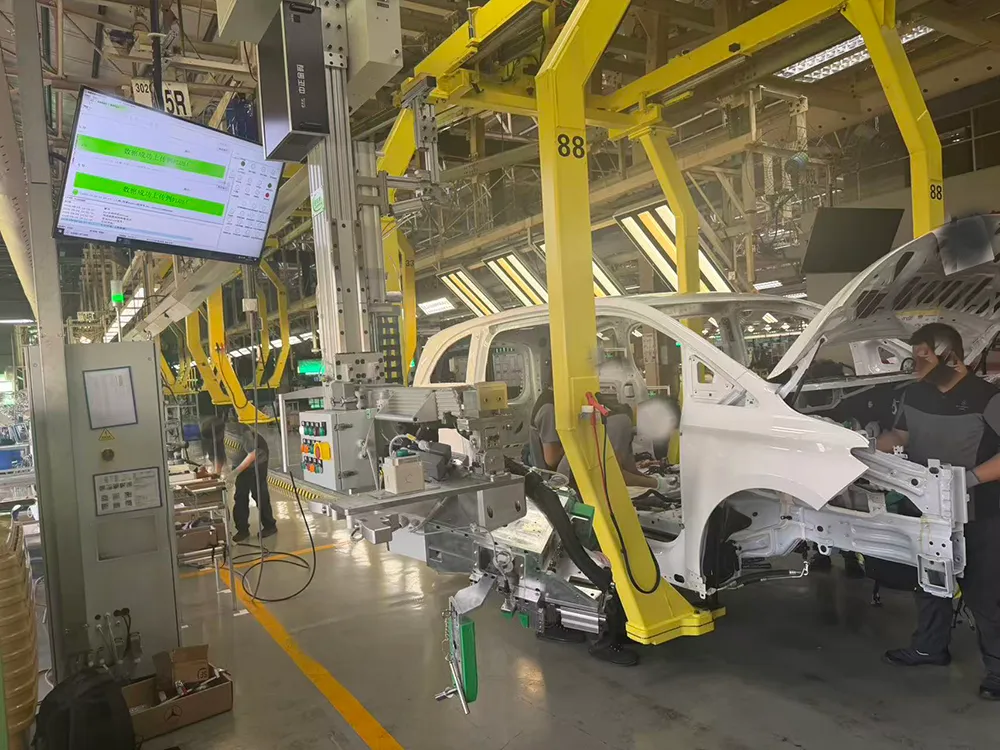
Many production and manufacturing engineers face the same practical questions when specifying a VIN marking system: which marking technology suits high-strength steel, what marking depth is required, how the equipment integrates with robots and conveyors, and how marking quality can be verified in line. This buying guide addresses these questions from an engineering perspective. It explains the main equipment categories, the technical criteria that matter, and the integration and traceability considerations that influence long-term performance.
What Is VIN Marking Equipment?
VIN marking equipment is the hardware and software used to apply a permanent vehicle identification number onto a vehicle body or chassis component. In modern automotive manufacturing, VIN marking is performed on the body-in-white, typically on a structural member such as a shock tower, floor panel, or firewall area. The marking must survive the paint shop, assembly, and the full service life of the vehicle.
A VIN marking system generally includes a marking head, a positioning or handling device, a control system, and often a verification component. Depending on the production layout, the marking head may be mounted on a robot, a stationary gantry, or an assisted manipulator. The equipment category chosen depends on the material being marked, the required marking depth, the production takt time, and the level of automation in the plant.
VIN Marking Technologies Compared
Several marking technologies are used for VIN application. Each has different characteristics in terms of depth, permanence, and suitability for high-strength materials.
Dot Peen Marking
Dot peen marking uses a stylus to indent the material point by point. It is widely used for component marking and can produce readable characters on many metal surfaces. However, on high-strength steel and hot-formed steel, achieving a consistent deep mark can be challenging because the material resists plastic deformation.
Scribe Marking
Scribe marking uses a sharp stylus to cut a continuous line into the surface. It produces clear characters but is generally limited in depth. On very hard materials, tool wear and depth consistency become important maintenance considerations.
Laser Marking
Laser marking uses a focused beam to remove or alter material. For VIN application on high-strength steel, deep laser marking is used to create a mark with sufficient depth to remain permanent. Laser marking is non-contact, which avoids tool wear and allows integration with robot systems. The KINMARK Deep Laser Marking Machine is an example of this category, designed for permanent VIN deep marking on high-strength steel plates with yield strength exceeding 700 MPa and hot-formed steel plates with strength up to 1500 MPa. The marking depth on body-in-white can reach more than 0.2 mm.
Key Selection Criteria
When comparing VIN marking equipment, engineers should evaluate the following criteria. These factors determine whether the equipment can meet both the technical requirement and the production environment.
Material and Marking Depth
The first question is the substrate. High-strength steel and hot-formed steel are increasingly used in vehicle structures for crash performance and weight reduction. These materials require a marking method that can achieve the specified depth without cracking or deforming the part. A marking depth of more than 0.2 mm on the body-in-white is a common requirement for permanence. The equipment specification should state the achievable depth on the specific material grade used in the plant.
Marking Area and Character Size
The marking area must accommodate the VIN character string and any additional data. A marking area of 112 mm × 112 mm, as specified for the KINMARK Deep Laser Marking Machine, provides a defined working envelope. Engineers should confirm that the VIN layout, character height, and any adjacent marks fit within the available area at the planned marking position.
Power Supply and Consumption
Electrical requirements affect installation cost and plant infrastructure. The KINMARK Deep Laser Marking Machine operates on AC220V ±10%, 50Hz ±2%, with power consumption below 1000W. Laser power is 200W. These values should be checked against the available power supply at the intended installation point.
Ambient Conditions
Production environments vary in temperature and humidity. The KINMARK Deep Laser Marking Machine is specified for an operating temperature of 0~40°C and operating humidity of ≤90% RH (non-condensing). If the installation area exceeds these conditions, additional environmental control may be required.
Rubbing and Paint Shop Performance
After marking, the BIW passes through the paint shop. The VIN may need to be readable after painting, and in some processes a rubbing or transfer is taken from the mark. The marking process must therefore produce a mark that remains clear after paint application. The KINMARK Deep Laser Marking Machine adopts a special marking process to ensure clear rubbing results after painting.
Integration with Production Lines
VIN marking equipment is rarely a standalone station. It is part of a body shop or assembly line, and integration determines whether the system supports takt time and automation goals.
Robot and Manipulator Integration
For flexible production, the marking head is often mounted on an industrial robot or an assisted manipulator. The equipment should be designed with mounting interfaces that allow quick integration. The KINMARK Deep Laser Marking Machine is designed with various mounting interfaces and can be quickly integrated with industrial robots or assisted manipulators for automated production lines.
Vision Guidance and Positioning
Accurate positioning is essential for repeatable VIN marking, especially when the body position varies slightly on the conveyor. An optional 3D vision guidance system can be specified to enable precise positioning and accurate marking. This option is relevant when the marking position must be located dynamically rather than by a fixed fixture.
Traceability and Quality Verification
Traceability requirements continue to increase. The marking system should support verification of marking quality and data capture. An optional 3D laser scanning measurement and OCR recognition system provides online inspection of marking quality and supports 100% traceability. This allows the plant to confirm that each VIN is correctly marked and readable before the body moves downstream.
Traceability and Data Management
VIN marking is one element of a broader traceability strategy. The equipment should be able to exchange data with the plant manufacturing execution system or line control system so that the marked VIN is linked to the vehicle record. When selecting equipment, engineers should confirm the available interfaces and how marking results, including verification outcomes, are reported to the line.
The combination of deep marking and online verification supports a closed-loop process: mark, verify, and record. This is particularly important for high-strength steel applications where the marking process window must be controlled to maintain depth consistency.
Applications in Automotive Manufacturing
VIN marking equipment is used across several areas of vehicle production. The most common application is BIW VIN marking on high-strength steel and hot-formed steel structures. The equipment is also relevant in powertrain manufacturing and automotive component production where permanent identification and traceability are required.
In new energy vehicle production, body structures increasingly use high-strength materials, making deep marking capability important. The same traceability principles apply to component marking, where parts must be identified throughout the production process and service life.
Benefits of a Well-Specified VIN Marking System
Permanent identification: Deep marking on high-strength steel supports long-term readability of the VIN.
Process consistency: A defined marking process with vision guidance and verification helps maintain repeatable results.
Production integration: Mounting interfaces and robot compatibility allow the system to fit into automated lines.
Traceability: Optional scanning and OCR verification support online inspection and 100% traceability.
Paint shop performance: A special marking process supports clear rubbing results after painting.
Why Consider KINMARK for VIN Marking Equipment
KINMARK is a manufacturer of marking and traceability systems, servo press systems, fluid filling systems, and robot automation systems. The company has supplied automotive marking and automation equipment since the 1990s and has worked with a range of domestic and international automotive manufacturers and component suppliers.
The KINMARK Deep Laser Marking Machine is designed specifically for deep VIN marking on high-strength materials, with a marking depth of more than 0.2 mm on body-in-white. The system supports robot integration, optional 3D vision guidance, and optional 3D laser scanning measurement with OCR recognition for traceability. KINMARK provides a 12-month warranty on the complete machine, along with installation, commissioning, operator training, and after-sales technical support.
Specification note: Always confirm the achievable marking depth, marking area, and integration requirements against the specific material grade and production line layout before purchase. The values in this guide reflect the published specifications of the KINMARK Deep Laser Marking Machine.
Frequently Asked Questions
What marking depth is required for a permanent VIN on body-in-white?
A marking depth of more than 0.2 mm on the body-in-white is used for permanent VIN deep marking. The KINMARK Deep Laser Marking Machine is specified to reach a marking depth of ≥0.2 mm and is designed for high-strength steel plates with yield strength exceeding 700 MPa and hot-formed steel plates with strength up to 1500 MPa.
Can VIN marking equipment be integrated with robots?
Yes. The KINMARK Deep Laser Marking Machine is designed with various mounting interfaces and can be quickly integrated with industrial robots or assisted manipulators for automated production lines.
How is marking quality verified in line?
An optional 3D laser scanning measurement and OCR recognition system provides online inspection of marking quality and supports 100% traceability. An optional 3D vision guidance system can also be specified for precise positioning and accurate marking.
What are the power and environmental requirements?
The KINMARK Deep Laser Marking Machine operates on AC220V ±10%, 50Hz ±2%, with power consumption below 1000W and laser power of 200W. The specified operating temperature is 0~40°C and operating humidity is ≤90% RH (non-condensing).
Does the mark remain readable after painting?
The KINMARK Deep Laser Marking Machine adopts a special marking process to ensure clear rubbing results after painting, which supports readability and rubbing requirements in the paint shop.
Conclusion
Choosing VIN marking equipment requires a clear understanding of the material, the required marking depth, the production line integration, and the traceability strategy. High-strength steel and hot-formed steel demand a marking method capable of producing a permanent mark without compromising the part. Deep laser marking addresses this requirement, and when combined with robot integration, optional vision guidance, and optional scanning verification, it supports a controlled and traceable VIN marking process.
This buying guide has outlined the main technologies, selection criteria, integration considerations, and traceability options. Engineers and purchasing teams can use these points to define a specification that matches their production environment and quality requirements.
If you're interested in any of the equipment mentioned in this article, feel free to contact our sales engineers for detailed product information and customized technical solutions.