
Requesting a Quotation for an Antifreeze Filling Machine: Information to Prepare
Introduction
An antifreeze vacuum filling machine is production equipment used on automotive assembly and powertrain lines to evacuate air from a cooling circuit, verify system tightness, and fill coolant to a defined liquid level. Because the machine is configured around the vehicle or component it serves, the quality of a supplier's quotation depends heavily on the quality of the information the buyer provides. A request that omits filling volume, line interface details, or leak-test expectations typically results in a generic offer, followed by weeks of clarification.
This guide is written for manufacturing engineers, production managers, and purchasing teams who are preparing to request an antifreeze filling machine quotation. It explains which information to collect before contacting a supplier, how that information maps to the technical specification of a vacuum filling system, and which questions to ask so that the returned quotation can be compared on a like-for-like basis. The reference points used here are drawn from a PLC-controlled antifreeze vacuum filling machine that integrates vacuum evacuation, leak testing, pressure filling, and back suction in a single cycle.
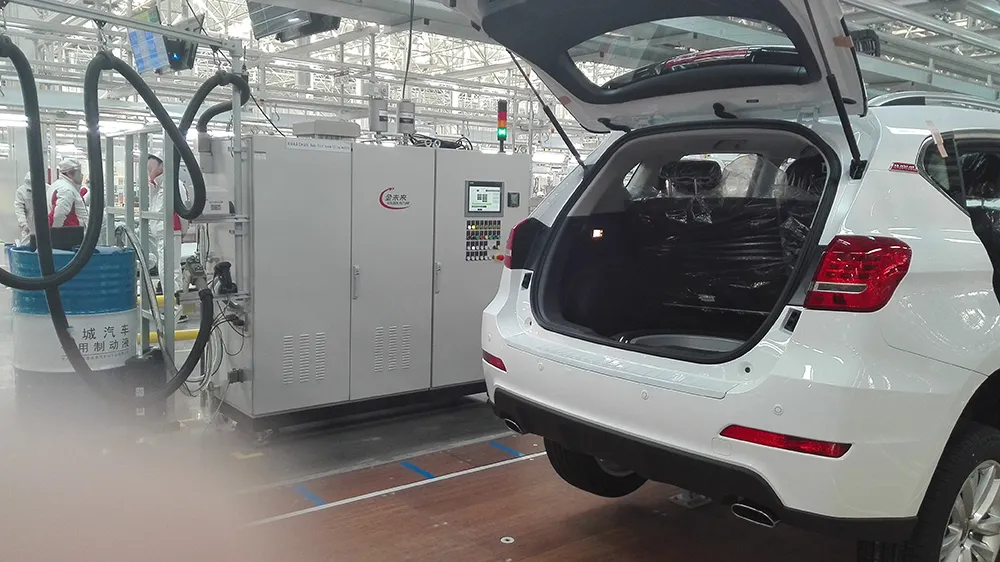
Product Overview
The antifreeze vacuum filling machine described in this guide is an automated system for coolant and antifreeze filling. It uses a PLC-controlled sequence to perform vacuum evacuation, leak testing under vacuum and pressure conditions, a secondary vacuum, pressure filling, and back suction. The purpose of the back suction step is to remove excess coolant after filling pressure reaches equilibrium, so the specified liquid level is achieved and the coolant level does not drop after the fill is complete.
The machine is intended for automated coolant and antifreeze filling applications on automotive production and assembly lines. Its working range covers antifreeze and coolant as the filling medium, a filling volume from 1 to 400 L, filling pressure from 1 to 4 bar, a maximum filling speed of 60 L/min, filling precision of ±0.5%, and liquid level accuracy of ±2 mm. The measurement display range is 0.0–999.9 L, the vacuum pump capacity is 40–65 m³/h, and the equipment dimensions are 1800 × 1000 × 800 mm, customizable.
For a buyer, the practical meaning is that the machine is not a fixed catalog item. Several parameters, including equipment dimensions and the exact configuration of the filling cycle, are adapted to the application. That is why a quotation request needs to describe the application rather than only name the product.
Working Principle
Understanding the filling cycle helps determine which data a supplier will ask for. The sequence runs as follows:
Vacuum evacuation. The system evacuates the cooling circuit to remove air and moisture before coolant is introduced.
Leak testing. The circuit is tested under vacuum and pressure conditions. The reference specification for this machine includes a negative pressure leak rate of ≤0.5 mbar / 60 s and positive pressure leakage of <1.4 g/year.
Secondary vacuum. After system tightness is confirmed, a secondary vacuum is created before filling.
Pressure filling. Coolant is introduced under controlled pressure within the 1–4 bar filling pressure range.
Vent and back suction. Once filling pressure reaches equilibrium, the system automatically vents to atmospheric pressure and performs back suction to remove excess coolant, achieving the specified liquid level.
Each of these stages is influenced by the volume of the circuit being filled, the coolant specification, and the acceptable cycle time on the line. A supplier cannot size or configure the machine without that context, which is why the information checklist below follows the sequence of the filling cycle.
Information to Prepare Before Requesting a Quotation
The checklist below is organized so that each item maps to a machine parameter or a commercial condition. Preparing these items in advance shortens the quotation cycle and reduces the risk of a specification mismatch later.
1. Filling Medium and Volume
State the exact medium: antifreeze or coolant, including the product family and any concentration requirements. Then state the fill volume per vehicle or component. The reference machine covers 1–400 L, so indicating where the application falls within that range helps the supplier confirm the configuration. If the line handles multiple models with different fill volumes, list each variant.
2. Filling Precision and Liquid Level Requirements
Specify the required filling precision and liquid level tolerance. The reference specification is ±0.5% filling precision and ±2 mm liquid level accuracy. If your process requires tighter tolerances, say so explicitly; if the standard values are acceptable, confirm that as well. This avoids over-specification and keeps the quotation comparable.
3. Leak Test Requirements
Describe the leak test acceptance criteria used in your plant. The reference machine supports negative pressure leak testing at ≤0.5 mbar / 60 s and positive pressure leakage below 1.4 g/year. If your quality department applies different limits, provide them, together with the test duration and the pass/fail handling procedure.
4. Cycle Time and Throughput
Provide the takt time of the line and the number of units per shift. The maximum filling speed of the reference machine is 60 L/min, but the total cycle also includes evacuation, leak testing, and back suction. Knowing the required cycle time allows the supplier to confirm whether the machine configuration matches the line rhythm.
5. Line Interface and Automation Level
Describe how the filling station fits into the line. Relevant details include whether filling is stationary or follows a moving vehicle, how the vehicle or component is positioned, what signals are exchanged with the line control system, and what operator interaction is expected. If the station is part of an automated or intelligent factory environment, state the integration requirements at this stage.
6. Utilities and Site Conditions
The reference machine requires a power supply of AC 380 V ±10%, 50 Hz ±2%. Confirm the available power supply at the installation point, along with compressed air, floor space, and any environmental constraints. Equipment dimensions of 1800 × 1000 × 800 mm are customizable, so provide the available footprint and access route so the supplier can propose a realistic layout.
7. Documentation, Training, and Service Scope
State what you expect beyond the machine itself: installation and commissioning, operator training, warranty terms, spare parts, and after-sales response. The reference offer for this type of equipment includes a 12-month warranty on the complete machine, installation and commissioning by engineers, operator training, and remote diagnosis support. Clarifying these items in the RFQ prevents them from appearing as unexpected line items in the quotation.
RFQ preparation tip: Assemble the checklist into a single document with a table of model variants, volumes, and tolerances. Suppliers can then respond to a defined scope instead of making assumptions, and the resulting quotations can be compared line by line.
Key Features to Reference in Your RFQ
When describing the expected machine in a quotation request, the following features of the reference antifreeze vacuum filling machine provide a useful baseline:
PLC-controlled automation of the complete coolant filling process
Integrated vacuum evacuation, leak testing, pressure filling, and back suction in one cycle
Leak testing under both vacuum and pressure conditions before filling
Automatic venting to atmospheric pressure and back suction to achieve the specified liquid level
Filling volume range of 1–400 L with a measurement display range of 0.0–999.9 L
Filling pressure range of 1–4 bar and maximum filling speed of 60 L/min
Filling precision of ±0.5% and liquid level accuracy of ±2 mm
Vacuum pump capacity of 40–65 m³/h
Customizable equipment dimensions
These values are reference specifications. If your application requires different values, state the requirement clearly so the supplier can confirm feasibility rather than assume the standard configuration applies.
Applications
Antifreeze vacuum filling machines are used where cooling circuits must be filled reliably and repeatably. Typical application areas include:
Automotive manufacturing. Coolant filling stations on vehicle assembly lines, where the fill level must be correct before the vehicle leaves the line.
Powertrain manufacturing. Filling and leak verification for engines and related cooling circuits before installation or end-of-line testing.
New energy vehicles. Coolant filling for battery thermal management and electric drive cooling circuits, where air removal and tightness verification are part of the process. These applications are also relevant to new energy vehicle thermal management systems.
Automotive components. Filling of subassemblies that are delivered with coolant already in place.
In each case, the information required for a quotation is similar: medium, volume, tolerance, leak criteria, cycle time, and line interface. Describing the application in these terms is more useful to a supplier than naming the vehicle program alone.
Benefits of a Well-Prepared Quotation Request
A structured RFQ has practical benefits that go beyond faster paperwork:
Comparable offers. When every supplier receives the same technical scope, quotations can be compared on configuration, not on assumptions.
Fewer specification changes. Clarifying volume, tolerance, and leak criteria up front reduces the likelihood of change orders after the order is placed.
Realistic layout planning. Providing footprint and utility data allows the supplier to propose equipment dimensions and interfaces that fit the actual installation point.
Clear service scope. Stating expectations for installation, training, warranty, and support avoids later disagreement about what the quotation includes.
Better traceability of decisions. A written RFQ record documents the requirements that the final machine was specified against.
Why Choose KINMARK
KINMARK has been active in automotive intelligent automation equipment since 1996, with product lines covering marking and traceability systems, servo press systems, fluid filling systems, and robot automation systems. Fluid filling is one of the company's core product series, applied in complete vehicle, powertrain, automotive component, new energy, and intelligent factory automation contexts.
For a filling machine project, this background is relevant in several ways. The company has delivered automated printing and fluid filling equipment to automotive production lines over a long period, and its filling portfolio includes follow-along filling projects delivered to vehicle assembly plants. KINMARK maintains offices and service centers in several Chinese industrial cities, and offers installation and commissioning by engineers, operator training, and remote diagnosis support for the equipment it supplies. These factors matter when the filling station must be integrated into an existing line and supported over its service life. KINMARK's fluid filling solutions cover a range of automotive filling applications.
When you send an RFQ, include the checklist items above. A complete request allows KINMARK to respond with a configuration that reflects your actual filling volume, tolerance, leak criteria, and line conditions.
Frequently Asked Questions
What information is most important when requesting an antifreeze filling machine quotation?
The filling medium and volume, required filling precision and liquid level tolerance, leak test criteria, line cycle time, and the available power supply and footprint. These items determine the machine configuration and allow quotations from different suppliers to be compared directly.
What filling volume range does an antifreeze vacuum filling machine cover?
The reference machine covers a filling volume of 1–400 L, with a measurement display range of 0.0–999.9 L. If your application falls outside this range, state the required volume in the RFQ so the supplier can confirm whether the configuration can be adapted.
What leak test performance should be specified in the RFQ?
Provide the acceptance criteria used by your quality department. For reference, the machine described in this guide supports negative pressure leak testing at ≤0.5 mbar / 60 s and positive pressure leakage below 1.4 g/year. If your plant applies different limits, include them in the request.
Does the quotation include installation and training?
This depends on the supplier and should be stated explicitly in the RFQ. KINMARK provides equipment installation, commissioning, and operator training, along with a 12-month warranty on the complete machine and remote diagnosis support. Listing these expectations in the request ensures they are reflected in the returned quotation.
Can equipment dimensions be adapted to the available floor space?
The reference machine has dimensions of 1800 × 1000 × 800 mm and is customizable. Provide the available footprint and access route in the RFQ so the proposed layout matches the installation point.
Conclusion
Requesting a quotation for an antifreeze filling machine is a specification exercise as much as a purchasing step. The filling cycle combines vacuum evacuation, leak testing, pressure filling, and back suction, and each stage depends on details that only the buyer can provide: the medium, the volume, the tolerance, the leak criteria, the cycle time, and the line interface. When these are documented before the RFQ is sent, suppliers can respond with a defined configuration, and purchasing teams can compare offers on technical merit rather than on assumptions. Use the checklist in this guide as a starting point, and confirm any values that differ from the reference specifications directly with the supplier during the quotation process. For more information about vacuum filling machines, buyers can review the available equipment configurations and applications.
If you're interested in any of the equipment mentioned in this article, feel free to contact our sales engineers for detailed product information and customized technical solutions.