
Laser vs Dot Peen Marking for Automotive VIN Identification
Introduction
Vehicle Identification Number (VIN) marking is a critical process in automotive manufacturing. The VIN serves as the primary identifier for each vehicle, supporting regulatory compliance, theft deterrence, and end-to-end traceability. Two dominant technologies are used for VIN marking: laser marking and dot peen marking. Each method has distinct characteristics that affect marking depth, material compatibility, integration with production lines, and long-term durability.
This article provides a technical comparison of laser marking versus dot peen marking for automotive VIN identification. It examines how each process works, where they are applied, and the factors engineers and production managers should consider when selecting a marking solution for body-in-white (BIW) and other automotive components.
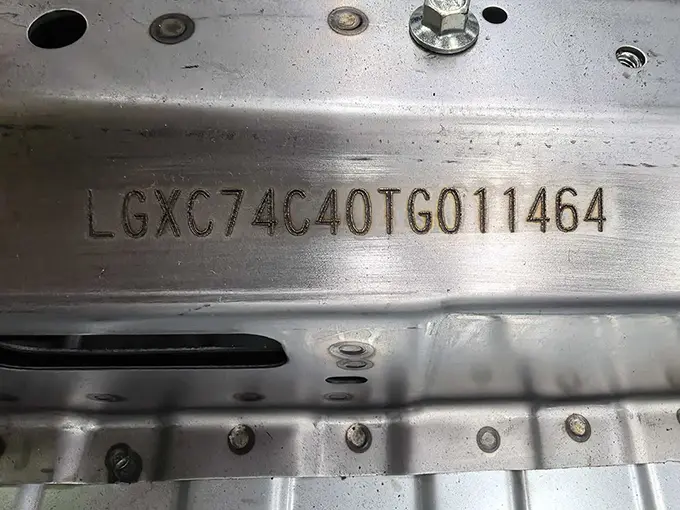
Product Overview: Marking Technologies for VIN
VIN marking must produce a permanent, legible, and tamper-resistant identifier on vehicle structures. The marking is typically applied to the body-in-white or chassis and must withstand painting, assembly, and years of service. Both laser and dot peen technologies are used for this purpose, but they differ in their physical interaction with the material. KINMARK provides a range of marking and traceability systems for automotive manufacturing.
Laser marking uses a focused laser beam to alter the surface of the material through ablation, melting, or material displacement. Deep laser marking systems can achieve controlled marking depths, making them suitable for high-strength steel and hot-formed steel components. For these applications, deep laser marking machines are designed to produce permanent identification marks on automotive structures.
Dot peen marking uses a carbide or hardened stylus that is pneumatically or electrically driven to indent the material surface, creating a series of dots that form characters. This method is a mechanical process and relies on direct physical contact with the workpiece. Industrial dot peen marking machines are commonly used for permanent identification on metal components.
Working Principle
Laser Marking
In deep laser marking, a high-power laser beam is directed onto the metal surface. The energy is absorbed, causing localized heating, melting, and vaporization of the material. By controlling parameters such as laser power, pulse duration, and focus position, the system can create a defined marking depth. The process is non-contact, meaning no physical force is applied to the workpiece. This is particularly advantageous for thin or high-strength materials where mechanical stress could cause deformation.
Dot Peen Marking
Dot peen marking operates by striking the material surface with a hard stylus. Each dot is created by a single impact, and the stylus moves along a programmed path to form characters. The depth of the mark is controlled by the impact force and the material hardness. Because it is a mechanical process, dot peen marking requires access to the marking surface and can induce localized stress. It is commonly used on castings, forgings, and some steel components.
Key Comparison Factors
Material Compatibility
Laser marking is effective on a wide range of metals, including high-strength steel with yield strength exceeding 700 MPa and hot-formed steel up to 1500 MPa. It can achieve marking depths greater than 0.2 mm on body-in-white. Dot peen marking is also used on metals, but its effectiveness on very high-strength steels can be limited by stylus wear and the force required to achieve sufficient depth. On advanced high-strength steels, dot peen may struggle to produce a consistent depth without excessive tooling wear.
Marking Depth and Legibility
Deep laser marking systems can achieve depths of 0.2 mm or more, ensuring the VIN remains legible after painting and rubbing. The process can be optimized to produce clear characters that are easy to read. Dot peen marking typically produces depths in the range of 0.1 to 0.3 mm, but achieving consistent depth on hard materials can be challenging. The legibility of dot peen marks after painting depends on the depth and the paint thickness.
Integration and Automation
Laser marking systems are well-suited for automation. They can be integrated with industrial robots or assisted manipulators using various mounting interfaces. This allows for flexible positioning and marking on complex geometries. Optional 3D vision guidance systems can further enhance precision by locating the exact marking position. Dot peen marking heads are also integrated into automated lines, but the mechanical nature of the process may require additional considerations for part clamping and reaction forces.
Traceability and Quality Inspection
Laser marking systems can be equipped with optional 3D laser scanning measurement and OCR recognition systems. These provide online inspection of marking quality and ensure 100% traceability. The non-contact nature of laser marking means the inspection can be performed immediately after marking without additional handling. Dot peen marking can also be inspected, but the mechanical indentation may require different inspection methods, and the process may not offer the same level of in-line quality verification.
Maintenance and Consumables
Laser marking systems have fewer moving parts and no consumable stylus. The main wear components are the laser source and optical elements, which have long service lives. Dot peen marking requires periodic replacement of the stylus, and the impact mechanism may require maintenance. The frequency of stylus replacement depends on the material being marked and production volume.
Applications in Automotive Manufacturing
Both marking technologies are used in automotive manufacturing, but their application areas differ based on the requirements of the part and the production environment. Different marking machine solutions can be selected according to the material, marking position, and production requirements.
Body-in-white VIN marking: Deep laser marking is increasingly preferred for BIW VIN marking, especially on high-strength and hot-formed steel. The non-contact process avoids deformation and can achieve the required depth for durability.
Chassis and frame components: Dot peen marking is often used on thicker castings and forgings where deep, permanent marks are needed. It is also used on components where laser marking may not be practical due to accessibility or material reflectivity.
Engine and powertrain components: Both methods are used for marking engine blocks, cylinder heads, and transmission cases. The choice depends on material, cycle time, and traceability requirements.
New energy vehicle (NEV) components: Laser marking is suitable for battery trays, motor housings, and other NEV parts where lightweight materials and high-strength steels are used.
Benefits of Laser Marking for VIN
Non-contact process: No mechanical force is applied, reducing the risk of part deformation.
High-strength material capability: Can mark high-strength steel (yield strength >700 MPa) and hot-formed steel (up to 1500 MPa).
Deep marking: Achieves marking depths greater than 0.2 mm on body-in-white.
Easy integration: Designed with various mounting interfaces for robot or manipulator integration.
Optional vision guidance: 3D vision guidance enables precise positioning.
Automatic traceability: Optional 3D laser scanning and OCR provide 100% online inspection.
Clear rubbing after painting: Special marking process ensures legible rubbing results.
Benefits of Dot Peen Marking for VIN
Deep, permanent marks: Mechanical indentation creates a durable mark that resists wear.
Material versatility: Effective on a range of metals, including castings and forgings.
Lower initial cost: Dot peen systems generally have a lower capital cost compared to high-power laser systems.
Simple operation: The process is straightforward and well-understood.
Why Choose KINMARK Deep Laser Marking Machine
KINMARK specializes in marking and traceability systems for automotive manufacturing. The KINMARK Deep Laser Marking Machine is designed to meet the demands of modern vehicle production, particularly for VIN marking on high-strength steel and hot-formed steel. The system supports marking depths greater than 0.2 mm on body-in-white, ensuring permanent identification that remains legible after painting.
The machine is engineered for easy integration with industrial robots and assisted manipulators, with various mounting interfaces to suit different production line configurations. Optional 3D vision guidance and 3D laser scanning measurement with OCR recognition provide precise positioning and online quality inspection, supporting full traceability. With a 12-month warranty and responsive after-sales support, KINMARK provides a reliable solution for automotive VIN marking.
Technical Specifications:
Power Supply: AC220V ±10%, 50Hz ±2%
Power Consumption: <1000W
Laser Power: 200W
Marking Area: 112mm × 112mm
Marking Depth: ≥0.2mm
Operating Temperature: 0~40℃
Operating Humidity: ≤90% RH (Non-condensing)
Frequently Asked Questions
What is the difference between laser marking and dot peen marking for VIN?
Laser marking uses a focused laser beam to alter the material surface without contact, while dot peen marking uses a mechanical stylus to indent the surface. Laser marking is non-contact and can achieve deep marks on high-strength steel, while dot peen marking is a mechanical process that creates marks through impact.
Can laser marking achieve the required depth for VIN on high-strength steel?
Yes. Deep laser marking systems, such as the KINMARK Deep Laser Marking Machine, can achieve marking depths greater than 0.2 mm on body-in-white, including high-strength steel with yield strength exceeding 700 MPa and hot-formed steel up to 1500 MPa.
Is dot peen marking suitable for all automotive VIN applications?
Dot peen marking is suitable for many applications, especially on castings and forgings. However, on very high-strength steels, achieving consistent depth can be challenging due to stylus wear and the force required. Laser marking is often preferred for high-strength steel and hot-formed steel components.
How does laser marking support traceability?
Laser marking systems can be equipped with optional 3D laser scanning measurement and OCR recognition systems. These provide online inspection of marking quality and ensure 100% traceability by verifying the marked characters immediately after marking.
Can laser marking be integrated into existing production lines?
Yes. The KINMARK Deep Laser Marking Machine is designed with various mounting interfaces for quick integration with industrial robots or assisted manipulators. Optional 3D vision guidance further enhances positioning accuracy for automated production lines.
Conclusion
Choosing between laser marking and dot peen marking for automotive VIN identification depends on the specific material, production environment, and traceability requirements. Laser marking offers a non-contact process capable of deep marking on high-strength and hot-formed steels, with easy automation and optional in-line quality inspection. Dot peen marking provides a mechanical alternative suitable for many metal components. For modern automotive manufacturing, particularly with the increasing use of advanced high-strength steels, deep laser marking systems like the KINMARK Deep Laser Marking Machine provide a reliable solution for permanent VIN identification and full traceability.
If you're interested in any of the equipment mentioned in this article, feel free to contact our sales engineers for detailed product information and customized technical solutions.