
Evaluating an OEM Supplier for Automotive Refrigerant Filling Equipment
Introduction
Refrigerant charging is one of the final and most quality-sensitive steps on an automotive assembly line. The air conditioning system must be evacuated, held under vacuum, and then charged with a precisely measured mass of refrigerant. If the charge is short, cooling performance suffers. If the charge is excessive, system pressure and compressor load increase. Either condition creates warranty risk and rework at the end of the line.
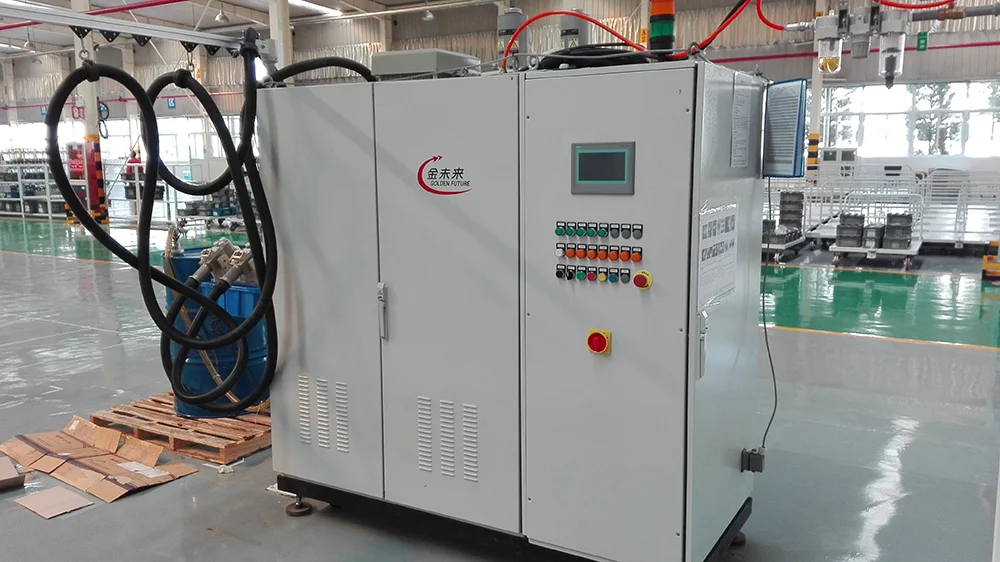
Because of this, the refrigerant filling equipment selected for a production line directly affects process consistency and product quality. For production managers and purchasing teams, the decision is not only about the machine itself but also about the OEM supplier behind it. A supplier that understands automotive assembly conditions, PLC-based process control, and line integration will deliver equipment that supports stable production. This guide explains how to evaluate a refrigerant filling equipment OEM supplier, what technical points to verify, and which questions to ask before placing an order.
Product Overview
A refrigerant vacuum filling machine is an automated station that performs two core functions: vacuum evacuation of the vehicle air conditioning system and refrigerant charging. The machine is controlled by a PLC system that manages the vacuum pump and the filling process. A dedicated pneumatic plunger pump delivers refrigerant at pressure, while a mass flow meter measures the quantity being charged. For more details about this equipment, see the Refrigerant Vacuum Filling Machine.
This type of equipment is used in automotive air conditioning system filling applications, including vehicle assembly lines and air conditioning system production. The machine is designed to complete the filling process in a single cycle with high filling accuracy, and it is built around a compact structure with convenient maintenance and a high level of automation.
From a purchasing perspective, the machine should be evaluated as a process station rather than a stand-alone device. It must fit into the line layout, match the required refrigerant type, and deliver repeatable charge accuracy.
Working Principle
The working principle of the refrigerant vacuum filling machine is straightforward but requires disciplined control at each stage:
Vacuum evacuation: The PLC-based control system automatically controls the vacuum pump and evacuates the air conditioning system of the vehicle body. Removing air and moisture before charging is essential for system performance and reliability.
Refrigerant delivery: After evacuation, a dedicated pneumatic plunger pump delivers the refrigerant to the system. The pump supports high-pressure refrigerant charging.
Mass flow measurement: A mass flow meter accurately measures the filling quantity. This measurement approach supports precise refrigerant dosing and consistent filling quality.
Single-cycle completion: The machine is designed so that the filling process can be completed in a single cycle, which supports line takt requirements.
The automation of both vacuum evacuation and refrigerant filling reduces manual intervention, simplifies operation, and supports production efficiency. For engineers evaluating a supplier, this working principle should be confirmed in the technical proposal, including how the PLC sequence is structured and how the mass flow measurement is used to control the final charge.
Key Features to Verify in a Supplier's Offer
Precise Refrigerant Filling
High-precision mass flow measurement ensures accurate refrigerant dosing, stable filling performance, and consistent filling quality. The published filling accuracy of this machine type is ±5 g, which should be confirmed against the refrigerant type and filling volume range used in your plant.
Automatic Vacuum Evacuation
A PLC-controlled vacuum pump automatically evacuates the vehicle air conditioning system before refrigerant filling. This improves process efficiency and reliability by removing operator-dependent steps. The minimum vacuum level for this machine type is specified as below 2 mbar, with a vacuum pump capacity of 30 m³/h.
Compact Structure and Easy Maintenance
A compact and optimized machine design supports convenient operation, easy maintenance, and reliable long-term performance. Equipment dimensions for this machine type are 1800 × 1000 × 1800 mm and can be customized. Maintenance access should be reviewed during supplier evaluation, especially for pump and meter service.
High Automation Level
Automated control of vacuum evacuation and refrigerant filling reduces manual intervention and simplifies operation. For a line with defined takt time, the supplier should confirm the filling cycle time against the actual charge volume. The published cycle time for this machine type is under 200 seconds based on a single filling below 2 kg.
Technical Specifications to Compare
When comparing suppliers, request a specification table and verify each item against your process requirements. The following parameters are typical for this equipment type and should be confirmed in the quotation:
| Parameter | Specification |
|---|---|
| Applicable Refrigerant | R134A / R1234yf |
| Minimum Vacuum Level | < 2 mbar |
| Vacuum Pump Capacity | 30 m³/h |
| Filling Volume Display | 0.0 ~ 9999 mL |
| Filling Pressure | 1 ~ 3.5 bar |
| Filling Accuracy | ±5 g |
| Filling Cycle Time | <200 s (based on single filling below 2 kg) |
| Power Supply | AC380V ±10%, 50Hz ±2% |
| Air Supply Pressure | 0.4 ~ 0.5 MPa |
| Rated Power | 5 kW |
| Equipment Dimension | 1800 × 1000 × 1800 mm (Customizable) |
A reliable OEM supplier will provide these values clearly and will explain how they apply to your specific refrigerant and charge volume. If a supplier is vague about accuracy, vacuum level, or cycle time, treat that as a warning sign.
Applications
Refrigerant vacuum filling machines are used in automotive air conditioning system filling applications. Typical production environments include vehicle assembly lines where the air conditioning system is evacuated and charged before final inspection. The equipment is also relevant to automotive component manufacturing where air conditioning systems are assembled and tested.
Because the machine is controlled by a PLC and uses mass flow measurement, it fits into production environments where process consistency and traceable filling results are required. The ability to handle both R134A and R1234yf refrigerants makes it relevant for plants producing vehicles for different markets and refrigerant regulations.
Benefits for Production and Purchasing Teams
Improved process consistency: Mass flow measurement and PLC control support stable filling quality across cycles.
Reduced manual intervention: Automatic vacuum evacuation and filling simplify operation and reduce operator-dependent variation.
Line integration: A compact structure and customizable dimensions help the machine fit into existing line layouts.
Maintenance planning: A design focused on convenient maintenance supports long-term reliable performance.
Refrigerant flexibility: Support for R134A and R1234yf allows the same equipment type to serve different vehicle programs.
Why Choose KINMARK as a Refrigerant Filling Equipment OEM Supplier
KINMARK is a developer and manufacturer of marking and traceability systems, servo press systems, fluid filling systems, and robot automation systems. The company has been working in automotive intelligent automation equipment since 1996 and serves vehicle manufacturers, powertrain manufacturers, automotive component suppliers, and new energy vehicle producers.
The fluid filling product line includes refrigerant vacuum filling machines built around PLC control, pneumatic plunger pumps, and mass flow measurement. KINMARK's automotive experience covers assembly lines where filling equipment must integrate with production processes and quality requirements. The company also provides installation and commissioning support, operator training, a 12-month warranty, and after-sales service through offices and service centers in multiple cities. Explore KINMARK's fluid filling solutions to learn more about its equipment and application capabilities.
Evaluation tip: Ask each candidate supplier to provide a written technical proposal that maps the machine specifications to your refrigerant type, charge volume, takt time, and line interface requirements. Compare proposals on the same basis before making a decision.
Frequently Asked Questions
What refrigerants can a refrigerant vacuum filling machine handle?
The machine type described here is applicable to R134A and R1234yf refrigerants. Confirm the refrigerant type with the supplier before ordering, because the refrigerant affects the pump, seals, and filling parameters.
What filling accuracy can be expected?
The published filling accuracy for this machine type is ±5 g, supported by mass flow measurement. Accuracy should be confirmed against your charge volume and production conditions during the technical review.
How long does a filling cycle take?
The published filling cycle time is under 200 seconds, based on a single filling below 2 kg. Cycle time depends on the charge volume and vacuum conditions, so it should be verified for your specific application.
What utilities are required for installation?
The machine requires a power supply of AC380V ±10%, 50Hz ±2%, with a rated power of 5 kW, and an air supply pressure of 0.4 to 0.5 MPa. Equipment dimensions are 1800 × 1000 × 1800 mm and can be customized.
What support does the supplier provide after delivery?
KINMARK provides installation and commissioning, operator training, a 12-month warranty for the complete machine, remote diagnosis, and technical assistance. Service offices and repair centers are located in multiple cities to support continuous operation.
Conclusion
Selecting a refrigerant filling equipment OEM supplier requires more than comparing price. The machine must deliver accurate, repeatable charging, reliable vacuum evacuation, and smooth integration into the assembly line. Verify the specifications, confirm the refrigerant compatibility, and review the supplier's installation and service support. A structured evaluation based on the points in this guide helps production and purchasing teams choose equipment that supports consistent quality and stable production.
If you're interested in any of the equipment mentioned in this article, feel free to contact our sales engineers for detailed product information and customized technical solutions.