
How Does Dot Peen Marking Work on Metal Parts?
Introduction
Dot peen marking is a mechanical marking process used to create permanent, readable characters, codes, and data matrix symbols directly on metal surfaces. Rather than removing material with a cutting tool or changing surface chemistry with a laser, dot peen marking uses a hardened stylus that is driven into the workpiece to form a series of closely spaced indentations. Each indentation is a dot, and the arrangement of these dots forms the required character or code.
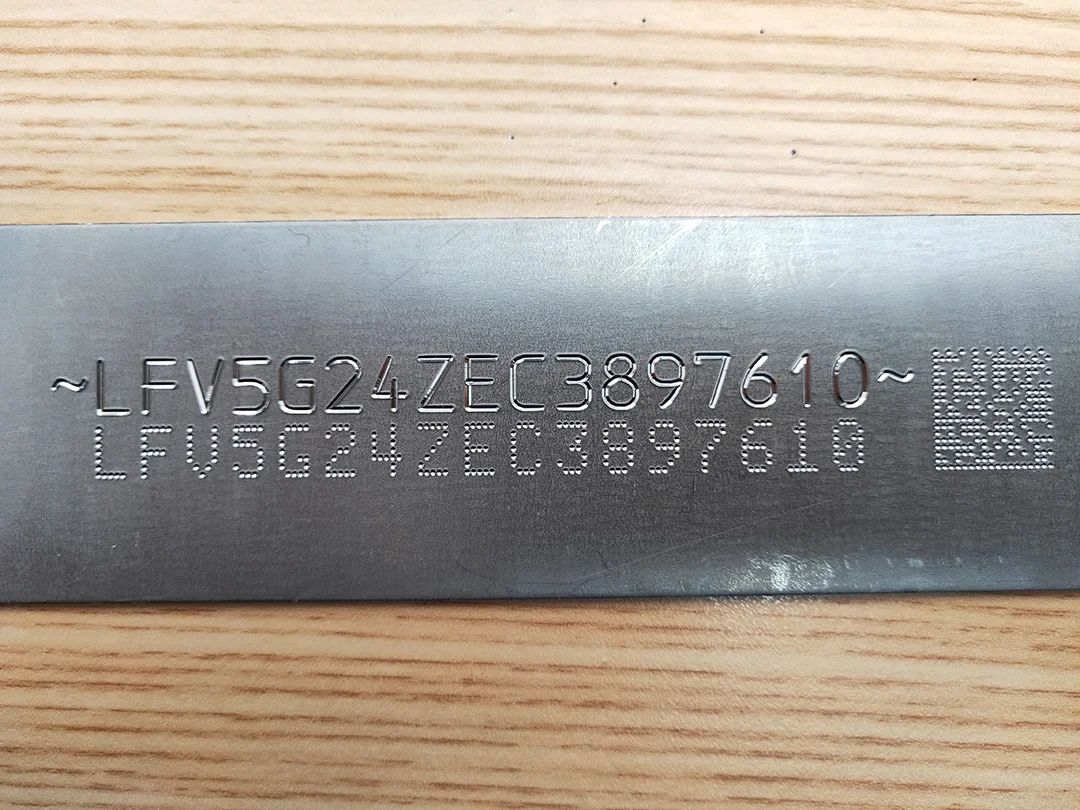
For automotive manufacturers, the value of this process is directly linked to traceability. Brake discs, engine components, transmission parts, and other safety-related metal parts must remain identifiable throughout their service life. A mark that fades, peels, or becomes unreadable after painting, coating, or years of exposure creates a real production and compliance problem. Dot peen marking addresses this because the mark is formed into the metal itself rather than applied on top of it.
This article explains the dot peen marking working principle on metal parts, how the marking head, positioning system, and inspection functions operate together in an automatic production environment, and what automotive engineers and production managers should consider when evaluating dot peen marking equipment for brake disc and round metal component production.
Product Overview
An automatic dot peen brake disc marking machine is designed for high-volume marking of automotive brake discs and round metal components. It combines a high-performance marking head, a flexible positioning system, and automatic inspection technology to deliver stable, deep, and permanent marks for production line traceability.
The system is built for multi-model production. It supports several positioning methods and automatic product changeover, which allows the same equipment to handle different brake disc sizes and designs without a lengthy manual setup for every model change. This is particularly relevant in brake disc production, where a single line may run multiple part numbers across a shift.
The equipment is intended for environments with high metal dust exposure. Its protective design, maintenance accessibility, and focus on equipment availability reflect the realities of automotive manufacturing, where unplanned downtime on a marking station can interrupt the entire downstream assembly flow.
Working Principle
The dot peen marking working principle is based on controlled impact. A hardened marking stylus is driven into the metal surface at a defined force, creating a small, permanent indentation. The marking head then moves the stylus to the next programmed position and repeats the impact. By controlling the spacing between dots and the number of dots in each character or symbol, the system builds readable text, serial numbers, or 2D codes.
Two elements determine the final mark quality: the impact force applied to the stylus and the positioning accuracy of the marking head. The marking depth can be adjusted according to different materials and production requirements. This matters because brake disc materials, surface conditions, and finishing operations vary, and the mark must remain legible after subsequent processes.
From Program to Permanent Mark
In an automated production line, the process follows a practical sequence:
The brake disc is located and secured using the appropriate positioning method.
The marking head receives the marking program, including character content, font, and layout.
The stylus impacts the surface dot by dot to form the complete mark.
An integrated inspection function monitors marking quality during operation.
Marking data and templates can be exchanged with factory management platforms for centralized control.
Because the mark is created by displacement of metal rather than by adding material, it is not affected by the adhesion problems associated with labels or ink. This is a central reason why dot peen marking is widely used for parts that must remain traceable through the full product lifecycle.
Positioning as Part of the Marking Principle
Accurate marking depends on accurate positioning. The automatic dot peen brake disc marking machine supports multiple positioning methods, including inner hole expansion, outer diameter clamping, threaded positioning, spring positioning, electromagnetic positioning, and chuck positioning. Each method suits different disc geometries and production requirements. The intelligent positioning system automatically adjusts according to product specifications, which reduces manual adjustment time and supports multi-product manufacturing.
Key Features
The following features are directly related to how dot peen marking performs on metal parts in an automotive production setting.
Deep and permanent dot peen marking – High-strength impact marking technology creates clear and durable marks on metal surfaces, with adjustable marking depth for different materials and production requirements.
Flexible positioning system – Supports inner hole expansion, outer diameter clamping, threaded positioning, spring positioning, electromagnetic positioning, and chuck positioning for different brake disc sizes and designs.
Automatic positioning and changeover – The intelligent positioning system adjusts automatically according to product specifications, reducing manual adjustment time in multi-product manufacturing.
Integrated marking quality inspection – Audio-based marking detection monitors marking quality during operation to reduce defective products and support reliable traceability.
High-efficiency production design – Built for large-scale brake disc production with fast marking speed, stable operation, and integration with automated production lines.
Factory data management integration – Supports connection with factory management platforms for centralized management of marking templates, fonts, and production data.
Reliable industrial design – Protective design, easy maintenance, and high equipment availability for environments with high metal dust exposure.
Applications
Dot peen marking equipment of this type is applied primarily in high-volume automotive brake disc and round metal component marking. The system is suited to production line traceability, where each part needs a durable identifier that survives handling, storage, and service conditions.
Typical application areas include:
Automotive brake disc production lines
Round metal component marking for automotive manufacturing
Multi-model production environments requiring automatic changeover
Production lines that must exchange marking data with factory management platforms
Because the system supports multiple positioning methods and automatic product changeover, it fits production environments where part variants change frequently and manual repositioning would otherwise slow the line.
Benefits
The benefits of dot peen marking on metal parts come from the nature of the process and the way the equipment is integrated into production.
Improved traceability – Permanent marks remain legible on the metal surface, supporting part identification throughout the production and service lifecycle.
Better process consistency – Automatic positioning and changeover reduce manual adjustment, which supports consistent marking across different product models.
Quality monitoring during production – Audio-based marking detection monitors marking quality as parts are processed, helping reduce defective products.
Production integration – The system can connect with factory management platforms for centralized management of marking templates, fonts, and production data.
Equipment availability – Protective design and easy maintenance support continuous operation in automotive manufacturing environments with high metal dust exposure.
Engineering note: Marking depth is adjustable according to material and production requirements. When specifying a dot peen marking process, the required depth and legibility should be defined together with the downstream processes, because finishing operations can affect how the mark appears on the finished part.
Why Choose KINMARK
KINMARK is a manufacturer of marking and traceability systems, servo press systems, fluid filling systems, and robot automation systems for automotive intelligent manufacturing. The company began with marking equipment and has developed its product range around automotive intelligent automation applications, serving vehicle manufacturing, powertrain, automotive components, new energy vehicles, and intelligent factory automation.
For brake disc marking applications, KINMARK provides automatic dot peen marking equipment with flexible positioning, deep permanent marking, automatic inspection, and factory data integration. The company offers a 12-month warranty on the complete machine, fast response service with remote diagnosis and technical assistance, and installation and commissioning support including operator training.
KINMARK has established long-term cooperation with automotive manufacturers and suppliers across the industry and provides automation solutions to industrial customers in related sectors. Its engineering focus is on building equipment that fits real production conditions, including multi-model lines, high metal dust environments, and the traceability requirements of automotive manufacturing. Learn more about KINMARK's marking machine solutions for industrial applications.
Frequently Asked Questions
What is the dot peen marking working principle?
Dot peen marking works by controlled impact. A hardened stylus is driven into the metal surface to create a small indentation, and the marking head moves the stylus to each programmed position to form characters, codes, or symbols dot by dot. The result is a permanent mark formed into the metal rather than applied on top of it.
Can the marking depth be adjusted for different metal parts?
Yes. The marking depth can be adjusted according to different materials and production requirements. This allows the process to be matched to the part and to the legibility requirements of the application.
How does the machine handle different brake disc models on the same line?
The system supports multiple positioning methods, including inner hole expansion, outer diameter clamping, threaded positioning, spring positioning, electromagnetic positioning, and chuck positioning. The intelligent positioning system automatically adjusts according to product specifications, which supports automatic product changeover in multi-model production.
How is marking quality checked during production?
The equipment includes audio-based marking detection technology that monitors marking quality during operation. This helps reduce defective products and supports reliable traceability.
Can the marking system connect to factory management platforms?
Yes. The system supports connection with factory management platforms, enabling centralized management of marking templates, fonts, and production data.
Conclusion
The dot peen marking working principle is straightforward: controlled impact creates permanent indentations in metal, and precise positioning arranges those indentations into readable characters and codes. On brake discs and round metal components, this combination delivers the durable traceability that automotive production requires.
For production managers and manufacturing engineers, the practical questions are positioning flexibility, changeover time, marking quality monitoring, and integration with factory data systems. An automatic dot peen brake disc marking machine addresses these points through flexible positioning methods, automatic positioning and changeover, audio-based marking detection, and support for factory management platform connection. Together, these functions make dot peen marking a practical choice for high-volume automotive brake disc marking and production line traceability.
If you're interested in any of the equipment mentioned in this article, feel free to contact our sales engineers for detailed product information and customized technical solutions.