Inspection in Automated Flexible Label Laser Marking
Introduction
Flexible film labels are used across automotive and industrial manufacturing to carry identification data such as part numbers, serial numbers, 1D barcodes, and 2D codes. Unlike rigid metal nameplates, these labels are thin, compliant, and supplied on rolls, which means they must be unwound, positioned, marked, and cut within a single continuous process. A flexible label laser marking system therefore has to do more than fire a laser: it has to keep the web under control while the marking is applied. For related industrial applications, explore KINMARK's laser marking machines.
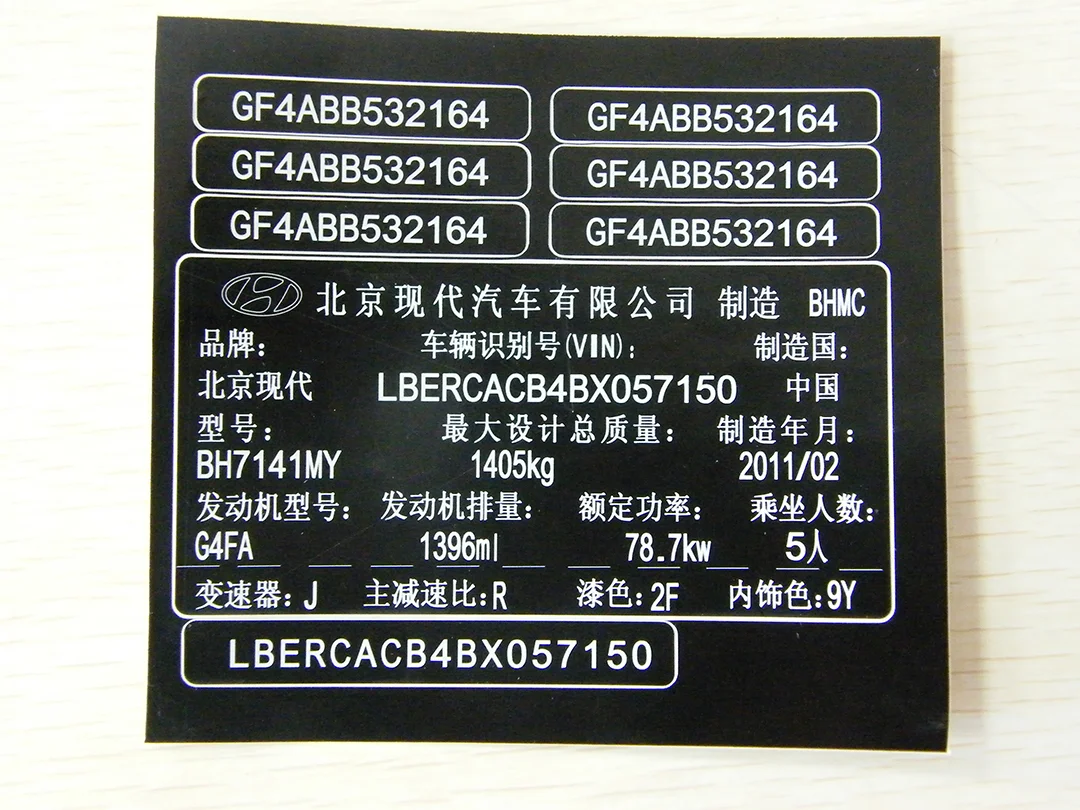
Inspection is the part of that process that determines whether the marked label is actually usable. A label that is misaligned, wrinkled, or marked with an incomplete code will fail at the point of scanning, often long after it has left the marking station. This article explains how inspection is integrated into automated flexible label laser marking, what it checks, why it matters for traceability, and how it relates to the other process steps such as unwinding, leveling, marking, and cutting. Reliable identification is also an important part of industrial marking and traceability.
Product Overview
The KINMARK Flexible Fiber Laser Marking Machine is designed for laser marking on flexible film labels from brands such as TESA, 3M, and Schreiner. It supports automated processing that includes unwinding, inspection, leveling, marking, and cutting. Rather than treating marking as an isolated operation, the system integrates these steps into one automated solution for producing customized identification labels with stable quality. Learn more about KINMARK's marking machine solutions.
The machine is built around fiber laser marking technology and is intended for permanent marking of characters, texts, graphics, 1D barcodes, and 2D codes on flexible label materials. The modular design allows fast adaptation to different production requirements and provides flexible integration options for industrial applications. Core components are standardized and the marking process is mature, which supports reliable operation in continuous production environments.
Process sequence: unwinding → inspection → leveling → marking → cutting. Inspection is positioned before marking so that material condition is confirmed before the laser writes the label, and it supports the quality of the finished label after marking.
Working Principle
Flexible label laser marking is a web-based process. The label material is supplied on a roll and is unwound as it moves through the machine. Because flexible films can carry tension variations, curl, or minor surface irregularities, the web is leveled before marking so that the laser focal position and marking area remain consistent across the label. The fiber laser then applies the required characters, text, graphics, or codes to the label surface. After marking, the label is cut to the required format.
Inspection operates alongside this sequence. It examines the label material and the marking result so that defects can be identified as part of the automated process rather than discovered later at the scanning station. In practical terms, inspection serves two related functions: it confirms that the label entering the marking station is in a suitable condition, and it verifies that the marked output meets the required identification content.
The exact inspection hardware, sensor configuration, and software algorithms are defined by the specific machine configuration and are not generalized here. What can be stated is that inspection is one of the automated processing steps supported by the KINMARK flexible label marking system, and it works together with unwinding, leveling, marking, and cutting to produce finished labels.
Key Features
Automated multi-step processing: unwinding, inspection, leveling, marking, and cutting are handled within one automated solution.
Flexible film compatibility: designed for laser marking on flexible film labels from brands such as TESA, 3M, and Schreiner.
Permanent marking content: supports characters, texts, graphics, 1D barcodes, and 2D codes on flexible label materials.
Modular design: allows fast adaptation to different production requirements and flexible integration into industrial applications.
Standardized core components: core parts are standardized and the marking process is mature, supporting reliable continuous operation.
Integrated quality control: inspection is part of the automated flow, helping to keep label quality stable across production.
What Inspection Contributes to the Process
In a manual or semi-automatic label process, inspection is often a separate task performed by an operator. In an automated flexible label laser marking system, inspection is embedded in the line. This changes its role in several ways.
Material Condition Before Marking
Flexible films can be affected by tension, tracking, or surface condition as they unwind. Inspection before marking helps confirm that the label material is in a suitable state for the laser process, which supports consistent marking results.
Marking Content Verification
Because the system marks characters, texts, graphics, 1D barcodes, and 2D codes, the readability of that content is essential. Inspection supports verification of the marked label so that identification data remains usable at the point of scanning.
Traceability Support
Barcode and 2D code traceability depends on labels being marked correctly and consistently. By integrating inspection into the marking process, the system supports the production of identification labels whose data can be relied upon downstream. Explore how industrial marking and traceability systems support product identification throughout manufacturing.
Applications
Flexible label laser marking with integrated inspection is relevant wherever durable, scannable identification labels are required in manufacturing. Typical areas include:
Automotive manufacturing: identification labels used on components, assemblies, and production documentation.
Automotive components: labels applied to parts that require serial numbers or traceability codes.
New energy vehicles: identification and traceability labels for battery, electrical, and vehicle systems.
Powertrain manufacturing: labels for engines, transmissions, and related assemblies.
Intelligent factory automation: inline label production integrated with automated production and traceability systems.
In each of these areas, the value of inspection is the same: it helps ensure that the label carries the correct, readable identification data before it enters the wider production and logistics chain.
Benefits
Integrating inspection into automated flexible label laser marking provides several practical benefits for manufacturing operations.
Improved traceability: readable barcodes and 2D codes support reliable identification throughout production.
Better process consistency: inspection is applied as a defined step in the automated sequence rather than as an intermittent manual check.
Production integration: the modular system can be adapted to different production requirements and integrated into industrial applications.
Reduced rework risk: identifying unsuitable or incorrectly marked labels earlier in the process helps avoid downstream handling issues.
Support for automation: combining unwinding, inspection, leveling, marking, and cutting in one solution reduces the number of separate operations.
Why Choose KINMARK
KINMARK has been engaged in marking and traceability systems since 1996, beginning with marking machines and expanding into automotive intelligent automation equipment. The company's product lines cover marking and traceability, servo press systems, fluid filling systems, and robot automation systems, serving industries that include complete vehicles, powertrain, automotive components, new energy, and intelligent factory automation.
For flexible label marking, this background is relevant in several ways. The marking process is mature and core components are standardized, which supports reliable operation. The modular design allows the system to be adapted to different production requirements. And because KINMARK works with automotive manufacturers and industrial customers on automation solutions, the equipment is developed with production integration in mind.
KINMARK provides a 12-month warranty on the complete machine, along with professional technical support and long-term maintenance service. Fast response service includes efficient after-sales support, remote diagnosis, and technical assistance. Engineers also provide installation, commissioning, and operator training to help customers start production smoothly.
Frequently Asked Questions
What does inspection check in a flexible label laser marking system?
Inspection is an automated processing step within the system, working alongside unwinding, leveling, marking, and cutting. It supports the production of customized identification labels with stable quality by examining the label material and the marking result as part of the automated flow. The specific inspection parameters depend on the machine configuration.
Which label materials can be processed?
The KINMARK Flexible Fiber Laser Marking Machine is designed for laser marking on flexible film labels from brands such as TESA, 3M, and Schreiner. It supports permanent marking of characters, texts, graphics, 1D barcodes, and 2D codes on these flexible label materials.
Why is inspection important for barcode traceability?
Barcode and 2D code traceability depends on the marked label being readable and correct. If a code is incomplete or the label is not suitable for marking, scanning can fail later in the process. Integrating inspection into the marking system helps verify label quality as part of production rather than after the fact.
Can the system be integrated into an existing production line?
The system uses a modular design that allows fast adaptation to different production requirements and provides flexible integration options for industrial applications. Integration details depend on the specific production environment and should be discussed with KINMARK during project planning.
What support is available after installation?
The complete machine is covered by a 12-month warranty with professional technical support and long-term maintenance service. KINMARK provides fast response service including remote diagnosis and technical assistance, as well as installation, commissioning, and operator training.
Conclusion
In automated flexible label laser marking, inspection is not a separate quality step added at the end of the process. It is integrated into the sequence of unwinding, inspection, leveling, marking, and cutting that produces a finished identification label. This integration supports consistent marking results, readable barcodes and 2D codes, and reliable traceability in downstream production.
For manufacturers working with flexible film labels from brands such as TESA, 3M, and Schreiner, a system that combines marking and inspection in one automated solution can simplify label production while supporting quality and traceability requirements. KINMARK's flexible fiber laser marking machine is built around this integrated approach, with a modular design, standardized core components, and support services covering installation, commissioning, training, and after-sales assistance. For more information, explore KINMARK's laser marking machine range and marking machine solutions.
If you're interested in any of the equipment mentioned in this article, feel free to contact our sales engineers for detailed product information and customized technical solutions.