
How to Improve Refrigerant Filling Accuracy in Production
Introduction
Filling accuracy is one of the most critical quality parameters in automotive fluid filling operations. Whether the medium is refrigerant, coolant, or antifreeze, even small deviations in fill volume or liquid level can lead to rework, warranty claims, or functional problems in the finished vehicle. For engineers and production managers working on assembly lines, improving filling accuracy is not simply a matter of calibrating a flow meter. It requires a controlled process that addresses air entrapment, system leakage, pressure stability, and post-fill liquid level behavior.
This article examines the practical factors that influence refrigerant and coolant filling accuracy in production environments. It explains how vacuum-assisted filling, leak testing, controlled pressure filling, and back suction work together to deliver repeatable results. The discussion is intended for manufacturing engineers, process planners, and purchasing teams who are evaluating or improving fluid filling systems for automotive production lines.
Why Filling Accuracy Matters in Production
In automotive manufacturing, fluids such as refrigerant, coolant, and antifreeze are filled at specific stations along the assembly line. The filled volume and the resulting liquid level directly affect system performance, thermal management, and long-term reliability. An underfilled system may not provide sufficient cooling or freeze protection, while an overfilled system can create pressure issues or overflow during operation.
From a production standpoint, inaccurate filling also creates hidden costs. Vehicles that fail end-of-line checks must be returned to the filling station, which disrupts line balance and increases labor. When filling accuracy is unstable, quality teams cannot rely on process capability data, and traceability records become less meaningful. Improving accuracy therefore supports both product quality and production efficiency.
Common Causes of Filling Inaccuracy
Before selecting a solution, it is useful to understand why filling accuracy drifts in production. Several factors commonly contribute to inconsistent fill results:
Air entrapment: Air pockets in the cooling system or filling circuit can displace liquid and cause volume errors.
System leakage: Small leaks in hoses, connections, or the vehicle circuit allow fluid to escape before or after filling.
Unstable pressure: Fluctuations in filling pressure affect the amount of fluid delivered during the fill cycle.
Liquid level drop after filling: If excess fluid is not removed correctly, the level may settle below the target after the vehicle moves.
Measurement limitations: Flow meters and level sensors must be matched to the medium and the expected volume range.
Addressing these causes requires a filling process that combines vacuum evacuation, leak testing, pressure-controlled filling, and back suction into a single automated cycle.
Product Overview: Antifreeze Vacuum Filling Machine
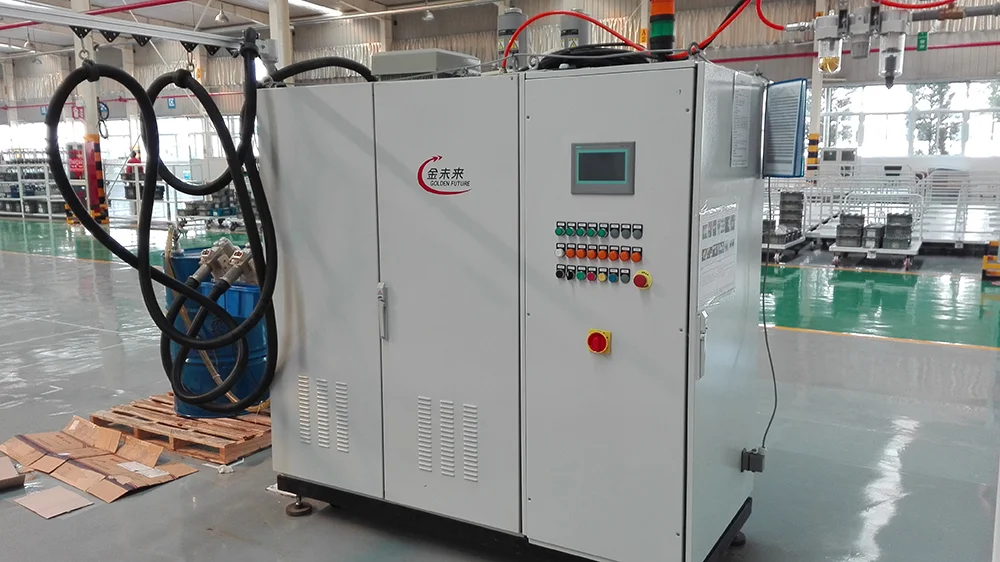
The Antifreeze Vacuum Filling Machine is an automated system designed for precise coolant and antifreeze filling with a stable liquid level. It uses a PLC-controlled process to integrate vacuum evacuation, leak testing, pressure filling, and back suction. The machine is suitable for automotive production and assembly lines where repeatable filling results are required.
The system is designed to handle antifreeze and coolant as the filling medium. It supports a filling volume range of 1–400 L, a filling pressure range of 1–4 bar, and a maximum filling speed of 60 L/min. The filling precision is specified as ±0.5%, and the liquid level accuracy is ±2 mm. These specifications make the machine relevant for applications where both volume and final liquid level must be controlled.
Equipment Specifications
| Filling Medium | Antifreeze / Coolant |
| Filling Volume | 1–400 L |
| Filling Pressure | 1–4 bar |
| Maximum Filling Speed | 60 L/min |
| Filling Precision | ±0.5% |
| Liquid Level Accuracy | ±2 mm |
| Measurement Display Range | 0.0–999.9 L |
| Vacuum Pump Capacity | 40–65 m³/h |
| Negative Pressure Leak Rate | ≤0.5 mbar / 60 s |
| Positive Pressure Leakage | <1.4 g/year |
| Power Supply | AC 380 V ±10%, 50 Hz ±2% |
| Equipment Dimensions | 1800 × 1000 × 800 mm (customizable) |
Working Principle
The Antifreeze Vacuum Filling Machine follows a structured cycle that addresses the main causes of filling inaccuracy. The process begins with vacuum evacuation, which removes air from the system and reduces the risk of air pockets affecting the fill volume. After evacuation, the system performs leak testing under both vacuum and pressure conditions. This step confirms that the vehicle circuit and filling connections are sealed before fluid is introduced.
Once system tightness is confirmed, a secondary vacuum is created. The coolant is then introduced under controlled pressure. When the filling pressure reaches equilibrium, the system automatically vents to atmospheric pressure and performs back suction to remove excess coolant. This back suction step is important because it helps achieve the specified liquid level and prevents the coolant level from dropping after filling.
By combining vacuum evacuation, leak testing, pressure filling, and back suction in one automated cycle, the machine reduces the variables that typically cause filling errors. The result is a repeatable process that supports stable liquid levels in production. Learn more about KINMARK's vacuum filling machines for automotive production applications.
How Vacuum Filling Improves Accuracy
Vacuum-assisted filling is a key method for improving filling accuracy. When a system is evacuated before filling, air is removed from the circuit. This is important because trapped air can compress or displace liquid, leading to volume errors that are difficult to detect. By filling under vacuum, the liquid can enter the system more completely and with fewer voids.
The vacuum pump capacity of 40–65 m³/h supports effective evacuation of the filling circuit. The negative pressure leak rate specification of ≤0.5 mbar / 60 s provides a measurable criterion for verifying vacuum integrity. When the system holds vacuum within this limit, it indicates that the circuit is sealed and that the filling process can proceed with confidence.
In addition to improving accuracy, vacuum filling also supports better process consistency. Because air is removed before filling, the amount of fluid required to reach the target level is more predictable. This makes it easier to maintain filling precision across multiple vehicles on the same line.
The Role of Leak Testing in Filling Accuracy
Leak testing is closely linked to filling accuracy. If a system leaks, fluid may escape during or after filling, causing the final volume or liquid level to fall below the target. The Antifreeze Vacuum Filling Machine performs leak testing under vacuum and pressure conditions before filling. This allows the system to detect leaks before fluid is introduced, reducing the risk of inaccurate fills caused by leakage.
The positive pressure leakage specification of <1.4 g/year provides a reference for evaluating system tightness. By verifying tightness before filling, the machine helps ensure that the measured fill volume remains in the system after the filling cycle is complete. This is particularly important for refrigerant and coolant circuits, where even small leaks can affect performance over time.
Pressure Control and Back Suction
Controlled pressure filling is another factor that supports accurate filling. The machine operates within a filling pressure range of 1–4 bar. When the filling pressure reaches equilibrium, the system automatically vents to atmospheric pressure. This controlled venting helps stabilize the fluid before the final level is set.
Back suction is then used to remove excess coolant. This step helps achieve the specified liquid level and prevents the coolant level from dropping after filling. Without back suction, excess fluid could remain in the circuit and later settle, causing the level to fall below the target. By removing excess fluid in a controlled manner, the machine supports a stable liquid level that meets the ±2 mm accuracy specification.
Key Features
PLC-controlled automated cycle: Integrates vacuum evacuation, leak testing, pressure filling, and back suction.
Vacuum and pressure leak testing: Verifies system tightness before fluid is introduced.
Controlled pressure filling: Operates within a 1–4 bar filling pressure range.
Automatic venting and back suction: Helps achieve the specified liquid level and prevents level drop after filling.
Filling precision of ±0.5%: Supports repeatable fill results in production.
Liquid level accuracy of ±2 mm: Provides a measurable target for final level control.
Measurement display range of 0.0–999.9 L: Supports a wide range of filling volumes.
Customizable dimensions: Equipment dimensions are 1800 × 1000 × 800 mm and can be customized.
Applications in Automotive Production
The Antifreeze Vacuum Filling Machine is designed for automated coolant and antifreeze filling applications on automotive production and assembly lines. It is relevant to areas such as:
Automotive manufacturing: Coolant and antifreeze filling at assembly stations.
New energy vehicles: Thermal management circuits that require controlled fluid filling.
Powertrain manufacturing: Filling operations for engine and drivetrain cooling systems.
Automotive components: Filling of components that require a stable liquid level.
Intelligent factory automation: Integration into automated production lines with traceable filling data.
The machine is suitable for production environments where filling volume, filling pressure, and final liquid level must be controlled within specified limits. For EV thermal management applications, see KINMARK's new energy cooling systems.
Benefits for Production Teams
For production teams, the main benefit of a vacuum-assisted filling process is improved process control. By combining vacuum evacuation, leak testing, pressure filling, and back suction, the machine reduces the variables that cause filling errors. This supports consistent results across vehicles and shifts.
Improved filling accuracy also supports quality management. When fill volume and liquid level are stable, end-of-line checks are less likely to identify out-of-spec vehicles. This reduces rework and helps maintain line balance. In addition, the automated cycle reduces the need for manual intervention, which supports repeatability and operator safety.
The machine also supports traceability when integrated into a production line. Filling data can be recorded and linked to the vehicle, which helps quality teams investigate issues if they arise. This is consistent with the broader trend toward intelligent factory automation in automotive manufacturing.
Why Choose KINMARK
KINMARK is a manufacturer of marking and traceability systems, servo press systems, fluid filling systems, and robot automation systems. The company serves automotive manufacturing, automotive components, new energy vehicles, powertrain manufacturing, and intelligent factory automation. Its fluid filling systems are part of a broader portfolio that supports automated production environments.
The Antifreeze Vacuum Filling Machine is covered by a 12-month warranty on the complete machine. KINMARK provides professional technical support and long-term maintenance service. The company also offers fast response service, including remote diagnosis and technical assistance, to support continuous operation. Engineers provide equipment installation, commissioning, and operator training to help customers start production smoothly.
For production teams evaluating filling solutions, these support services can help reduce downtime and shorten the learning curve during equipment introduction. Explore KINMARK's fluid filling solutions for additional industrial filling applications.
Frequently Asked Questions
What filling medium does the Antifreeze Vacuum Filling Machine support?
The machine is designed for antifreeze and coolant as the filling medium. It is suitable for automated coolant and antifreeze filling applications on automotive production and assembly lines.
What is the filling precision of the machine?
The specified filling precision is ±0.5%. The liquid level accuracy is ±2 mm. These specifications support repeatable filling results in production.
How does the machine prevent the coolant level from dropping after filling?
After filling pressure reaches equilibrium, the system automatically vents to atmospheric pressure and performs back suction to remove excess coolant. This helps achieve the specified liquid level and prevents the level from dropping after filling.
What is the filling volume and pressure range?
The filling volume range is 1–400 L, and the filling pressure range is 1–4 bar. The maximum filling speed is 60 L/min. The measurement display range is 0.0–999.9 L.
Does the machine include leak testing?
Yes. The system performs leak testing under vacuum and pressure conditions before filling. The negative pressure leak rate specification is ≤0.5 mbar / 60 s, and the positive pressure leakage specification is <1.4 g/year.
Conclusion
Improving refrigerant and coolant filling accuracy in production requires more than a precise flow meter. It requires a controlled process that removes air, verifies system tightness, fills under stable pressure, and manages the final liquid level. The Antifreeze Vacuum Filling Machine addresses these factors through a PLC-controlled cycle that integrates vacuum evacuation, leak testing, pressure filling, and back suction.
For automotive manufacturing, new energy vehicle, and powertrain production teams, this approach supports consistent filling results and stable liquid levels. With specifications such as ±0.5% filling precision, ±2 mm liquid level accuracy, and leak testing under vacuum and pressure, the machine provides a measurable basis for process control. As production lines continue to move toward intelligent factory automation, vacuum-assisted filling systems offer a practical way to improve filling accuracy and support quality management.
If you're interested in any of the equipment mentioned in this article, feel free to contact our sales engineers for detailed product information and customized technical solutions.