Flexible Label Laser Marking Process: Unwinding, Inspection, Marking and Cutting
Introduction
Flexible film labels are used throughout automotive and industrial manufacturing to carry identification data on components, assemblies and finished products. Unlike rigid metal nameplates, these labels are supplied as roll-fed film and must be converted into finished, marked labels before they reach the production line. The flexible label laser marking process describes the complete in-line sequence that converts raw label stock into printed, cut and traceable labels: unwinding, inspection, leveling, marking and cutting.
For engineers and production managers, the value of this process lies in its integration. Instead of handling unwinding, printing and cutting as separate offline operations, a flexible fiber laser marking machine performs these steps in one automated flow. This reduces manual handling of thin film materials and produces customized identification labels with stable, repeatable marking quality.
This technical guide explains how the flexible label laser marking process works, what each stage contributes, which materials and label brands are supported, and where the process fits in automotive and industrial production environments.
Product Overview
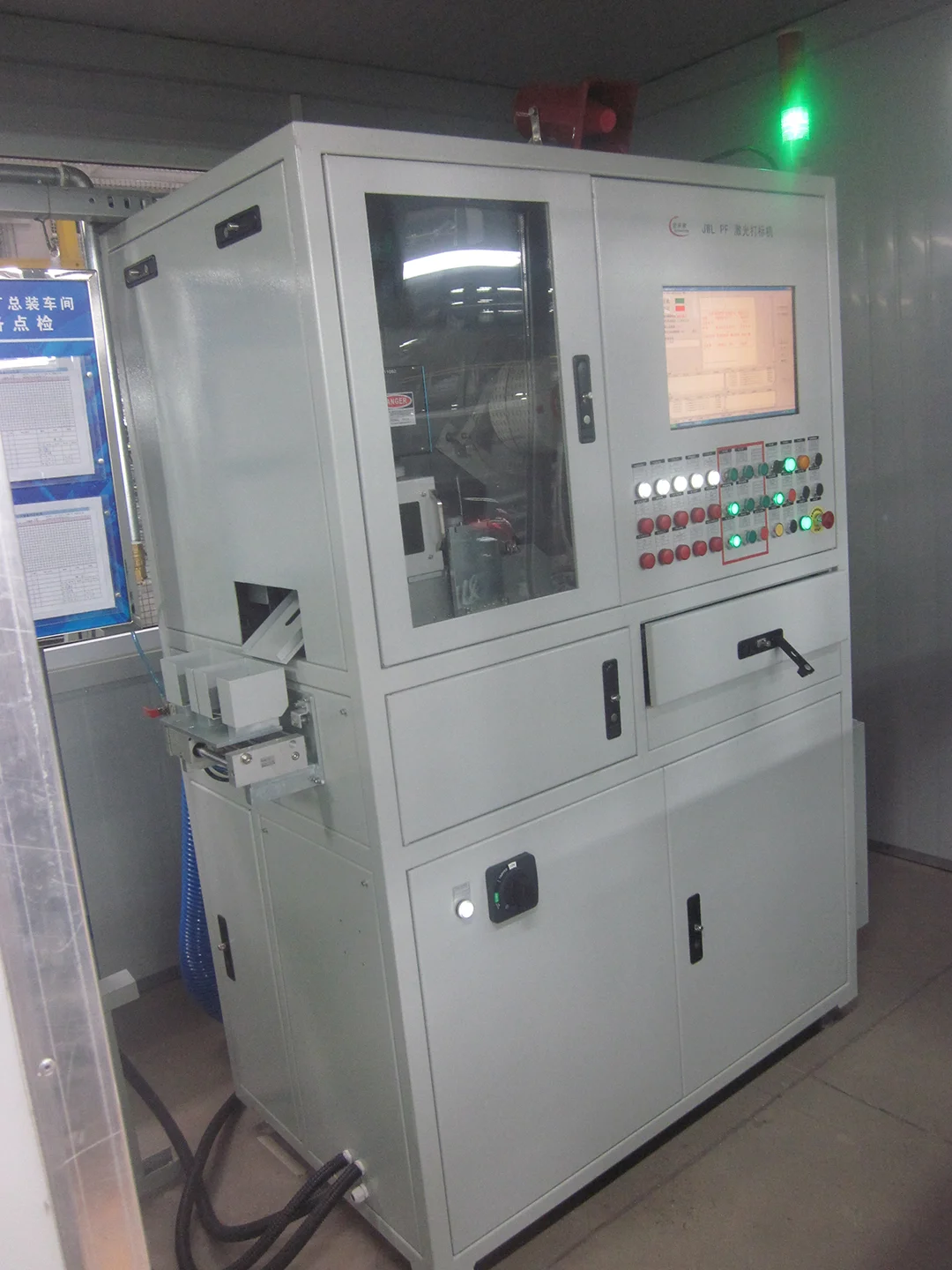
KINMARK Flexible Fiber Laser Marking Machine is designed specifically for laser marking on flexible film labels. It supports label materials from brands such as TESA, 3M and Schreiner, which are commonly used in industrial labeling applications. The equipment is built around a fiber laser marking platform and an automated material handling path, allowing roll-fed film labels to be processed continuously.
The machine is not a standalone marking head. It is an integrated label processing solution that combines unwinding, inspection, leveling, marking and cutting into a single automated sequence. This makes it suitable for producing customized identification labels in the quantities and formats required by a given production program, without relying on separate printing and die-cutting equipment.
The system addresses a common industrial problem: flexible film labels are difficult to handle and mark reliably because the material is thin, compliant and sensitive to tension and surface condition. By combining material handling and laser marking in one machine, the process keeps the label web under controlled conditions from the supply reel to the finished cut label.
What the Machine Produces
The flexible fiber laser marking machine produces customized identification labels from flexible film stock. Marking content includes:
Characters and text
Graphics
1D barcodes
2D codes
These elements support identification and traceability requirements in manufacturing environments where labels must remain legible and machine-readable.
Working Principle
The flexible label laser marking process is organized as a continuous web path with several functional stations. The label film travels from the supply reel through each station in sequence, and the finished label is cut and discharged at the end.
1. Unwinding
The process begins with unwinding. Label film is drawn from the supply reel and fed into the machine. The unwinding stage establishes the material flow for the rest of the process and presents the film to the downstream stations in a continuous, controlled manner.
2. Inspection
After unwinding, the label film passes through an inspection stage. Inspection verifies the condition of the incoming material before marking, so that defects or inconsistencies in the film are identified before the label is marked and cut. This step supports consistent output quality in the finished label.
3. Leveling
Flexible film can carry slight waviness, curl or tension variation from the reel. The leveling stage conditions the film so that it presents a stable surface for laser marking. Leveling helps maintain consistent focus and positioning between the laser and the label surface, which is important for clear marking of fine features such as small characters and 2D codes.
4. Marking
Marking is performed by a fiber laser. The laser writes the required content onto the flexible label material, including characters, text, graphics, 1D barcodes and 2D codes. The marking process produces permanent, clearly legible content on the label surface rather than an applied ink layer, which supports reliable identification and traceability. For other industrial marking applications, KINMARK also provides laser marking machines.
5. Cutting
The final stage is cutting. After marking, the label is separated from the web into the required finished format. Cutting completes the conversion of raw film stock into a finished, marked label that can be applied to a component, assembly or product.
Process sequence at a glance: unwinding → inspection → leveling → marking → cutting. Each stage is part of one automated flow, so the label web is handled continuously from supply reel to finished label.
Key Features
The following features are defined by the machine configuration and process design.
Automated processing: unwinding, inspection, leveling, marking and cutting are integrated into one automated sequence.
Support for major flexible label brands: the equipment is suitable for flexible film labels from TESA, 3M and Schreiner.
Multiple marking content types: characters, text, graphics, 1D barcodes and 2D codes can be marked on flexible label materials.
Permanent laser marking: content is marked by laser rather than applied as a separate printed layer.
Modular design: the modular structure allows the system to adapt to different production requirements and provides flexible integration options for industrial applications.
Standardized core components: core components are standardized, supporting reliable operation in continuous production.
Mature marking process: the marking process is based on established laser marking technology, supporting stable and repeatable results.
Complete label manufacturing in one system: raw film stock is converted into finished, customized identification labels within a single machine.
Applications
The flexible label laser marking process is relevant wherever flexible film labels are used for identification and traceability. KINMARK serves the automotive manufacturing, automotive components, new energy vehicle, powertrain manufacturing and intelligent factory automation sectors, and the flexible label process supports identification needs in these environments.
Automotive Manufacturing and Components
Flexible labels are used to identify parts, assemblies and sub-components during production and after delivery. Laser-marked flexible labels provide permanent, machine-readable identification that can be scanned for traceability through the manufacturing process.
New Energy Vehicles and Powertrain Manufacturing
New energy vehicle and powertrain production rely on consistent component identification. Flexible film labels marked with barcodes or 2D codes support tracking of components and assemblies where label-based identification is preferred over direct part marking.
Intelligent Factory Automation
Because the process is automated and modular, it can be integrated into production environments where label supply and identification are handled as part of a wider automated workflow. The machine supports automated processing of roll-fed film, which fits the direction of intelligent factory automation. For broader industrial marking applications, explore KINMARK's marking machine solutions.
Customized Identification Labels
The process is suited to producing customized identification labels in the formats required by a given program, including labels carrying text, graphics and code content. This makes it useful where label content changes between products or production batches.
Benefits
The flexible label laser marking process offers several practical advantages for industrial label production.
Integrated Production Flow
Combining unwinding, inspection, leveling, marking and cutting in one automated system removes the need to move label stock between separate offline operations. The label web is processed in a single continuous sequence.
Consistent Marking Quality
Inspection and leveling prepare the film before marking, which supports clear and reliable marking of characters, graphics and codes. This contributes to stable quality in the finished label.
Traceability Support
The ability to mark 1D barcodes and 2D codes directly on flexible labels supports identification and traceability requirements in manufacturing. Machine-readable codes on labels allow components and products to be tracked through production.
Permanent Marking
Laser marking produces permanent content on the label material, which is important where labels must remain legible throughout the product lifecycle.
Flexible Integration
The modular design and flexible integration options allow the system to be adapted to different production requirements, supporting integration into broader industrial automation environments.
Reliable Continuous Operation
Standardized core components and a mature marking process support reliable operation for continuous production, which is important in manufacturing settings where label supply must keep pace with production.
Why Choose KINMARK
KINMARK (Jinan Zhongzheng Jinma Technology Co., Ltd.) has been engaged in marking and traceability technology since 1996, beginning with marking machines and expanding into intelligent automotive automation equipment. The company develops and manufactures marking and traceability systems, servo press systems, fluid filling systems and robot automation systems.
The flexible fiber laser marking machine reflects this background in marking and traceability. It is built around standardized core components and a mature marking process, and it is designed for automated processing of flexible film labels from established brands such as TESA, 3M and Schreiner.
KINMARK serves customers across vehicle manufacturing, powertrain, automotive components, engineering machinery, home appliances, new energy, electronics and communication, and rail transit. The company maintains offices and service centers in cities including Shanghai, Beijing, Guangzhou, Changchun, Wuhan and Chongqing.
Support and Service
12-month warranty: the complete machine is covered by a 12-month warranty, with professional technical support and long-term maintenance service.
Fast response service: efficient after-sales support, remote diagnosis and technical assistance help maintain continuous operation.
Installation and commissioning: engineers provide equipment installation, commissioning and operator training to help customers start production smoothly.
Frequently Asked Questions
What materials can the flexible label laser marking process handle?
The machine is designed for laser marking on flexible film labels, including labels from brands such as TESA, 3M and Schreiner. It is suitable for flexible film label materials used in industrial labeling applications.
What content can be marked on flexible labels?
The system supports marking of characters, text, graphics, 1D barcodes and 2D codes on flexible label materials. This content supports identification and traceability requirements.
Which process steps are included in the automated flow?
The automated flow includes unwinding, inspection, leveling, marking and cutting. These steps are integrated so that the label film is processed continuously from the supply reel to the finished label.
Why is inspection and leveling included before marking?
Inspection verifies the condition of the incoming film, and leveling presents a stable surface for laser marking. Together they support consistent, clear marking results on flexible label material.
What support is provided with the machine?
The complete machine is covered by a 12-month warranty. KINMARK provides technical support, long-term maintenance service, remote diagnosis, and installation and commissioning with operator training.
Conclusion
The flexible label laser marking process converts roll-fed film stock into finished, marked identification labels through a defined sequence: unwinding, inspection, leveling, marking and cutting. Each stage prepares the material or applies content, and together they produce customized labels with clear, permanent marking of text, graphics and codes.
For automotive and industrial manufacturers, the value of this process is its integration and control. Automated processing of flexible film labels from brands such as TESA, 3M and Schreiner, combined with inspection and leveling before marking, supports stable quality and reliable traceability. As production environments move toward greater automation, an integrated flexible label laser marking system offers a practical way to handle label identification as part of the wider manufacturing flow.
If you're interested in any of the equipment mentioned in this article, feel free to contact our sales engineers for detailed product information and customized technical solutions.