
PLC Control in Automated Refrigerant Vacuum Filling
Introduction
In automotive assembly and powertrain manufacturing, filling refrigerant or coolant circuits is a critical process that directly affects vehicle performance, safety, and long-term reliability. Manual filling methods often struggle to achieve consistent liquid levels, remove trapped air, or verify circuit integrity before production release. These challenges can lead to rework, fluid waste, and quality issues downstream.
A PLC-controlled vacuum filling system addresses these problems by automating the complete filling cycle. The programmable logic controller (PLC) sequences vacuum evacuation, leak testing, pressure filling, and back suction without manual intervention. This article explains how PLC control works in automated refrigerant vacuum filling, what equipment features support the process, and why this approach is relevant for modern automotive production lines.
Product Overview
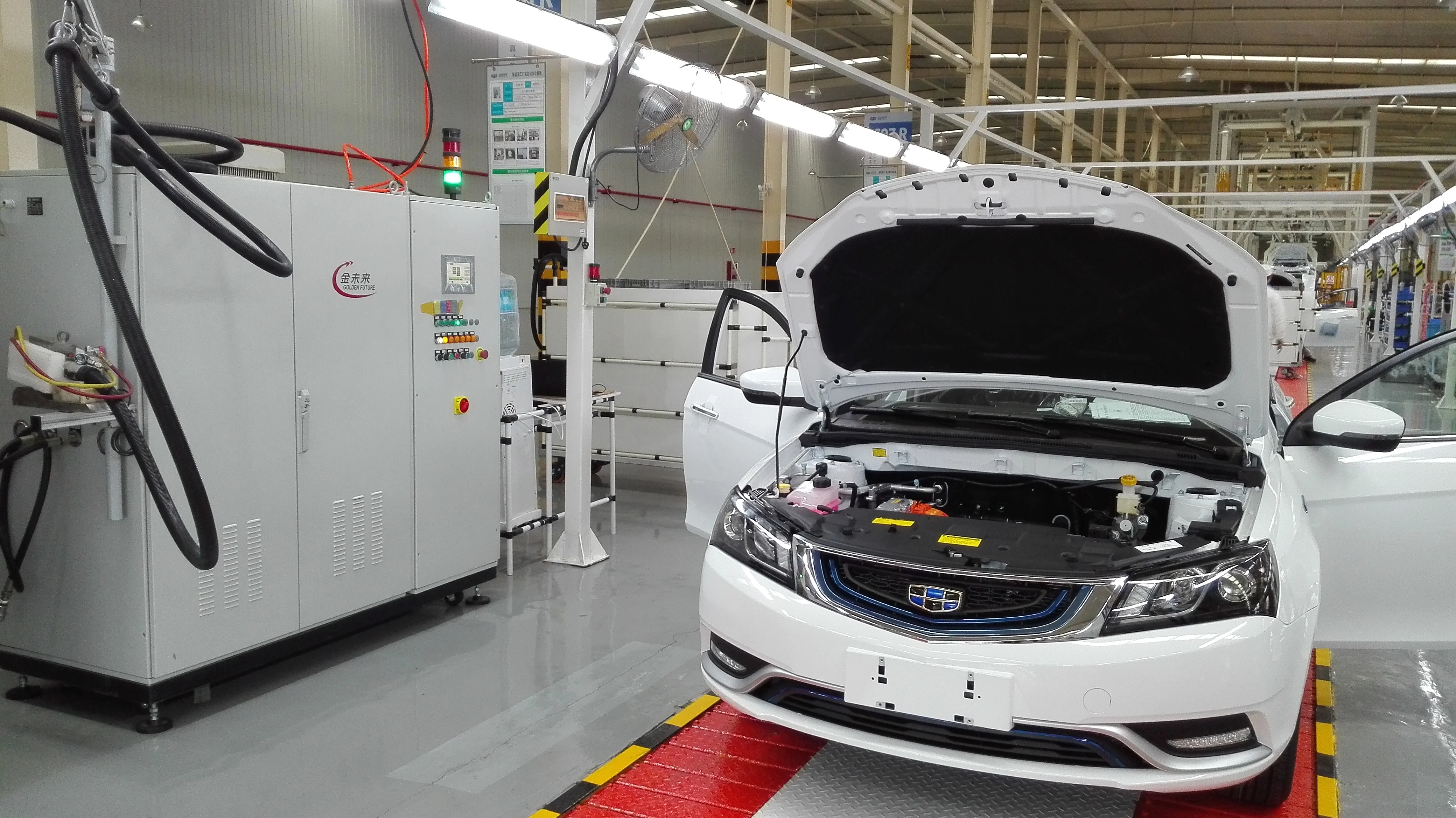
The Antifreeze Vacuum Filling Machine is an automated system designed for precise coolant and antifreeze filling with a stable liquid level. It uses a PLC-controlled system to manage the entire filling process, from initial vacuum evacuation through final liquid level correction.
The machine is suitable for automated coolant and antifreeze filling applications on automotive production and assembly lines. It handles filling volumes from 1 to 400 liters and supports filling pressures between 1 and 4 bar. The system integrates vacuum evacuation, leak testing, pressure filling, and back suction into a single automated cycle.
Key technical specifications include:
Filling medium: antifreeze / coolant
Filling volume: 1–400 L
Filling pressure: 1–4 bar
Maximum filling speed: 60 L/min
Filling precision: ±0.5%
Liquid level accuracy: ±2 mm
Measurement display range: 0.0–999.9 L
Vacuum pump capacity: 40–65 m³/h
Negative pressure leak rate: ≤0.5 mbar / 60 s
Positive pressure leakage:
< 1.4 g/year
Power supply: AC 380 V ±10%, 50 Hz ±2%
Equipment dimensions: 1800 × 1000 × 800 mm (customizable)
Working Principle
The PLC-controlled filling process follows a defined sequence that combines vacuum, pressure, and leak testing to ensure accurate and reliable results.
Step 1: Vacuum Evacuation
The system first performs vacuum evacuation to remove air and moisture from the coolant circuit. This step is essential because trapped air can cause inaccurate filling levels, reduce cooling efficiency, and create pressure fluctuations during operation.
Step 2: Leak Testing Under Vacuum and Pressure
After evacuation, the system conducts leak testing under both vacuum and pressure conditions. The negative pressure leak rate specification is ≤0.5 mbar / 60 s, and positive pressure leakage is specified as
Step 3: Secondary Vacuum
Once tightness is confirmed, a secondary vacuum is created. This additional evacuation step helps ensure the circuit is fully prepared for coolant introduction and minimizes the risk of air pockets forming during filling.
Step 4: Pressure Filling
Coolant is introduced under controlled pressure. The filling pressure ranges from 1 to 4 bar, and the maximum filling speed is 60 L/min. The PLC monitors and adjusts the process to maintain filling precision within ±0.5%.
Step 5: Venting and Back Suction
Once the filling pressure reaches equilibrium, the system automatically vents to atmospheric pressure and performs back suction to remove excess coolant. This step achieves the specified liquid level and prevents the coolant level from dropping after filling. Liquid level accuracy is maintained within ±2 mm.
Note: The complete cycle integrates vacuum evacuation, leak testing, pressure filling, and back suction. Each step is sequenced by the PLC to ensure repeatable results without manual intervention.
Key Features
PLC-controlled automation: The entire filling cycle is managed by a programmable logic controller, reducing manual intervention and improving process consistency.
Integrated leak testing: Vacuum and pressure leak tests are performed within the same cycle, confirming circuit tightness before filling.
Stable liquid level: Back suction after filling helps achieve the specified liquid level and prevents level drop after the process.
High filling precision: Filling precision of ±0.5% and liquid level accuracy of ±2 mm support repeatable results.
Wide filling volume range: Supports 1–400 L, making it suitable for different coolant circuit sizes.
Adjustable filling pressure: Operates between 1 and 4 bar to match application requirements.
Fast filling speed: Maximum filling speed of 60 L/min supports production line cycle times.
Clear measurement display: Measurement display range of 0.0–999.9 L provides readable process feedback.
Customizable dimensions: Equipment dimensions of 1800 × 1000 × 800 mm can be customized for line integration.
Applications
The Antifreeze Vacuum Filling Machine is designed for automated coolant and antifreeze filling applications on automotive production and assembly lines. Its PLC-controlled process supports consistent filling and leak testing in manufacturing environments.
Automotive manufacturing: Coolant filling on vehicle assembly lines where stable liquid levels and circuit integrity are required.
Automotive components: Filling of coolant circuits in components and subassemblies before final vehicle integration.
New energy vehicles: Coolant filling for battery thermal management and electric drive cooling circuits. Related applications include new energy cooling systems.
Powertrain manufacturing: Filling and leak testing of engine and transmission cooling circuits.
Intelligent factory automation: Integration into automated production lines where PLC-controlled equipment supports digital process monitoring.
Benefits
Using PLC control in automated refrigerant vacuum filling offers several practical benefits for production environments:
Improved traceability: PLC-controlled processes can log filling parameters, supporting quality documentation and traceability requirements.
Better process consistency: Automated sequencing reduces variation between filling cycles compared to manual methods.
Production integration: The system can be integrated into assembly lines and coordinated with other automated equipment.
Reduced fluid waste: Back suction and precise filling control help minimize excess coolant and spillage.
Quality management: Integrated leak testing confirms circuit tightness before filling, reducing the risk of releasing defective assemblies.
Operator safety: Automated handling of vacuum and pressure steps reduces direct operator exposure to the filling process.
Why Choose KINMARK
KINMARK (Jinan Zhongzheng Jinma Technology Co., Ltd.) has been developing and manufacturing automotive intelligent automation equipment since 1996. The company specializes in marking and traceability systems, servo press systems, fluid filling systems, and robot automation systems.
KINMARK serves automotive manufacturing, automotive components, new energy vehicles, powertrain manufacturing, and intelligent factory automation. The company has established long-term cooperation with domestic and international automotive manufacturers and also provides automation solutions for other industrial enterprises.
The Antifreeze Vacuum Filling Machine is supported by a 12-month warranty covering the complete machine, with professional technical support and long-term maintenance service. KINMARK provides fast response service, including remote diagnosis and technical assistance, as well as installation and commissioning by engineers, including operator training to help customers start production smoothly.
Frequently Asked Questions
What is the role of the PLC in automated refrigerant vacuum filling?
The PLC controls and sequences the complete filling cycle, including vacuum evacuation, leak testing under vacuum and pressure conditions, secondary vacuum, pressure filling, venting, and back suction. This automation helps ensure repeatable results and reduces manual intervention.
What filling precision can be expected from this system?
The Antifreeze Vacuum Filling Machine achieves a filling precision of ±0.5% and a liquid level accuracy of ±2 mm. These specifications support stable liquid levels and consistent filling results.
How does the system verify circuit tightness before filling?
The system performs leak testing under both vacuum and pressure conditions. The negative pressure leak rate specification is ≤0.5 mbar / 60 s, and positive pressure leakage is specified as
What filling volumes and pressures does the machine support?
The machine supports filling volumes from 1 to 400 liters and filling pressures from 1 to 4 bar. The maximum filling speed is 60 L/min, and the measurement display range is 0.0–999.9 L.
Can the equipment dimensions be customized for line integration?
Yes. The standard equipment dimensions are 1800 × 1000 × 800 mm, and these dimensions are customizable to support integration into different production line layouts.
Conclusion
PLC control in automated refrigerant vacuum filling brings together vacuum evacuation, leak testing, pressure filling, and back suction into a single repeatable process. For automotive manufacturing, components, new energy vehicles, and powertrain production, this approach supports stable liquid levels, consistent filling precision, and verified circuit tightness.
The Antifreeze Vacuum Filling Machine from KINMARK is designed for automated coolant and antifreeze filling on production and assembly lines, with technical specifications that support filling volumes from 1 to 400 L, filling pressures from 1 to 4 bar, and filling precision of ±0.5%. By integrating PLC control into the filling process, manufacturers can improve process consistency, support traceability, and reduce the risk of filling-related quality issues.
If you're interested in any of the equipment mentioned in this article, feel free to contact our sales engineers for detailed product information and customized technical solutions.