OCR Inspection in Automated Laser Marking
Introduction
In automotive manufacturing, the integrity of vehicle identification numbers (VIN) and other critical markings is essential for traceability, regulatory compliance, and quality control. Automated laser marking systems have become a standard method for applying these permanent marks, especially on high-strength steel and hot-formed steel components. However, the marking process itself is only half the equation. Verifying that each mark is correctly applied, legible, and meets depth and character quality requirements is equally important. This is where OCR (Optical Character Recognition) inspection comes into play. By integrating OCR inspection with automated laser marking, manufacturers can achieve real-time, inline verification of marked characters, ensuring that every part meets specification before it moves to the next production stage. This article examines the role of OCR inspection in automated laser marking, focusing on its working principles, key features, applications, and benefits for automotive production lines.
Product Overview
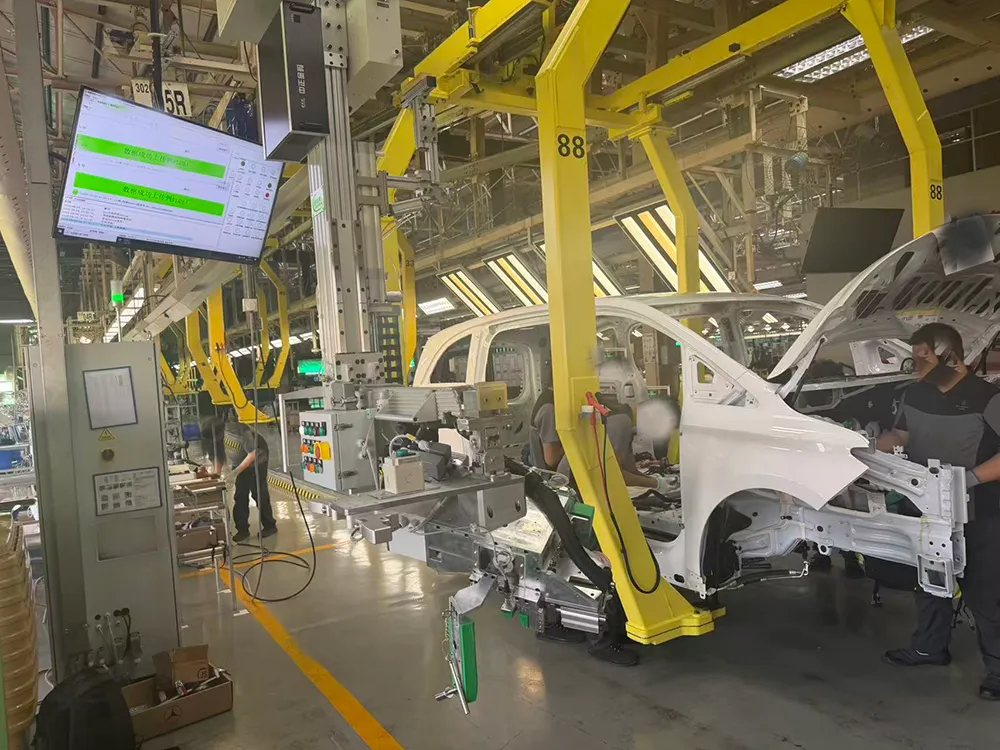
The subject of this discussion is the integration of OCR inspection with deep laser marking machines, such as those used for VIN marking on body-in-white. A deep laser marking machine is designed to create permanent marks with a depth of at least 0.2 mm on materials including high-strength steel with yield strength exceeding 700 MPa and hot-formed steel up to 1500 MPa. These machines are built for automated production environments, with mounting interfaces that allow quick integration with industrial robots or assisted manipulators. The OCR inspection component, often an optional 3D laser scanning measurement and OCR recognition system, works in tandem with the marking head to inspect the quality of the marked characters online. This combined system addresses the need for 100% traceability by verifying that each VIN or character string is correctly marked, readable, and meets depth requirements. It is particularly relevant for automotive assembly lines where manual inspection is impractical due to cycle time constraints and the critical nature of the marking.
Working Principle
The working principle of OCR inspection in automated laser marking involves a sequence of steps that begin with marking and end with verification. First, the deep laser marking machine applies the required characters—such as a VIN—onto the substrate. The marking process uses a special technique to ensure clear rubbing results after painting, which is important for later readability. Once marking is complete, the OCR inspection system captures an image of the marked area. In systems equipped with optional 3D laser scanning measurement, the system can also measure the depth of the characters to ensure they meet the specified minimum depth. The OCR software then processes the captured image, recognizing each character and comparing the result against the expected string. If the characters are correctly recognized and the depth is within tolerance, the part is considered verified. If any discrepancy is detected—such as a missing character, incorrect character, or insufficient depth—the system can flag the part for further action. This inline inspection allows for immediate feedback and prevents non-conforming parts from advancing. The integration of vision guidance, such as an optional 3D vision guidance system, further enhances positioning accuracy before marking, which in turn supports reliable OCR inspection by ensuring the mark is placed correctly.
Key Features
The combined deep laser marking and OCR inspection system offers several features that are directly relevant to automated production:
Easy Rubbing: The marking process is designed to ensure clear rubbing results after painting, which supports subsequent OCR readability.
Easy Integration: Various mounting interfaces allow quick integration with industrial robots or assisted manipulators, facilitating automated inline inspection.
Deep VIN Marking: The system can mark VINs with a depth of more than 0.2 mm on high-strength steel and hot-formed steel, providing a durable mark for OCR verification.
Vision Guidance: An optional 3D vision guidance system enables precise positioning before marking, which helps ensure the mark is placed correctly for OCR inspection.
Automatic Traceability: Optional 3D laser scanning measurement and OCR recognition systems provide online inspection of marking quality and support 100% traceability.
These features are supported by technical specifications such as a 200W laser power, a marking area of 112mm × 112mm, and a marking depth of ≥0.2mm. The system operates on AC220V ±10%, 50Hz ±2%, with power consumption below 1000W, and is designed for operating temperatures of 0~40℃ and humidity up to 90% RH (non-condensing).
Applications
OCR inspection in automated laser marking is primarily applied in automotive manufacturing environments where permanent identification and traceability are required. Specific applications include:
VIN Marking on Body-in-White: Deep laser marking creates VINs on high-strength steel and hot-formed steel components, and OCR inspection verifies character quality and depth.
Automotive Component Marking: Components requiring permanent traceability can be marked and inspected inline.
New Energy Vehicle Production: As EVs and hybrid vehicles incorporate high-strength materials, deep marking and OCR verification support traceability needs.
Powertrain Manufacturing: Engine and transmission parts often require durable markings that can be verified by OCR.
Intelligent Factory Automation: Integration with robots and automated lines allows for unmanned marking and inspection stations.
These applications benefit from the system's ability to operate in automated production lines, where speed and reliability are critical.
Benefits
Integrating OCR inspection with automated laser marking provides several industrial benefits:
Improved Traceability: Online inspection ensures that each marked character is verified, supporting 100% traceability requirements.
Better Process Consistency: Automated inspection reduces variability compared to manual visual checks.
Production Integration: The system can be integrated into existing automated lines with minimal disruption.
Quality Management: Immediate feedback on marking quality allows for timely corrective actions.
Automation: Reduces the need for manual inspection, freeing operators for other tasks.
These benefits are derived from the system's features and are not based on specific percentage improvements, which would require empirical data not provided here.
Why Choose KINMARK
KINMARK (Jinan Zhongzheng Jinma Technology Co., Ltd.) has been developing and manufacturing marking and traceability systems since 1996. The company's deep laser marking machines are designed for automotive mass production, with a focus on deep VIN marking on high-strength materials. KINMARK offers optional 3D vision guidance and 3D laser scanning measurement with OCR recognition, which are directly relevant to OCR inspection in automated laser marking. The company provides a 12-month warranty on the complete machine, along with installation and commissioning services, operator training, and fast response after-sales support. KINMARK has established long-term cooperation with automotive manufacturers, including Mercedes-Benz, BMW, Toyota, Volkswagen, Tesla, GM, Nissan, FAW Hongqi, GAC, Changan Automobile, BYD, Great Wall Motors, Geely, Chery, XPeng, and NIO. This experience in the automotive sector supports the development of reliable marking and inspection solutions. When considering OCR inspection for automated laser marking, KINMARK's focus on deep marking technology and traceability systems makes it a relevant option for automotive manufacturers.
Frequently Asked Questions
What is OCR inspection in automated laser marking?
OCR inspection is an automated process that uses optical character recognition to verify the quality and correctness of characters marked by a laser marking system. In automated laser marking, it is typically integrated inline to inspect VINs or other identifiers immediately after marking, ensuring they are legible and meet specifications.
How does OCR inspection ensure marking quality?
OCR inspection captures an image of the marked area and uses software to recognize each character. It compares the recognized string against the expected string. When combined with optional 3D laser scanning measurement, it can also verify marking depth. This provides a comprehensive check of both character accuracy and physical quality.
Can OCR inspection be integrated with existing production lines?
Yes, deep laser marking machines with OCR inspection are designed with various mounting interfaces for quick integration with industrial robots or assisted manipulators. This allows them to be incorporated into automated production lines with minimal modifications. For broader automated marking applications, KINMARK also provides marking machine solutions for industrial production.
What materials can be marked and inspected with this system?
The deep laser marking machine can mark high-strength steel with yield strength exceeding 700 MPa and hot-formed steel with strength up to 1500 MPa. The marking depth on body-in-white can reach more than 0.2 mm. OCR inspection is suitable for verifying marks on these materials.
Is the OCR inspection system optional?
Yes, the 3D laser scanning measurement and OCR recognition system is an optional feature. It can be specified when ordering the deep laser marking machine to enable automatic traceability and online inspection.
Conclusion
OCR inspection plays a critical role in automated laser marking by providing inline verification of character quality and depth. For automotive manufacturers, this integration supports traceability, process consistency, and quality management. The deep laser marking machines from KINMARK, with optional OCR recognition and 3D scanning, are designed to meet these needs on high-strength steel and hot-formed steel components. As automotive production continues to emphasize automation and traceability, the combination of deep marking and OCR inspection offers a practical solution for ensuring that every VIN and identifier is correctly applied and verified.
If you're interested in any of the equipment mentioned in this article, feel free to contact our sales engineers for detailed product information and customized technical solutions.