
How Does a Refrigerant Vacuum Filling Machine Work?
Introduction
In automotive manufacturing, accurate and reliable fluid filling is critical for vehicle performance and longevity. Coolant and antifreeze systems require precise filling to prevent overheating, corrosion, and leaks. A refrigerant vacuum filling machine—often referred to as a vacuum filling machine for coolants—automates this process using vacuum technology to ensure a stable liquid level and system integrity. This article explains the working principle of such machines, focusing on the sequence of vacuum evacuation, leak testing, pressure filling, and back suction. Understanding these steps helps engineers and production managers evaluate equipment for automotive assembly lines.
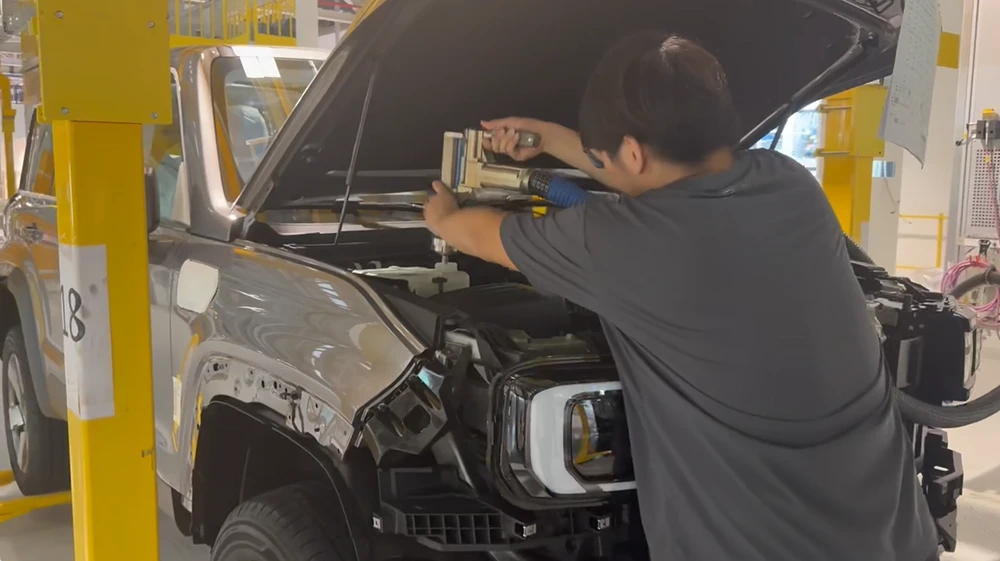
Product Overview
The Antifreeze Vacuum Filling Machine is a PLC-controlled system designed for automated coolant and antifreeze filling. It performs vacuum evacuation, leak testing under vacuum and pressure, pressure filling, and back suction to achieve the specified liquid level. The machine is suitable for automotive production and assembly lines where consistent filling and leak-free systems are essential. Key technical specifications include a filling volume range of 1–400 L, filling pressure of 1–4 bar, maximum filling speed of 60 L/min, filling precision of ±0.5%, and liquid level accuracy of ±2 mm. The vacuum pump capacity ranges from 40–65 m³/h, and the system detects negative pressure leak rates ≤0.5 mbar/60 s and positive pressure leakage<1.4 g/year.
Working Principle
The working principle of a refrigerant vacuum filling machine integrates several stages to ensure precise filling and system tightness. The process begins with vacuum evacuation, where air and moisture are removed from the cooling system. This step is crucial because trapped air can cause inaccurate filling, reduced cooling efficiency, and corrosion. Following evacuation, the system performs leak testing under vacuum and pressure conditions. A negative pressure leak rate of ≤0.5 mbar/60 s and positive pressure leakage<1.4 g/year are monitored to confirm system integrity. If the system is tight, a secondary vacuum is created before coolant is introduced under controlled pressure. The filling pressure is set between 1–4 bar, and the coolant flows at a maximum speed of 60 L/min. Once the filling pressure reaches equilibrium, the system automatically vents to atmospheric pressure and performs back suction to remove excess coolant. This back suction ensures the liquid level meets the specified accuracy of ±2 mm and prevents the coolant level from dropping after filling. The entire cycle is managed by a PLC, which coordinates vacuum, pressure, and filling parameters for repeatable results.
Key Features
PLC-controlled automation: Integrates vacuum evacuation, leak testing, pressure filling, and back suction into a single cycle.
High filling precision: ±0.5% filling precision and ±2 mm liquid level accuracy.
Leak detection: Monitors negative pressure leak rate (≤0.5 mbar/60 s) and positive pressure leakage (<1.4 g/year).
Wide filling volume range: 1–400 L, suitable for various coolant systems.
Adjustable filling pressure: 1–4 bar to match different system requirements.
Fast filling speed: Up to 60 L/min with a vacuum pump capacity of 40–65 m³/h.
Measurement display: 0.0–999.9 L for real-time monitoring.
Customizable dimensions: 1800 × 1000 × 800 mm (customizable).
Applications
The Antifreeze Vacuum Filling Machine is designed for automated coolant and antifreeze filling on automotive production and assembly lines. It supports applications in automotive manufacturing, powertrain manufacturing, and new energy vehicles where precise fluid filling is required. The machine's ability to handle filling volumes from 1–400 L makes it adaptable to various vehicle platforms and component sizes. Its integrated leak testing helps ensure system integrity before vehicles leave the assembly line.
Benefits
Improved traceability: PLC-controlled process records filling parameters for quality documentation.
Better process consistency: Automated cycle reduces variability compared to manual filling.
Production integration: Designed for inline operation in automotive assembly lines.
Manufacturing efficiency: Fast filling speed and automated leak testing reduce cycle time.
Quality management: Precise filling and leak detection help prevent coolant-related defects.
Why Choose
KINMARK, a manufacturer of marking and traceability systems, servo press systems, fluid filling systems, and robot automation systems, offers the Antifreeze Vacuum Filling Machine as part of its fluid filling product line. With experience serving automotive manufacturers and component suppliers, KINMARK provides equipment designed for integration into intelligent factory automation. The machine includes a 12-month warranty, fast response service, and installation and commissioning support to help customers start production smoothly.
Frequently Asked Questions
What is the working principle of a refrigerant vacuum filling machine?
The machine uses a PLC to control a sequence of vacuum evacuation, leak testing, pressure filling, and back suction. First, vacuum removes air and moisture. Then, leak testing under vacuum and pressure confirms system tightness. A secondary vacuum is created before coolant is introduced under pressure. After filling, the system vents to atmospheric pressure and performs back suction to achieve the specified liquid level.
What are the key specifications of the Antifreeze Vacuum Filling Machine?
Key specifications include filling volume 1–400 L, filling pressure 1–4 bar, maximum filling speed 60 L/min, filling precision ±0.5%, liquid level accuracy ±2 mm, vacuum pump capacity 40–65 m³/h, negative pressure leak rate ≤0.5 mbar/60 s, positive pressure leakage<1.4 g/year, and power supply AC 380 V ±10%, 50 Hz ±2%.
Can this machine be integrated into an existing assembly line?
Yes, the machine is designed for automated coolant and antifreeze filling on automotive production and assembly lines. Its PLC-controlled system and customizable dimensions (1800 × 1000 × 800 mm) allow integration into various line configurations.
What support does KINMARK provide for installation and maintenance?
KINMARK provides installation and commissioning services, operator training, a 12-month warranty, and fast response service including remote diagnosis and technical assistance.
Conclusion
The refrigerant vacuum filling machine, such as the Antifreeze Vacuum Filling Machine, automates the critical process of coolant filling in automotive manufacturing. By integrating vacuum evacuation, leak testing, pressure filling, and back suction, it ensures precise filling and system integrity. Understanding this working principle helps engineers and production managers select appropriate equipment for their assembly lines. With PLC control and a range of technical specifications, this machine supports consistent and reliable fluid filling operations.
If you're interested in any of the equipment mentioned in this article, feel free to contact our sales engineers for detailed product information and customized technical solutions.