Automotive VIN Marking Equipment Guide
Introduction
Every vehicle that leaves a final assembly line carries a Vehicle Identification Number. That number is not a label or a sticker; it is a permanent physical mark applied to the body-in-white, and it must remain readable for the entire life of the vehicle. For manufacturing engineers and production managers, selecting automotive VIN marking equipment is therefore not a cosmetic decision. It is a decision about process reliability, material compatibility, and long-term traceability.
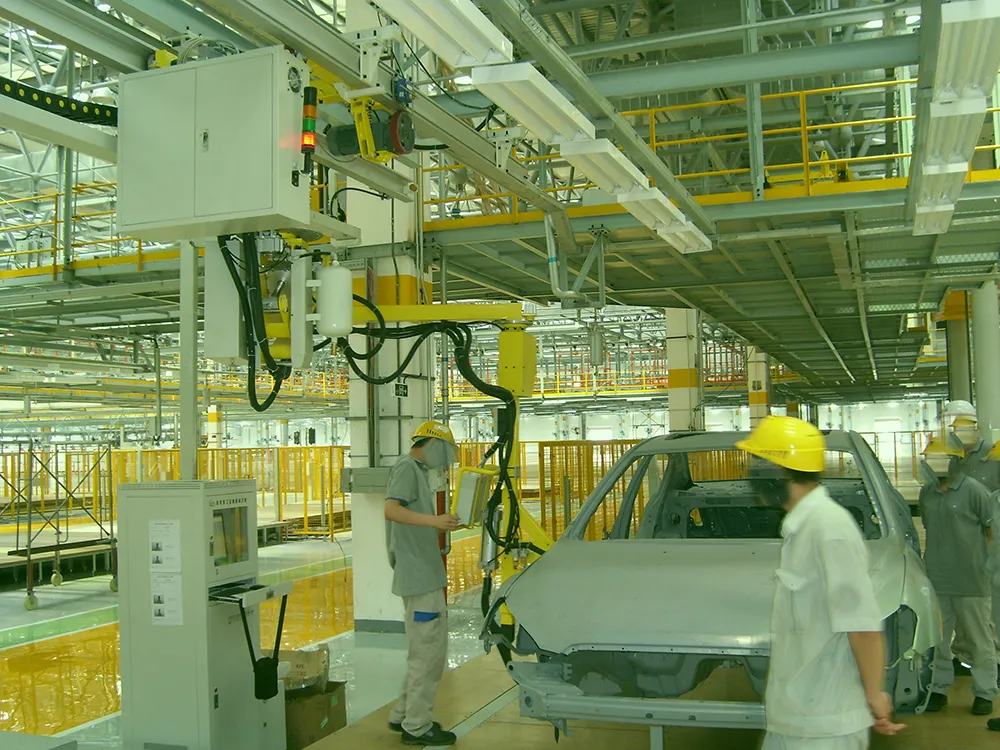
The challenge has become harder in recent years. Modern body structures increasingly use high-strength steel and hot-formed steel, materials that resist conventional marking methods. A shallow surface mark that works on mild steel may become illegible after painting, or may not survive the mechanical rubbing process used to verify the VIN. Meanwhile, production lines are expected to run at high cycle rates with minimal manual intervention.
This guide examines deep laser marking technology as a category of automotive VIN marking equipment. It covers how the process works, what technical specifications matter, how the equipment integrates into automated production lines, and which applications benefit most. The focus is on practical engineering considerations rather than marketing claims.
Product Overview
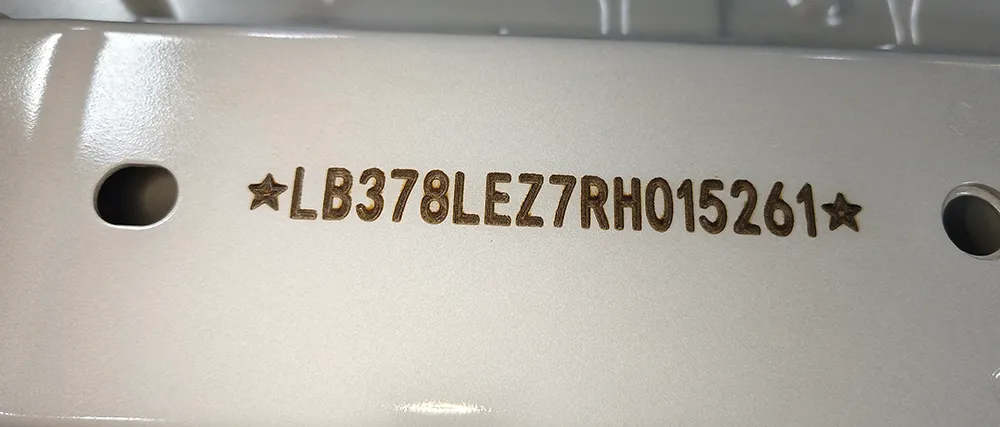
A deep laser marking machine is a specialized piece of automotive VIN marking equipment designed to create permanent, deep identification marks on vehicle body structures. Unlike surface marking systems that only alter the top layer of material, deep laser marking produces a mark with measurable depth, which is essential for VIN applications where legibility must be verified after the paint shop.
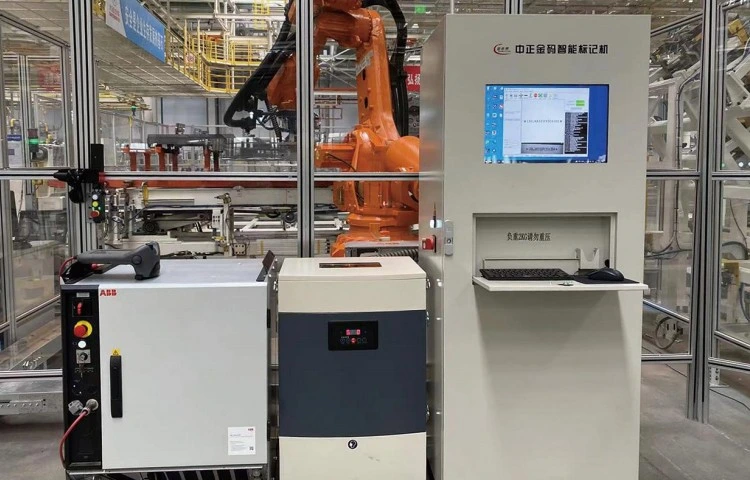
KINMARK's Deep Laser Marking Machine is built specifically for VIN deep marking on high-strength materials. It is positioned as production equipment for body-in-white lines, supporting automotive mass production rather than low-volume or laboratory marking tasks.
The system addresses a specific industrial problem: how to apply a durable, traceable VIN on steel grades that are difficult to mark. It is designed for integration with industrial robots or assisted manipulators, allowing it to operate inside automated production lines rather than as a standalone manual workstation.
Application note: Deep laser marking is intended for permanent VIN application on body-in-white structures. Marking depth and material compatibility should always be confirmed against the specific steel grade used in a given vehicle program.
Working Principle
Deep laser marking uses a focused laser beam to remove or displace material from the workpiece surface, creating a recessed mark rather than a surface discoloration. The marking depth is a controlled process parameter, and for VIN applications on body-in-white, the target depth is typically greater than 0.2 mm.
The ability to mark high-strength materials depends on delivering sufficient laser power to the workpiece. The KINMARK system uses a 200W laser and provides a marking area of 112 mm × 112 mm, which accommodates the character layout required for a VIN string.
Two optional subsystems extend the basic marking function. A 3D vision guidance system can be used for precise positioning before marking, which is relevant when the body position varies slightly within the fixture. A 3D laser scanning measurement and OCR recognition system can be used for online inspection of marking quality, supporting traceability requirements.
The marking process itself is supported by a special marking process design intended to ensure clear rubbing results after painting. This matters because VIN verification often involves rubbing the mark after the paint process, and a mark that is deep but poorly formed can still fail that check.
Key Features
The following features are defined by the product specification and are relevant to engineers evaluating automotive VIN marking equipment.
Deep VIN marking capability: The system enables permanent VIN deep marking on high-strength steel plates with yield strength exceeding 700 MPa and on hot-formed steel plates with strength up to 1500 MPa.
Marking depth: Marking depth on body-in-white can reach more than 0.2 mm.
Easy rubbing: A special marking process is used to ensure clear rubbing results after painting.
Easy integration: Various mounting interfaces allow the system to be quickly integrated with industrial robots or assisted manipulators for automated production lines.
Vision guidance (optional): A 3D vision guidance system enables precise positioning and accurate marking.
Automatic traceability (optional): A 3D laser scanning measurement and OCR recognition system provides online inspection of marking quality and supports full traceability.
Technical Specifications
| Power Supply | AC220V ±10%, 50Hz ±2% |
| Power Consumption | <1000W |
| Laser Power | 200W |
| Marking Area | 112mm × 112mm |
| Marking Depth | ≥0.2mm |
| Operating Temperature | 0~40℃ |
| Operating Humidity | ≤90% RH (Non-condensing) |
Applications
Deep laser marking equipment is used where permanent identification must survive painting, assembly, and years of vehicle service. The primary application is VIN marking on body-in-white structures in automotive manufacturing.
Because the system can mark high-strength and hot-formed steel, it is relevant to vehicle programs that use advanced body structures for structural rigidity and crash performance. These materials are common in modern passenger vehicle platforms, including new energy vehicle platforms, where body design often prioritizes both strength and weight.
Beyond the body shop, marking and traceability requirements extend across automotive components and powertrain manufacturing. The same principles of permanent, verifiable marking apply wherever a part or assembly must be identified throughout its production and service life.
The robot integration capability means the equipment can be deployed within intelligent factory automation architectures, where marking is one station in a connected production sequence rather than an isolated operation.
Benefits
The value of deep laser marking equipment in VIN applications comes from several practical factors.
Improved traceability: A permanent, deep mark provides a durable identification reference for the vehicle, and optional OCR and 3D scanning support online verification of mark quality.
Better process consistency: Controlled marking depth and a defined marking process help maintain consistent results across a production run.
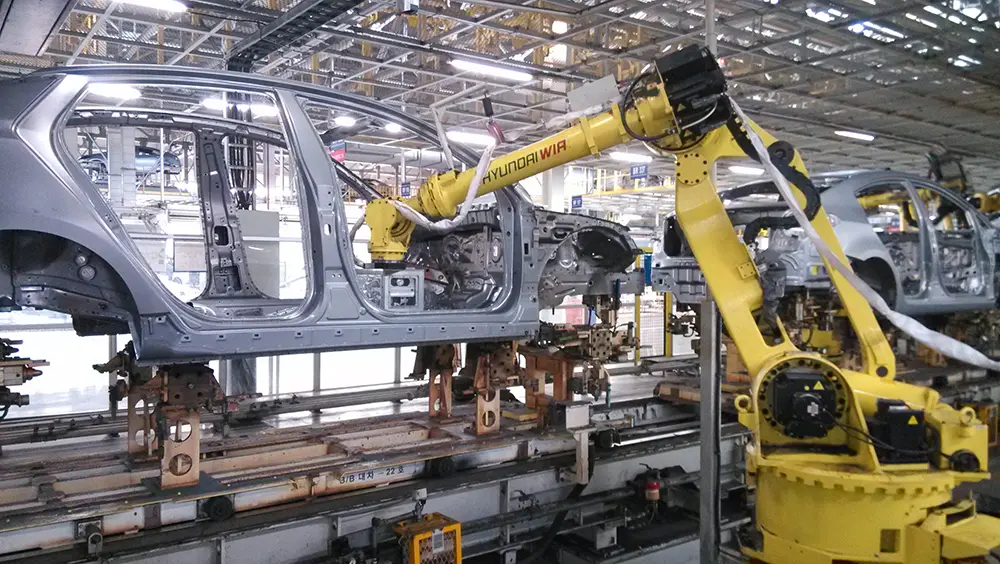
Production integration: Mounting interfaces and robot compatibility allow the marking operation to be embedded in an automated line.
Material compatibility: The system is designed for high-strength and hot-formed steels that are difficult to mark with conventional methods.
Quality management support: Optional vision guidance and measurement systems contribute to in-line quality control rather than post-process inspection.
These benefits should be evaluated against the specific requirements of each production program. Marking depth, cycle time, and integration scope depend on the body design, material grade, and line layout.
Why Choose KINMARK
KINMARK has been engaged in automotive intelligent automation equipment since 1996, beginning with marking machines and expanding into marking and traceability systems, servo press systems, fluid filling systems, and robot automation systems. The company is recognized as a Shandong Province "Gazelle" enterprise and a "Specialized and Refined" enterprise.
In the marking and traceability field, the company's development history includes the introduction of body VIN marking systems with assist manipulators, laser label machines, robot automatic marking systems, VIN automatic identification systems, and laser deep marking systems. The VIN laser deep marking system was developed and put into operation in 2023.
KINMARK has established long-term cooperation with automotive manufacturers including Mercedes-Benz, BMW, Toyota, Volkswagen, Tesla, GM, Nissan, FAW Hongqi, GAC, Changan Automobile, BAIC Foton, GAC Honda, Beijing Hyundai, BYD, Great Wall Motor, Geely Automobile, Chery Automobile, XPeng, and NIO. The company also provides automation solutions to industrial companies such as Bosch, BorgWarner, Gree, CRRC, Meritor, and AGCO.
Support infrastructure includes offices and maintenance centers in Shanghai, Beijing, Guangzhou, Changchun, Wuhan, and Chongqing. The complete machine is covered by a 12-month warranty, with professional technical support and long-term maintenance service. Engineers provide installation, commissioning, and operator training, and after-sales support includes remote diagnosis and technical assistance.
Frequently Asked Questions
What materials can deep laser marking equipment mark for VIN applications?
The KINMARK Deep Laser Marking Machine is designed to mark high-strength steel plates with yield strength exceeding 700 MPa and hot-formed steel plates with strength up to 1500 MPa. Marking depth on body-in-white can reach more than 0.2 mm.
Can the marking system be integrated into an existing production line?
Yes. The system is designed with various mounting interfaces so it can be quickly integrated with industrial robots or assisted manipulators for automated production lines. Integration scope depends on the line layout and the robot or manipulator used.
Is vision guidance required for VIN marking?
Vision guidance is an optional configuration. A 3D vision guidance system can be specified to enable precise positioning and accurate marking. Whether it is needed depends on the positioning accuracy of the fixture and the variability of the workpiece position.
How is marking quality verified?
An optional 3D laser scanning measurement and OCR recognition system provides online inspection of marking quality. This supports traceability by verifying the mark within the production process rather than after the fact.
What support is available after installation?
The complete machine is covered by a 12-month warranty. KINMARK provides installation, commissioning, and operator training, along with after-sales support that includes remote diagnosis and technical assistance. Offices and maintenance centers are located in Shanghai, Beijing, Guangzhou, Changchun, Wuhan, and Chongqing.
Conclusion
Choosing automotive VIN marking equipment is a decision that affects traceability, production integration, and long-term identification quality. As body structures increasingly rely on high-strength and hot-formed steels, marking methods that only affect the surface may not deliver the durability and legibility that VIN applications require.
Deep laser marking addresses this by producing a mark with measurable depth on materials that are difficult to mark. With a 200W laser, a 112 mm × 112 mm marking area, and marking depth of ≥0.2 mm on body-in-white, the KINMARK Deep Laser Marking Machine is designed for production environments. Optional 3D vision guidance and 3D laser scanning with OCR recognition extend the system toward precise positioning and online quality verification.
For engineers and production managers specifying marking equipment, the practical questions are material compatibility, marking depth, integration method, and verification strategy. Evaluating these factors against the specific vehicle program is the most reliable way to select equipment that will perform consistently over the life of the line.
If you're interested in any of the equipment mentioned in this article, feel free to contact our sales engineers for detailed product information and customized technical solutions.